Where the VIN Sits on Most Side-by-Sides
It can be incredibly frustrating to need a crucial piece of information about your side-by-side, only to find yourself crawling all over the machine, wrench in hand, trying to locate it. One of the most common headaches for UTV owners, especially when buying, selling, or registering, is pinpointing the Vehicle Identification Number (VIN). This guide will walk you through the most likely spots to find that elusive VIN on your side-by-side, ensuring you're ready for whatever paperwork comes your way in Utah.
Why Finding Your UTV's VIN is So Crucial
The VIN is more than just a string of numbers and letters; it's the unique DNA of your side-by-side. Think of it as your machine's social security number. For any significant transaction or official interaction involving your UTV in Utah, you'll need this number. Skipping the step of verifying the VIN can lead to huge headaches down the road, from registration delays to unknowingly purchasing a stolen machine.
Registration, Titling, and Legal Proof
When you head to the Utah DMV to register your UTV, the VIN is the very first piece of information they'll ask for. Without it, you simply cannot complete the [How to Register an ATV or UTV in Utah]. It's how the state identifies your specific vehicle and ties it to your ownership. The VIN is printed on your title, your registration card, and is used for things like ensuring your machine meets [Which Machines Utah Registers as Off-Highway Vehicles]. It’s the ultimate legal proof of your machine's identity, separating it from every other side-by-side ever manufactured. Even for things like replacing a lost title, you'll need that VIN to verify your claim.
Buying and Selling Peace of Mind
If you're buying a used side-by-side, checking the VIN is absolutely non-negotiable. It's the only way to perform a proper background check on the machine. You'll want to run the VIN through online databases to check for theft records or outstanding liens. This due diligence can save you from a world of trouble. Conversely, if you're selling your UTV, providing the VIN to prospective buyers demonstrates transparency and helps them feel confident in their purchase. When drafting a [Bill of Sale Requirements for a Utah ATV Sale], especially if you're using a template from a service like LawDepot, the VIN is a critical field that must be accurately included to formalize the transfer of ownership. It protects both the buyer and the seller from future disputes.
Theft Recovery and Insurance Claims
Heaven forbid your beloved side-by-side goes missing, but if it does, the VIN is the primary identifier law enforcement will use to track and recover it. Without that unique number, a stolen UTV becomes incredibly difficult to trace among the thousands of similar machines out there. Similarly, if your UTV is damaged in an accident or lost to fire, your insurance company will use the VIN to process your claim, verify the machine's details, and ensure you receive proper compensation. It’s the linchpin for both reporting a theft and navigating the often complex world of insurance payouts.
Common VIN Locations on Side-by-Sides
Side-by-sides, or UTVs, are built for rugged environments, which means their VIN plates need to be durable and somewhat protected. However, manufacturers also need to make them accessible for inspections and registration. While exact locations can vary slightly between manufacturers and models, there are several go-to spots where you'll almost always find the VIN.
The Chassis and Frame Rail
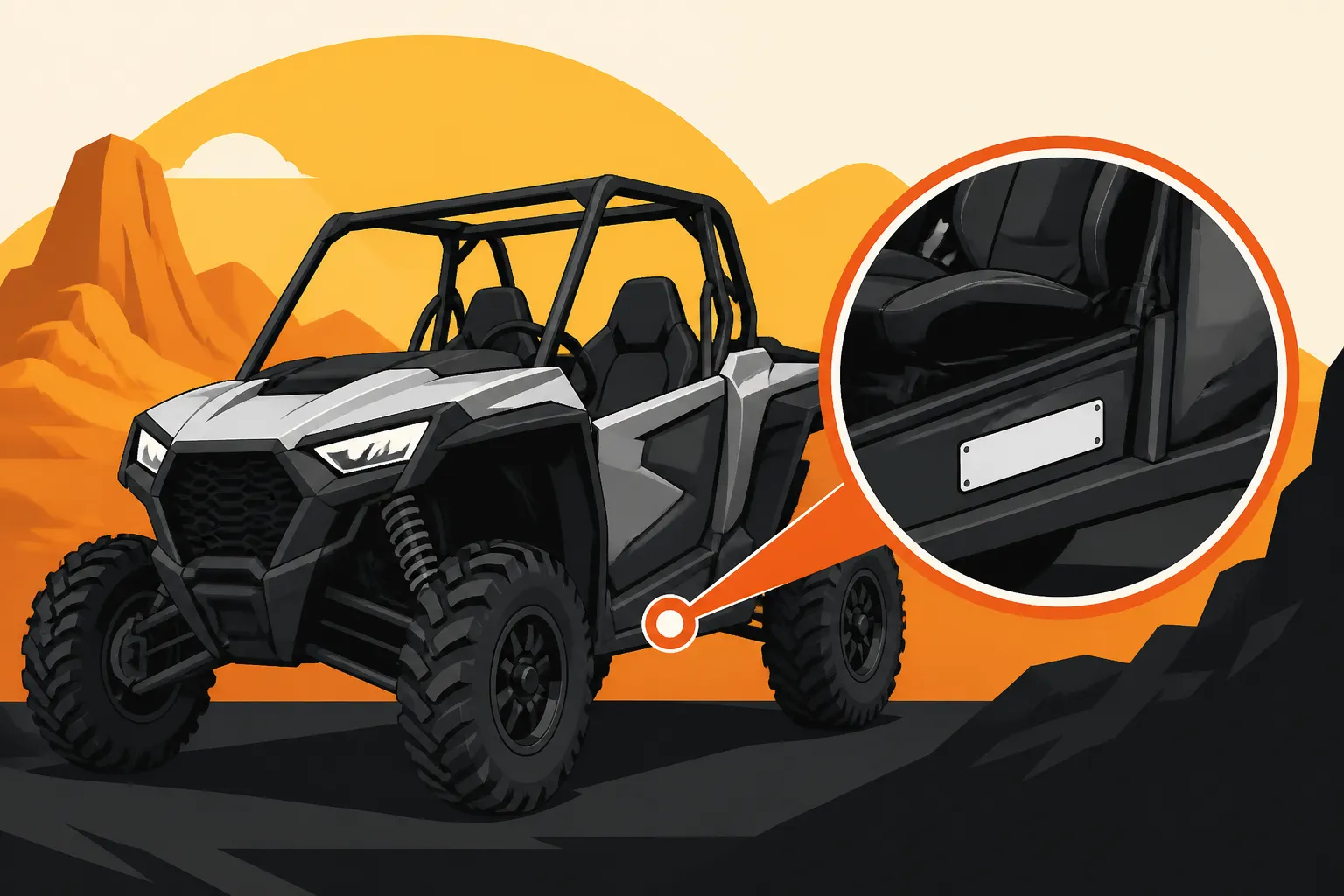
This is arguably the most common and robust location for a UTV's VIN. Manufacturers often stamp or affix a plate with the VIN directly onto the machine's main frame.
- Front Frame Rail: Many side-by-sides have the VIN stamped on the front frame rail, often near one of the front wheels, behind the bumper, or under the hood near the radiator support. You might need to turn the front wheels to one side to get a better look, or even remove a small plastic cover. It's usually on the driver's side, but check both.
- Rear Frame Rail: Another popular spot is on the rear frame, often near the suspension mounting points or the hitch receiver. This area can get particularly dirty, so be prepared to do some cleaning.
- A-Pillar/Roll Cage: On some models, especially those with an integrated roll cage, you might find a VIN plate or sticker on one of the A-pillars (the front supports of the roll cage, just outside the windshield) or along one of the main cage bars, often low down where it meets the frame.
These locations are chosen for their structural integrity, making the VIN less likely to be damaged in a minor collision or obscured by aftermarket accessories. However, they are also prone to dirt, mud, and debris, so always carry a rag and a flashlight!
Passenger Side Door Jamb or Pillar
Just like a car, many modern side-by-sides are now incorporating VIN plates in the door jamb area, or on a structural pillar near where a door would latch. This is often an easier spot to find compared to crawling under the vehicle.
- Door Jamb (if applicable): If your UTV has actual doors, check the frame where the door latches when closed. The VIN sticker or plate is often affixed here, similar to what you’d find on a pickup truck. It's typically on the passenger side, but always check both.
- B-Pillar: Even if your UTV doesn't have traditional doors, it will have a B-pillar, which is the roll cage upright behind the front seats. Look on the outside or inside surface of this pillar, usually low down, for a VIN decal or plate. This spot is generally protected from direct impacts and heavy mud, making it easier to read.
- Under the Dash: On some utility-focused side-by-sides, the VIN might be on a small sticker or plate visible when you open the passenger side door, just under the dashboard or glove box.
This location has become increasingly common for ease of access during inspections or when quickly verifying the VIN.
Under the Hood or Front Storage Compartment
Depending on the design of your side-by-side, the front of the vehicle can offer a few spots where the VIN might be hiding.
- Inside the "Frunk" (Front Trunk): Many UTVs have a small storage compartment under the front hood. Open this up and look around the perimeter, especially on the firewall or the structural members that form the compartment.
- Radiator Support: On machines where the front bodywork lifts or tilts forward, the VIN might be found stamped onto the metal cross-member that supports the radiator.
- Dash Panel: A less common but possible location is a sticker on the dashboard, often on the passenger side or near the center console. These can sometimes wear off or become faded over time due to sun exposure, so don't rely solely on this if it's the only one you find.
These areas are generally cleaner than under the chassis, but might require opening a latched compartment or lifting a panel.
Engine Compartment and Firewall
While not as common for the primary VIN display, some manufacturers will also place a secondary VIN sticker or stamp within the engine bay, usually on the firewall (the metal barrier between the engine and the passenger compartment) or on a frame rail accessible once the engine cover is removed.
- Firewall: This is more typical on older models or specific utility vehicles. You'll need to open up the engine access (often under the bed or rear seats) and look at the metal wall facing the cab.
- Near Battery Box: Sometimes the VIN can be found near the battery tray or on the frame piece that the battery box is mounted to.
These locations can be tricky because they often require more effort to access and are frequently exposed to heat, oil, and grime, which can make the VIN hard to read.
Here's a quick overview of common VIN locations:
| Location Type | Typical Spot | Accessibility | Durability | Notes |
|---|---|---|---|---|
| Frame Rail | Front or rear main frame, near wheels/suspension | Medium (might need to crawl/clean) | High (stamped metal) | Most common, check both sides and front/rear |
| Door Jamb/Pillar | Passenger side A-pillar, B-pillar, or door frame | Easy (visible when door open) | Medium (sticker/plate) | Becoming more common on modern UTVs |
| Under Hood/Frunk | Inside front storage, radiator support, dash | Easy (open hood/compartment) | Medium (sticker/plate) | Good for quick checks, may fade on dash |
| Engine Compartment | Firewall, near battery tray | Hard (engine access needed) | Medium (sticker/plate) | Less common primary location, often secondary |
What to Do If You Can't Find or Read the VIN
Sometimes, despite your best efforts, the VIN seems to have vanished, or it’s so obscured that you can’t make out the characters. This isn't an uncommon problem, especially with older, well-used machines. Don't panic; there are steps you can take.
Cleaning and Lighting Techniques
Often, the VIN isn't truly missing; it's just buried under years of trail dust, mud, or paint overspray.
- Start with a good cleaning: Use a stiff brush, a degreaser, and plenty of water to clean suspected areas thoroughly. A wire brush can sometimes help on stamped metal, but be careful not to damage any painted or plastic areas.
- Flashlight is your friend: Even in broad daylight, a powerful flashlight can make a huge difference. Angle the light from different directions to create shadows that highlight the stamped characters. Sometimes a side angle works best to reveal the raised or recessed numbers.
- Rubbing Technique: A classic trick for faint stampings is to place a piece of paper over the area and rub a crayon or pencil lead gently across it. This can often transfer the impression of the VIN onto the paper, making it legible.
- Smartphone Camera: Use your smartphone camera’s zoom function. Sometimes, a high-resolution photo, especially with good lighting, can reveal numbers that are hard to see with the naked eye. Take multiple pictures from different angles.
Remember to be patient. It might take some serious elbow grease to uncover the VIN, but it's essential.
Consulting Your Owner's Manual
This might sound obvious, but it's amazing how many people overlook the owner's manual. Most manufacturers include a diagram or specific instructions on where to find the VIN in their manuals. If you don't have the physical manual, check the manufacturer's website; many offer digital versions for download. Search for terms like "VIN location," "identification number," or "serial number." The manual will also confirm the exact format of the VIN for your specific model year, which can be helpful if some characters are ambiguous.
When to Seek Professional Help
If you've tried everything and the VIN remains unreadable or truly missing, it's time to call in the cavalry.
- Dealer Service Department: If you bought the UTV new, or if it's a relatively common model, contact a dealership for that brand. They often have internal diagrams or common knowledge of where specific model years hid their VINs. They might even be able to perform a VIN inspection service.
- Utah DMV or State Law Enforcement: For machines with a severely damaged or missing VIN, you might need to involve the Utah DMV or state law enforcement. They can guide you on the process for verification or assignment of a new VIN, though this is usually a last resort and can be a lengthy process. This is especially critical if you are registering a UTV without a title or if you have questions about [Registering a UTV in Utah Without a Title] for unique situations like a homebuilt machine. When dealing with official documents and titles, a service like LawDepot can provide templates for affidavits or statements of facts that might be required by the DMV in these unusual circumstances.
Understanding Your UTV's VIN Structure
Knowing where to find the VIN is one thing, but understanding what it means can also be incredibly useful. Every 17-character VIN follows a standardized format, providing a wealth of information about your side-by-side. You don't need to be an expert decoder, but grasping the basics can help you verify information, especially when buying used.
Decoding the World Manufacturer Identifier (WMI)
The first three characters of a VIN form the World Manufacturer Identifier (WMI). This segment tells you who made the vehicle and where.
- First character: Identifies the geographical region of the manufacturer (e.g., '1' for USA, 'J' for Japan, 'Z' for Italy).
- Second character: Identifies the manufacturer itself (e.g., 'P' for Polaris, 'Y' for Yamaha, 'K' for Kawasaki).
- Third character: Often combined with the first two to uniquely identify the manufacturer, or it can indicate the vehicle type/division.
So, if you see a VIN starting with "1P4…", you immediately know it's a Polaris made in the USA. This is a quick way to cross-reference if the VIN matches the machine's stated manufacturer.
Vehicle Descriptor Section (VDS) Insights
Characters four through nine make up the Vehicle Descriptor Section (VDS). This part describes the general attributes of the vehicle, though the specific codes are unique to each manufacturer.
- Characters 4-8: These typically describe the vehicle's features such as body type, engine type, model, series, and even gross vehicle weight rating. For a side-by-side, this might encode whether it's a two-seater or a four-seater, its engine size, or specific trim level.
- Character 9 (Check Digit): This is a unique security feature. It's a single digit (0-9 or X) that's mathematically calculated from all the other numbers in the VIN. It's used to detect false or fraudulent VINs. If you're using a [VIN Inspections for Utah ATV Paperwork] service or a VIN decoder online, this digit helps confirm the VIN's authenticity.
While you won't memorize every code, understanding that this section describes the machine's characteristics can be a handy tool, especially when comparing a VIN to a vehicle's advertised features. If you're looking at a UTV that claims to be a high-performance model, but its VIN's VDS section suggests a utility variant, that's a red flag worth investigating.
Vehicle Identifier Section (VIS) and Serial Number
The final eight characters, positions 10 through 17, are the Vehicle Identifier Section (VIS). This is the unique "serial number" of your specific machine.
- Character 10 (Model Year): This crucial character tells you the model year of the vehicle. It uses letters and numbers (e.g., 'A' for 2010, 'B' for 2011, 'Y' for 2000, '1' for 2001, 'F' for 2015, etc.). This is incredibly helpful for verifying the age of a used UTV, as a seller might accidentally or intentionally misstate the year.
- Character 11 (Assembly Plant): This character identifies the specific manufacturing plant where the vehicle was assembled.
- Characters 12-17 (Sequential Production Number): These last six digits are the actual unique serial number of your UTV, assigned sequentially on the production line. No two vehicles will have the same last six digits if they share the same first 11 characters.
When you're dealing with official documents like a title, a bill of sale, or even legal forms obtained from platforms like LawDepot, ensuring the VIN is correct, including the model year and unique serial number, is paramount. Mistakes here can lead to problems with [Transferring an ATV Title Between Family Members in Utah] or even issues with law enforcement if the VIN on your machine doesn't match your registration. Always double-check, triple-check, and then check it one more time!
Disclaimer
This article is for general informational purposes only and does not constitute professional advice. Laws, prices and regulations vary by location and change over time. Consult a qualified professional for guidance on your specific situation.