What a Utah Trooper Checks at a Trailhead
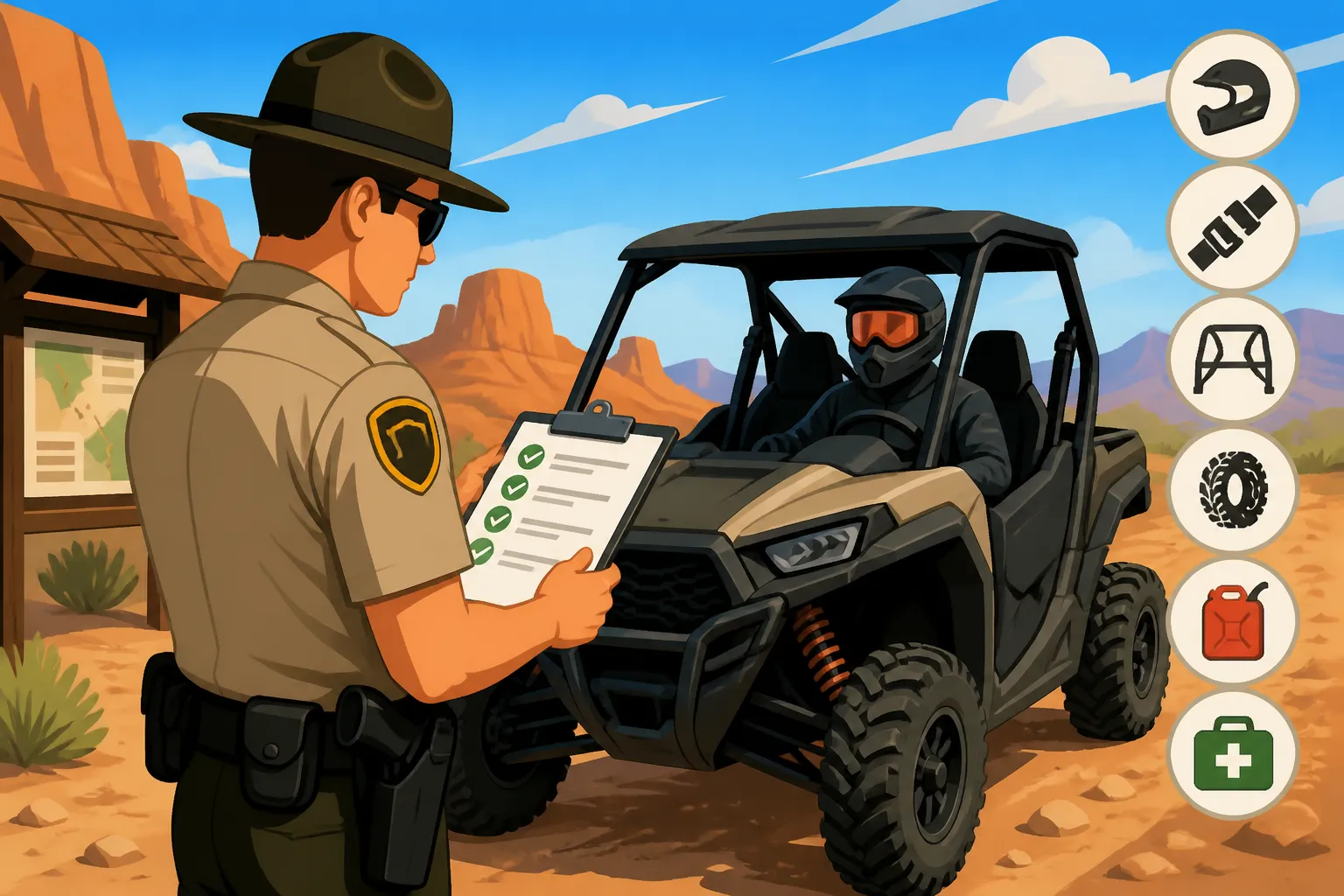
There's nothing quite like the rush of hitting a Utah trail on your ATV or UTV, but that excitement can quickly turn to anxiety when you see a trooper ahead. Many riders worry about whether their paperwork is in order or if their machine is compliant with all the rules. This guide is here to demystify exactly what Utah law enforcement officers are looking for when they conduct a stop or a spot check at a trailhead, helping you ride with confidence and avoid unnecessary fines.
The Essentials: Registration, Decals, and Plates
When you're out on Utah's incredible trails, the first thing a trooper is likely to check on your off-highway vehicle (OHV) is its legal status. This isn't just about collecting fees; it's how the state keeps track of machines, funds trail maintenance, and ensures a certain level of accountability on public lands. Having your registration in order is your ticket to hassle-free riding.
Current Registration and Decals
Every OHV operating on public lands in Utah must be properly registered, and that means having a current registration decal prominently displayed. These decals change color each year, making it easy for a trooper to spot if your registration is up to date from a distance. You'll typically find the decal on the left-rear side of your machine, visible and unobstructed. It's a small sticker, but it carries a lot of weight.
An expired registration isn't just a minor oversight; it's a violation that can lead to a fine. Imagine you've driven hours to a popular spot like Sand Hollow, excited for a day of riding, only for a trooper to inform you that your decal expired last month. Not only is it a financial hit, but you might also be told to cease riding until your registration is renewed, effectively ruining your trip. Troopers are trained to look for these details, and they often conduct checks at popular staging areas precisely because it's where many riders gather. If you're unsure where yours goes, check out [Utah OHV Decals and Where They Go] for specifics.
The state relies on these registration fees to maintain the trails we all love, so keeping your registration current is a vital part of being a responsible rider. Many riders forget to renew in the off-season, only to discover their lapse when they're already at the trailhead, ready to unload. Make it a habit to check your decal's expiration date before you even load your machine onto the trailer. If you're behind, understanding [Renewing Your Utah OHV Registration] can help you get back on track quickly, though it won't help you if you're already caught with an expired tag. The penalties can vary, but generally, [The Fine for an Expired OHV Registration in Utah] is something every rider wants to avoid.
Displaying Your License Plate Street-Legal Machines
If you've gone the extra mile to make your OHV street legal, there's an additional layer of compliance that troopers will scrutinize: your license plate. A street-legal OHV is expected to adhere to many of the same rules as any other motor vehicle when it's on public roads. This includes proper display of a valid, illuminated license plate. The plate must be securely mounted, clearly visible from the rear, and if you're riding after dusk, it must have a working license plate light.
Many riders, fresh from their [Making a UTV Street Legal in Utah] conversion, might focus heavily on the turn signals and mirrors but overlook the finer details of plate display. An officer on a patrol through a town like Moab or Kanab, where street-legal OHVs are common, will definitely notice a missing or unlit plate. It's not uncommon for a trooper to initiate a stop if they can't clearly read your plate, especially at night. This isn't meant to be punitive; it's a matter of public safety and vehicle identification.
Think about it: just like a car, your OHV needs to be identifiable by its plate number when on the road. If your plate is tucked away, covered in mud, or your plate light is out, it hinders that identification. This can lead to a roadside interaction that could have been easily avoided with a quick pre-ride check. Getting your machine street-legal involves many specific components; ensure you’ve covered them all by reviewing [Utah Street-Legal ATV Equipment Requirements]. For a closer look at ensuring your plate is properly displayed and visible after dark, understanding [License Plate Lights and Mounting in Utah] is crucial.
Rider Compliance and Equipment
Beyond the paperwork, a Utah trooper is also keenly interested in the safety of the riders and the mechanical readiness of the machine itself. This isn't just about enforcement; it's often about preventing accidents and ensuring everyone can enjoy the trails safely. Knowing these rules beforehand can save you a lot of grief.
Helmets and Age Restrictions
Utah has clear rules regarding helmets, particularly for younger riders. If anyone under the age of 18 is operating or riding as a passenger on an OHV on public land, they are legally required to wear a helmet. This is a non-negotiable safety measure designed to protect our youth, and troopers take it very seriously. It’s a common sight at trailheads for officers to observe arriving groups, making sure the kids are geared up correctly.
Parents and guardians are responsible for ensuring that minors comply with these rules. Imagine pulling into a staging area, your excited 12-year-old ready to hit the dirt on their quad, but without a helmet. A trooper observing this scenario will likely approach and inform you of the violation. Not only will you face a potential citation, but your child may not be allowed to ride until they have appropriate head protection. Understanding [Helmet and Age Rules on Utah Roads] provides more context, and if you're curious about driving age, [Age to Drive a Street-Legal ATV in Utah] covers that ground. It's also worth noting the specific rules for young passengers, which can be found in [Kids Riding as Passengers on Utah Roads].
Safety Gear and Machine Readiness
A trooper's check goes beyond just helmets; they'll also look at basic safety equipment and the overall condition of your machine. One of the most critical items, especially in Utah's dry climate, is a spark arrestor. This device, usually integrated into your muffler, prevents hot carbon particles from escaping and potentially starting a wildfire. It's a mandatory piece of equipment, and riding without one isn't just illegal; it's a serious environmental hazard.
Another area of focus is noise. Utah, like many states, has noise ordinances for OHVs. Troopers might carry decibel meters or simply use their experience to identify machines that are excessively loud. Modifications to exhaust systems that remove baffles or spark arrestors often lead to noise violations. Furthermore, basic operational safety features like working headlights, taillights, and functional brakes are expected. While not always a specific "check," a trooper will notice if your lights aren't working during a stop, especially if it's getting dark.
In dune areas like Sand Hollow or Little Sahara, one crucial piece of equipment that troopers actively look for is a whip flag. These tall, brightly colored flags increase visibility in the undulating terrain, helping to prevent collisions, especially over blind dunes. A missing whip flag in these designated areas is a quick way to get pulled over. For details on these requirements, especially if you plan to ride the dunes, check out [Whip Flags on the Road and on the Dunes]. For more information on preventing noise complaints, [Horns, Mufflers and Utah Noise Limits] is a useful resource.
Documentation and Ownership Verification
Beyond the physical aspects of your machine and gear, troopers also want to ensure that you are the rightful owner or have permission to operate the OHV. Having your documentation readily accessible is key to a swift and pleasant interaction with law enforcement. It provides immediate proof and helps clear up any potential misunderstandings.
Proof of Ownership and Registration Card
When a trooper stops you, whether for a routine check or a specific concern, they will almost certainly ask for your registration card. This little piece of paper is your official proof that the OHV is registered in your name (or the name of the owner) and that all necessary fees have been paid. It contains vital information like the VIN, make, model, and the owner's name. It's not just a formality; it's a core component of your legal riding status.
While a physical card is ideal, Utah does recognize digital proof of registration. This means a clear photo of your current registration card on your phone can suffice. However, relying solely on your phone can be risky if your battery dies, you lose signal in a remote area, or your screen is damaged. It's always best practice to carry a physical copy, perhaps laminated, in a waterproof bag on your machine. For more on what papers to carry, read [What Paperpaper Utah Riders Must Carry], and for specifics on digital proof, see [Carrying Digital Proof of Registration on the Trail]. If you're wondering about the validity of a photo, [Is a Photo of Your Registration Enough?] offers more insights.
For those who may be borrowing a friend's machine or riding as part of a group, having written permission from the owner can be incredibly helpful. While not strictly required by law for every scenario, it can smooth over any questions about stolen vehicles. Services like LawDepot can assist in creating simple, legally sound documents such as bills of sale or permission slips, which could be beneficial for record-keeping and proving legitimate possession if a trooper has questions. This adds an extra layer of peace of mind, especially if the owner isn't present.
Non-Resident Permits and Education Certificates
If you're visiting Utah from out of state, the rules for your OHV extend beyond just your home state's registration. Utah requires non-resident OHV users to purchase a special permit to ride on public lands, regardless of whether your machine is registered in another state. Troopers are well aware of this requirement, especially in popular tourist areas like Moab, Sand Hollow, and the Paiute Trail.
This permit helps fund Utah's trail system, which out-of-state riders benefit from. Failing to have one can result in a citation and being told to leave the trail. It's a common misconception that if your machine is legal in Arizona or Colorado, it's automatically legal in Utah. That reciprocity ended, and now the [Utah's Non-Resident OHV Permit Explained] is a must-have for visitors.
Additionally, for younger riders, an OHV education certificate is often required. Riders under 16 must complete an approved OHV safety course to operate an OHV on public land. Even some adult riders benefit from these courses. Troopers may ask for proof of this certificate, especially if they see a young rider. While LawDepot doesn't provide these certificates, keeping good records of your education certificates is just as important as your registration. For details on the education requirement, refer to [The Utah OHV Education Certificate], and if you're an out-of-state rider wondering who exactly needs the permit, [Who Needs a Utah Non-Resident OHV Permit] has the answers.
Common Misunderstandings and How to Avoid Fines
Sometimes, riders genuinely misunderstand the rules, leading to unintended violations. Troopers aren't just looking for blatant disregard for the law; they also address situations where riders are simply misinformed. Being proactive and understanding these nuances can save you from a frustrating encounter.
The "Private Land Only" Loophole
One of the most frequent misconceptions among OHV owners is the "private land only" loophole. Many riders believe that if their machine is primarily used on private property, like their farm or cabin land, they don't need to register it, even if they sometimes cross or utilize public roads or trails to get there. This is a crucial point of misunderstanding that often leads to citations.
The moment your wheels touch public land—whether it's a designated OHV trail, a county road open to OHVs, or even just crossing a short strip of public property to access another parcel of private land—your machine must be registered. Utah's OHV laws are clear: if you are on public land, state registration is required. Troopers patrol these access points precisely because this is where many riders unknowingly cross the line into non-compliance. Don't assume that because you're "just quickly crossing" a public section, you're exempt. For a deeper dive into this specific issue, [Private-Land-Only Machines and Utah Registration] and [Riding a UTV You Only Use on Your Own Land] offer valuable clarification.
Know Before You Go: Local Ordinances and Trail Rules
Utah's state OHV laws are comprehensive, but they are often supplemented by local county and city ordinances, especially in popular riding destinations. A state trooper might also be enforcing these local rules, which can vary significantly from one town to another. For example, Moab has specific speed limits for OHVs on city streets and strict noise ordinances. What might be perfectly legal on a remote forest trail could earn you a citation on Main Street in a trail town.
These local rules cover things like hours of operation, noise levels, specific parking regulations, and designated routes within city limits. A trooper will be familiar with these nuances and will enforce them to ensure harmony between OHV recreation and local community life. The responsibility falls on the rider to research and understand these local regulations before arriving. While LawDepot doesn't provide local ordinances, having a clear understanding of legal documents and terms can assist you in reviewing such ordinances on official county or city websites before your trip. This proactive approach ensures you're not caught off guard by a rule you didn't know existed.
Ignorance of the law is never a defense. Imagine planning a fun evening ride through a small town to grab dinner, only to get pulled over for exceeding a posted OHV speed limit or for your UTV's exhaust being too loud according to local rules. These situations can quickly turn an enjoyable trip into a costly one. Always check the local OHV rules for your destination. Resources like [Moab's Noise Ordinance and What It Measures] and [City and County OHV Rules Across Utah] are excellent starting points for understanding these varying local regulations.
Here's a quick summary of what a Utah trooper will generally look for:
| Category | Item Checked | Why It's Important | What Happens If Missing/Incorrect |
|---|---|---|---|
| Machine Registration | Current OHV Decal | Proves machine is registered and fees are paid | Fine, possible impound, unable to ride |
| Valid Registration Card (proof) | Links machine to owner, confirms registration | Fine, difficulty proving ownership, potential impound | |
| Street-Legal (if applicable) | Valid License Plate & Lighting | Required for road use, proves street-legal conversion | Fine, traffic citation, unable to ride on roads |
| Rider/Passenger | Helmet (for under 18) | Safety, compliance with age-based laws | Fine for guardian, rider cannot operate machine |
| OHV Education Certificate (age-based) | Proves rider completed mandatory safety training | Fine for guardian, rider cannot operate machine | |
| Equipment | Spark Arrestor | Prevents wildfires, legal requirement | Fine, environmental hazard |
| Appropriate Muffler | Ensures noise levels are within legal limits | Fine | |
| Whip Flag (in designated dune areas) | Visibility and safety in open sand riding areas | Fine, increased accident risk |
Disclaimer
This article is for general informational purposes only and does not constitute professional advice. Laws, prices and regulations vary by location and change over time. Consult a qualified professional for guidance on your specific situation.