Registering a Machine You Inherited in Utah
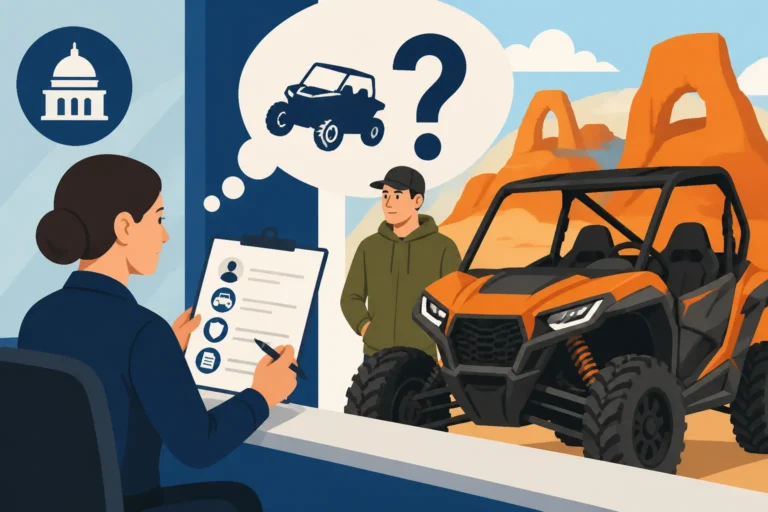
Discovering that you've inherited an ATV or UTV from a loved one can bring a mix of emotions – grief, nostalgia, and perhaps a little excitement at the thought of hitting Utah's incredible trails. But then the practical side kicks in: how do you actually get this machine legally into your name and ready to ride? The paperwork for an inherited off-highway vehicle (OHV) can feel like a daunting maze, especially when you're already navigating the complexities of an estate. This guide is here to walk you through every step, helping you understand the unique requirements for registering an inherited ATV or UTV in the Beehive State, so you can honor your loved one's legacy by enjoying the open air.
Understanding the Initial Steps When You Inherit an OHV
When an ATV or UTV becomes part of an estate, your first actions can really set the tone for how smoothly the rest of the registration process will go. It's often not as simple as just getting the keys; there are legalities to untangle, and it's best to approach them systematically, especially during what can be an emotional time.
The Importance of a Will or Trust
The presence, or absence, of a will or trust is one of the most critical factors determining how an inherited OHV transfers ownership. A valid will is a legal document that clearly outlines the deceased's wishes regarding their assets, including specific items like an ATV or UTV. If the machine is explicitly mentioned in the will, or if all personal property is bequeathed to a specific heir, then the path forward is usually clearer, guided by the instructions within that document. The personal representative or executor named in the will is responsible for carrying out these wishes, often with oversight from a probate court. This process results in "Letters Testamentary," which are official court documents granting authority to the executor to transfer assets.
However, if your loved one passed away without a will – a situation known as dying "intestate" – things can become a bit more complicated. In this scenario, state law dictates how assets are distributed among heirs. Utah has specific intestacy laws that prioritize spouses, children, and other close relatives. Without a will, you'll likely need to go through a probate court process to establish legal heirship, which can involve obtaining "Letters of Administration" from the court. This is where the frustration can really build, as you might feel caught in a slow-moving legal process when all you want to do is get the machine registered. Sometimes, for smaller estates, states allow for simplified processes like an affidavit of heirship, which can attest to who the legal heirs are without full probate. Services like LawDepot offer templates for these kinds of legal affidavits, which can be a real lifesaver in these situations, helping you draft the necessary declarations.
Locating Existing Paperwork
Once you have a handle on the legal framework, your next critical step is to find all existing paperwork related to the inherited OHV. This includes the original title certificate, current or expired registration documents, and any past bills of sale or purchase agreements. The title certificate is the ultimate proof of ownership, and its presence will significantly streamline your journey at the DMV. It's usually a small, distinct document, often kept with other important papers like vehicle titles, property deeds, or financial statements.
Think about where your loved one kept important documents – a fireproof safe, a dedicated filing cabinet, or even a drawer in their desk. Don't be afraid to dig deep, as these documents are gold. What if you can't find the title? This is a surprisingly common problem and one that can feel like a major roadblock. If the original title is missing, you'll need to apply for a duplicate title. This process usually requires the legal heir (or the executor with court authority) to fill out specific forms and often involves a fee. It's an extra step, but a necessary one before you can proceed with transferring ownership and registering the machine. You might want to review resources like [Replacing a Lost ATV Title in Utah] to understand what that process entails. Even old registration cards can offer valuable information, such as the Vehicle Identification Number (VIN), which is essential for identifying the machine and initiating any paperwork.
Gathering the Crucial Documents for Transfer
With an understanding of the initial legal steps and a thorough search for existing paperwork, it's time to compile all the necessary documents for the actual transfer of ownership and registration with the Utah Division of Motor Vehicles (DMV). This stage requires meticulous attention to detail to avoid delays.
The Death Certificate and Proof of Inheritance
The death certificate is an absolute non-negotiable document. You'll need an official, certified copy of the death certificate to prove that the original owner is deceased. The DMV will require this to initiate any transfer of ownership. Beyond the death certificate, you'll need proof that you are the rightful heir or the authorized representative of the estate.
This proof can take several forms, depending on whether there was a will:
- If there was a will: You'll typically provide "Letters Testamentary" or a certified copy of the court order appointing you as the executor or personal representative. These documents formally authorize you to act on behalf of the deceased's estate, including transferring the OHV title.
- If there was no will: You'll usually need "Letters of Administration" issued by a probate court, which formally appoints you as the administrator of the estate. In some cases, for smaller estates that fall below a certain monetary threshold, Utah law might allow for an "Affidavit of Heirship" or a "Small Estate Affidavit." These affidavits, often prepared by an attorney or using templates from legal services like LawDepot, legally declare your relationship to the deceased and your right to inherit the property. It's crucial to confirm Utah's specific requirements for small estate affidavits, as the value of the OHV might impact whether you qualify for this simplified process.
The Original Title and Its Condition
Having the original title certificate is paramount. Ideally, it will be a clean title in the deceased owner's name. However, sometimes titles can present challenges:
- Lost Title: As discussed, if the title is missing, the executor or legal heir will first need to apply for a duplicate title in the deceased's name before it can be transferred. This is why digging for that original document is so important.
- Endorsed Title: Occasionally, you might find a title that the deceased owner had already signed over to someone else (endorsed) but never completed the sale. This scenario can create significant headaches, as the DMV will typically consider the machine already sold. If this is the case, you may need to prove the sale was never completed or that the person it was endorsed to is not claiming ownership. It can involve additional affidavits.
- Older Machines: For very old machines, especially those manufactured before 1988, Utah's titling rules can be different. They might not have required a title at all, or the title might be less formal. If you're dealing with a vintage quad, understanding [Registering a 1987 ATV in Utah] or [Title Rules for a 1990s Four-Wheeler in Utah] will be incredibly helpful. You might be able to register it with a bill of sale and an affidavit of ownership if a title was never issued or is unavailable.
Regardless of its condition, the physical original title, or proof of a duplicate title application, is a foundational piece of your paperwork puzzle.
Bill of Sale and Uniform Fee Calculations
While an inheritance isn't a typical "sale," the DMV still needs a clear value for the OHV to calculate the applicable uniform fee. Utah levies an age-based uniform fee on OHVs, rather than traditional property tax. This fee is assessed annually and is based on the vehicle's age. Even if no money changes hands, you'll often need to provide a statement of value or a nominal "bill of sale" indicating a zero or very low transfer price if it's strictly an inheritance. This allows the DMV to accurately apply [The Age-Based Uniform Fee on Utah OHVs].
If you are transferring the machine as a gift between family members, a bill of sale may still be useful to document the transfer, even if the price is $0. LawDepot can provide customizable bill of sale templates that can be adapted for a transfer of ownership due to inheritance, clearly stating the nature of the transaction. You'll also want to understand [Utah ATV Sales Tax and Uniform Fees]. While sales tax is typically exempt for inherited property, confirming this with the DMV is always a good idea. Having a clear, documented value ensures that all fees are correctly calculated and that there are no surprises down the line.
Navigating the Utah DMV Registration Process
Once you've diligently gathered all your legal documents and the OHV's paperwork, it's time to face the final frontier: the Utah DMV. This step is about presenting your case clearly and completely to get that coveted registration and title in your name.
Completing the Application for Utah Title
The primary form you'll need to complete is the Application for Utah Title. This form asks for details about the vehicle (VIN, make, model, year), the previous owner (the deceased), and, most importantly, you as the new owner. When filling it out, you'll indicate that the transfer is due to inheritance. You'll need to sign the application, affirming that all information provided is accurate.
Depending on the circumstances, particularly if there are any discrepancies in the VIN or if the machine has come from out of state without a clear title, a VIN inspection might be required. This is a physical verification of the Vehicle Identification Number by a law enforcement officer or an authorized DMV agent to ensure it matches the paperwork and to check for signs of tampering. It's not always necessary for a straightforward inheritance with a clean title, but it's good to be aware of the possibility. You can find more information on this process in [VIN Inspections for Utah ATV Paperwork]. Take your time filling out the form; any errors can lead to delays and multiple trips to the DMV.
Payment of Fees and Taxes
Even with an inherited machine, there are fees associated with getting it titled and registered in your name. These typically include:
- Title Fee: A flat fee for issuing a new title certificate.
- Registration Fee: This is the annual fee to operate your OHV on designated public lands and trails. The amount can vary slightly depending on the type of OHV.
- Uniform Fee: As mentioned earlier, this is Utah's equivalent of a property tax on vehicles, calculated based on the OHV's age.
- Decal Fee: A small fee for the physical OHV decal that must be displayed on your machine.
Regarding sales tax, inherited property is generally exempt from sales tax in Utah. However, it's always wise to confirm this directly with the DMV or a tax professional to avoid any misunderstandings. The total cost will be calculated at the DMV counter. Remember, these are separate from any probate court fees you might have incurred to obtain Letters Testamentary or Letters of Administration. Understanding [Utah ATV Sales Tax and Uniform Fees] can help you budget for these expected costs. The frustration of unexpected expenses can be real, so having a clear picture beforehand is key.
What to Expect at the DMV
Visiting the DMV, especially for a complex transaction like an inherited OHV, can be intimidating. The key to a smooth visit is preparation.
- Bring Everything: Gather every document you've compiled: the certified death certificate, proof of inheritance (Letters Testamentary, Letters of Administration, or Affidavit of Heirship), the original title (or duplicate title application proof), the completed Application for Utah Title, and your personal identification (driver's license or state ID). It’s also wise to bring multiple copies of everything, just in case. A full list of what to expect can be found in [Documents to Bring to the Utah DMV for an ATV].
- Make an Appointment: Many Utah DMV locations offer online appointment scheduling. This can significantly reduce your wait time and ensure you get dedicated time with a clerk. If you walk in without an appointment, be prepared for a potentially long wait.
- Be Prepared for Questions: The DMV clerk may have questions about the deceased, your relationship, and the circumstances of the inheritance. Answer clearly and patiently.
- Patience is a Virtue: Even with an appointment, processing can take time. The clerk will review all your documents meticulously. Once approved and fees are paid, you'll typically receive a temporary registration, and your new title certificate will be mailed to you later. The entire process, from visit to receiving the title, can vary, so manage your expectations regarding [How Long Utah OHV Registration Takes to Process].
By being organized and patient, you can successfully navigate the DMV and emerge with your inherited OHV legally registered and ready for new adventures.
Common Challenges and Solutions
Even with careful preparation, registering an inherited OHV can sometimes present unique hurdles. Knowing what these challenges might be and how to approach them can save you a lot of stress and multiple trips to the DMV.
When the Deceased Owner Never Titled the OHV
This is a scenario that can feel like a genuine headache: you've inherited a machine, but for whatever reason, the previous owner never officially titled it in their name. Perhaps it was a very old machine, purchased before titling was common or required, or a private sale where the title paperwork was simply overlooked. Utah has specific rules for machines that were never titled anywhere, or for older models. For example, [Registering a 1987 ATV in Utah] or [Title Rules for a 1990s Four-Wheeler in Utah] might apply if you're dealing with an older quad.
In these cases, you won't have an original title to transfer. Instead, you'll likely need to provide robust alternative proof of ownership. This typically involves:
- Bill of Sale: If a bill of sale exists from when the deceased purchased the machine, even if it's old, it's vital.
- Affidavit of Ownership: You (as the heir) may need to complete an affidavit of ownership, stating how the deceased acquired the machine, how long they owned it, and that there are no known liens or disputes. This affidavit will need to be notarized. Legal services like LawDepot offer templates for general affidavits that can be customized for such a purpose, helping you create a formal document to present to the DMV.
- Statements of Fact: Sometimes, a "Statement of Fact" form is required, detailing the history of the vehicle and why a title was never issued.
- VIN Inspection: A VIN inspection is almost certainly required in this situation to verify the machine's identity.
The DMV will review these documents to determine if they can establish a clear chain of ownership and issue a first-time title in your name as the heir. This process often takes more time and requires more scrutiny than a simple title transfer. For more context, you can look into [Registering a UTV in Utah Without a Title].
Multiple Heirs and Joint Ownership
What if the inherited OHV is bequeathed to multiple family members, or if Utah's intestacy laws dictate that several people are legal heirs? This can create a situation of joint ownership. While it's certainly possible to register an OHV under multiple names, it requires coordination and agreement among all parties.
- All Owners on Title: Typically, all legal heirs who wish to claim ownership must be listed on the new title certificate. This means each person will need to provide identification and sign the necessary paperwork.
- Designated Primary Owner: For practical purposes, often one individual is designated as the primary contact or registered owner for mailing purposes, even if multiple names are on the title.
- Legal Agreement: It's highly advisable for multiple heirs to have a written agreement outlining the use, maintenance, and future sale of the OHV. While the DMV doesn't usually require this, it can prevent future disputes. Again, LawDepot might offer templates for co-ownership agreements that could be adapted for this purpose, providing a formal structure for your family's arrangement.
- One Heir Takes Ownership: Sometimes, one heir might "buy out" the others' share, or the other heirs might sign over their interest to one person. If this happens, you'll need additional documentation, such as a bill of sale (even for a nominal amount or as a gift) or a signed relinquishment of interest from each of the other heirs, typically notarized. You might find information in [Adding a Second Owner to a Utah OHV Title] useful, as the principles of adding apply similarly to listing multiple initial owners.
Dealing with Liens on the Title
An often-overlooked challenge is discovering that there's an outstanding lien on the inherited OHV's title. This means the previous owner used the OHV as collateral for a loan, and the loan has not been fully paid off. The lien holder (usually a bank or credit union) will be listed on the title.
- Lien Must Be Released: Before the OHV's title can be transferred into your name, the lien must be satisfied and released. This means the outstanding loan balance must be paid in full.
- Estate's Responsibility: Typically, the estate of the deceased owner is responsible for satisfying any debts, including vehicle loans. If the estate has sufficient funds, the loan will be paid off during the probate process.
- Obtaining a Lien Release: Once the loan is paid, the lien holder will issue a "lien release" document. This is a crucial piece of paper that you must present to the DMV, along with the title, to prove that the lien has been cleared. Without this, the DMV cannot transfer the title free and clear into your name.
- Personal Responsibility: If the estate doesn't have sufficient funds, or if you, as the heir, wish to keep the OHV, you might have to assume responsibility for paying off the remaining loan balance yourself. This is a significant financial decision.
Understanding [Lien Releases on a Used Utah Side-by-Side] can provide more detailed insight into this specific challenge. Always check the title for any listed lien holders before you assume the machine is free and clear. It's an important step to prevent future financial liabilities.
By understanding these potential challenges and preparing for them, you can navigate the process of registering your inherited OHV with greater confidence and efficiency. Remember that resources like LawDepot can assist with drafting some of the necessary affidavits and agreements, which can simplify the legal documentation aspect of an already complex situation.
| Scenario | Key Documents & Steps | Common Pitfalls & Solutions |
|---|---|---|
| Simple Inheritance (Will) | – Certified Death Certificate | Pitfall: Will doesn't explicitly name the OHV. |
| – Letters Testamentary / Court Order | Solution: Ensure the will covers "all personal property" or obtain a general heirship order. | |
| – Original Utah Title (if available) | Pitfall: Missing title. | |
| – Completed Application for Utah Title | Solution: Apply for duplicate title first. See [Replacing a Lost ATV Title in Utah]. | |
| Intestate Inheritance (No Will) | – Certified Death Certificate | Pitfall: Disagreements among heirs. |
| – Letters of Administration / Small Estate Affidavit | Solution: Mediate or seek legal counsel. Create a formal agreement if co-owning. | |
| – Original Utah Title (if available) | Pitfall: Proving legal heirship takes time. | |
| – Completed Application for Utah Title | Solution: Be patient, have all documents ready. LawDepot has affidavit templates. | |
| Lost Original Title | – All applicable inheritance docs (will/intestacy) | Pitfall: DMV won't transfer without a valid title. |
| – Application for Duplicate Title (in deceased's name first) | Solution: Apply for duplicate before attempting transfer. Adds time. | |
| – Completed Application for Utah Title | Pitfall: VIN discrepancies. | |
| Solution: Be prepared for a VIN inspection. | ||
| Outstanding Lien on Title | – All applicable inheritance docs (will/intestacy) | Pitfall: Inheriting a debt. |
| – Original Utah Title (showing lien) | Solution: The estate must pay off the loan and obtain a lien release from the lender. | |
| – Official Lien Release document | Pitfall: Lien holder is slow to provide release. | |
| – Completed Application for Utah Title | Solution: Follow up diligently with the lender. See [Lien Releases on a Used Utah Side-by-Side]. |
Remember, this process is about honoring your loved one's legacy by ensuring their machine is legally and safely transferred to your care. While it can be a maze of paperwork, breaking it down into manageable steps makes it entirely achievable. You're not alone in facing these frustrations, and with careful preparation, you'll soon be ready to enjoy Utah's incredible trails on your newly registered, inherited OHV. If you're looking to transfer a machine between living family members, the requirements are slightly different, so you might want to read [Transferring an ATV Title Between Family Members in Utah] for that specific process.
Disclaimer
This article is for general informational purposes only and does not constitute professional advice. Laws, prices and regulations vary by location and change over time. Consult a qualified professional for guidance on your specific situation.