When Utah Requires Insurance on an OHV
It can be incredibly confusing trying to figure out all the rules and regulations that come with owning an off-highway vehicle (OHV) in Utah. You just want to hit the trails, but the worry about what paperwork you need, or what you're missing, can really take the fun out of it. One question that often pops up, and causes a lot of head-scratching, is whether you really need insurance for your ATV or UTV in the Beehive State. This guide will cut through the noise and explain exactly when Utah requires OHV insurance and when it's just a really, really good idea.
Utah's Baseline Stance on OHV Insurance for Off-Road Use
Let's start with the most common scenario: you own an ATV or UTV, and you primarily use it for hitting the trails and playing in the dirt. You're not trying to drive it down Main Street, just enjoying the vast network of Utah's incredible backcountry. In this specific scenario, Utah's baseline law for off-highway use only machines is pretty straightforward, and it often surprises people.
No Mandatory Insurance for Off-Road Only OHVs
Believe it or not, for an OHV that is only registered and used for off-highway recreation in Utah, there is no statewide legal requirement to carry liability insurance. This means if you're out on the Paiute Trail or tearing up the dunes at Sand Hollow, and your machine isn't street-legal, the state doesn't mandate that you have an insurance policy specifically for that OHV. I know, it sounds a little wild, right? Especially when you consider how much damage these machines can do and how expensive repairs can be.
This often leads to a false sense of security for many riders. While the state might not require it, that doesn't mean you're immune to financial disaster if something goes wrong. Think about it: a crash with another rider, accidentally damaging someone's property, or even a single-vehicle accident that leaves your machine totaled and you with significant medical bills. Without insurance, all those costs fall squarely on your shoulders. It's a huge risk to take, even if it's technically legal for off-road use. This is one of those situations where "not required" absolutely does not mean "not necessary."
The Importance of Personal Responsibility Off-Road
Just because you're not mandated by the state to carry insurance for your off-road machine doesn't mean you're off the hook for any damage or injury you might cause. When you're out on the trail, you are still personally responsible for your actions. If you collide with another rider's UTV and cause significant damage, they can absolutely pursue you for the cost of repairs, medical bills, and any other losses. This can quickly escalate into a legal nightmare, with potential lawsuits that could wipe out your savings or future earnings.
Consider a scenario where you're riding a little too fast around a blind corner and clip another rider, sending their brand new side-by-side tumbling down an embankment. The damage is extensive, and the other rider suffers a broken arm. Even if you're the most careful rider, accidents happen. Without a dedicated OHV liability policy, you'd be looking at tens of thousands of dollars in repair costs, plus medical bills and potentially pain and suffering. This is where personal finance meets the wild world of OHV riding, and it can be a brutal collision. It's wise to consider obtaining a document like a [Bill of Sale Requirements for a Utah ATV Sale] or even a liability waiver if you ever let someone else ride your machine, to at least clearly define ownership and responsibilities, even if it doesn't replace insurance. While a resource like LawDepot can help you draft legally sound documents to formalize agreements or transfers, it doesn't provide insurance itself. It just emphasizes the legal implications of ownership and use.
When Insurance Becomes Absolutely Essential in Utah
While the baseline for purely off-road machines might be surprisingly lenient, there are very specific and common scenarios where OHV insurance isn't just a good idea, it's a non-negotiable legal requirement in Utah.
Making Your OHV Street Legal
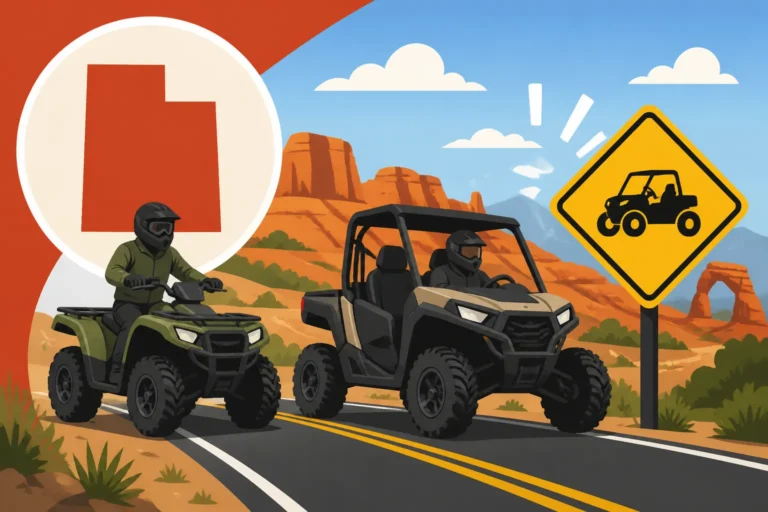
This is the big one. If you decide to convert your ATV or UTV to be street-legal in Utah, meaning you want to ride it on public roads and highways, then insurance becomes absolutely mandatory. The moment your machine hits that paved road, it's treated much like any other motor vehicle, and Utah law requires specific liability insurance coverage. This isn't just a suggestion; it's a legal obligation that comes with fines and penalties if you're caught without it.
The process of making your OHV street-legal involves a whole host of requirements, from specific equipment like turn signals, mirrors, and a horn, to passing an inspection and then, yes, providing proof of insurance. Think about it: you're sharing the road with cars, trucks, and motorcycles, and the potential for serious accidents dramatically increases. The state wants to ensure that if you cause an accident, there's a mechanism in place to cover the damages to other vehicles and any injuries to drivers or passengers. This protection extends not just to other drivers but also to your own financial well-being, shielding you from devastating out-of-pocket costs. You’ll definitely want to understand [Utah Street-Legal ATV Equipment Requirements] and what it means for your policy.
Specific Liability Requirements for Street-Legal OHVs
When you get street-legal insurance for your OHV, you'll need to meet Utah's minimum liability coverage limits, just like you would for a car. These limits specify the maximum amount your insurance company will pay for property damage and bodily injury in an accident you cause. It's typically split into three numbers: one for bodily injury per person, one for total bodily injury per accident, and one for property damage.
For example, a common minimum might be something like $25,000 for bodily injury per person, $65,000 for total bodily injury per accident, and $15,000 for property damage. These numbers might seem high, but in the event of a serious accident involving multiple vehicles or severe injuries, these minimums can be quickly exhausted. Many riders choose to carry higher limits than the state minimums to provide greater financial protection, especially considering the cost of modern vehicle repairs and medical care. Without this critical coverage, you could find yourself personally responsible for any amounts exceeding your policy limits, putting your assets at significant risk. This is a topic worth exploring in depth, especially as you look into [Insurance for a Street-Legal Machine in Utah].
When Leasing or Financing an OHV
Another common situation where insurance becomes a requirement is when you lease or finance your ATV or UTV. Just like with a car, if you don't own the machine outright, the lender or leasing company has a financial interest in it. They want to protect their investment, and a major way they do that is by requiring you to carry comprehensive and collision insurance. This type of coverage protects against damage to the OHV itself, whether it's from an accident, theft, vandalism, or natural disasters.
Even if you're only using the machine off-road and never intend to make it street-legal, a lender will almost certainly require this coverage. If your financed UTV is stolen from your garage or totaled in a rollover on the trail, the insurance policy will pay out to cover the loss, which in turn protects the lender's interest. Until that loan is paid off, the lender technically "owns" a piece of your machine, and they'll ensure it's protected. Skipping this insurance isn't just risky for you; it could be a breach of your loan agreement, leading to serious financial and legal consequences. Make sure you understand all the paperwork when [What a Utah Dealer Hands You at Delivery].
Types of OHV Insurance and What They Cover
Even when not explicitly required, understanding the different types of OHV insurance available can help you make an informed decision about protecting yourself and your assets. It's not just about meeting a legal mandate; it's about peace of mind.
Liability Coverage
This is the most fundamental type of insurance and what is typically required for street-legal machines. Liability coverage protects you financially if you are at fault for an accident that causes injury to another person or damage to their property. It's essentially your safety net against claims made by others.
- Bodily Injury Liability: This pays for medical expenses, lost wages, and pain and suffering for anyone you injure in an accident. If you accidentally hit a pedestrian or another rider, this part of your policy kicks in.
- Property Damage Liability: This covers the cost of repairing or replacing property you damage in an accident, such as another OHV, a fence, a parked car, or even a building. Imagine misjudging a turn on a gravel road and taking out a mailbox – property damage liability would help cover that.
Without liability coverage, all these costs would come straight out of your pocket. Even a minor incident can quickly rack up thousands of dollars in expenses, and a major one could be financially ruinous. While some liability might be covered under a homeowner's policy, it's often very limited for motorized vehicles, especially off-road. It's crucial to check with your home insurance provider to understand the specifics; many policies specifically exclude OHVs, particularly those registered for road use or with larger engine sizes.
Collision and Comprehensive Coverage
These two types of coverage work hand-in-hand to protect your own OHV from damage, regardless of who is at fault or the cause of the damage. They are almost always required if you have a loan on your machine.
- Collision Coverage: This pays for damages to your own ATV or UTV if it collides with another vehicle, an object (like a tree or a rock), or if it rolls over. If you misjudge a jump and land hard, bending the frame, collision coverage would help with the repair costs, minus your deductible.
- Comprehensive Coverage: This protects your OHV from damages not caused by a collision. This includes things like theft, vandalism, fire, natural disasters (hail, floods), and even hitting an animal. If your UTV is stolen from your trailer or catches fire due to an electrical issue, comprehensive coverage steps in.
These coverages are particularly important for newer, more expensive machines. The cost of replacing a modern side-by-side can easily exceed $20,000 or $30,000. Without collision and comprehensive, you'd be looking at that full replacement cost if your machine is totaled, even if it was completely out of your control. This is where the financial stakes get really high, especially if you're not in a position to easily replace a costly machine.
Uninsured/Underinsured Motorist Coverage
This type of coverage is often overlooked but can be incredibly valuable, especially if you're riding a street-legal machine. It protects you if you're involved in an accident with another driver who either doesn't have insurance (uninsured) or doesn't have enough insurance to cover your damages (underinsured).
- Uninsured Motorist (UM): Pays for your medical bills and possibly damage to your OHV if an uninsured driver hits you.
- Underinsured Motorist (UIM): Kicks in when the at-fault driver has insurance, but their policy limits aren't high enough to cover all your expenses. For example, if your medical bills are $50,000 and the other driver only has $25,000 in bodily injury coverage, UIM would cover the remaining $25,000.
Given that not everyone on the road, or even on the trail (if you're thinking about general liability off-road), carries sufficient insurance, UM/UIM acts as a critical safeguard for your own well-being. It prevents you from being stuck with huge bills just because the other party failed to adequately protect themselves. This can be particularly crucial if you're frequently riding your street-legal machine in areas with mixed traffic.
Medical Payments or Personal Injury Protection (PIP)
These coverages pay for your medical expenses and, in some cases, lost wages, regardless of who was at fault in an accident. They are typically considered "no-fault" coverages.
- Medical Payments (MedPay): Covers reasonable and necessary medical and funeral expenses for you and your passengers after an accident, up to the policy limits. This can include ambulance fees, hospital stays, and follow-up care.
- Personal Injury Protection (PIP): Offers broader coverage than MedPay, often including medical expenses, lost wages, and even essential services (like childcare if you're unable to perform tasks). The specifics of PIP can vary greatly by state and policy.
Even if you have health insurance, these coverages can be incredibly beneficial. They can help cover deductibles, co-pays, and other out-of-pocket expenses that your health insurance might not fully cover, or they can pay out more quickly than health insurance. For riders who spend a lot of time on trails where emergency medical services might be slow to arrive, having this extra layer of protection can be very comforting.
Navigating the "Gray Areas" and Best Practices
So, what about those tricky situations where the lines aren't so clear, or when insurance isn't required but is still heavily advised? Understanding these nuances and adopting best practices can save you a lot of grief.
When Your Homeowner's Policy Might or Might Not Cover You
Many OHV owners mistakenly believe their existing homeowner's or renter's insurance policy will fully cover their ATV or UTV. While some policies might offer very limited coverage, it's crucial to understand these limitations. Typically, homeowner's policies might provide a small amount of liability coverage if the OHV is used on your own property, but this coverage almost always disappears the moment you take your machine off your land and onto public trails or roads.
Furthermore, homeowner's policies rarely provide comprehensive or collision coverage for the machine itself when it's being operated, or even for theft if it's stolen away from your primary residence (e.g., from a trailhead parking lot or a cabin). It's incredibly important to call your insurance agent and explicitly ask about OHV coverage. Don't assume; verify. This conversation can often be the wake-up call that leads riders to purchase a dedicated OHV policy. You need to understand if [Does Home Insurance Cover a Utah ATV?].
The Value of Non-Required Insurance
Even if your OHV is solely for off-road use and you own it outright, getting a dedicated OHV insurance policy is almost always a wise investment. The cost of a good policy is often far less than the potential financial devastation of a major accident, theft, or natural disaster.
Think about these scenarios:
- Theft: Your brand new side-by-side, parked overnight at a trailhead while you camp, disappears. Without comprehensive coverage, you're out tens of thousands of dollars.
- Fire: A mechanical issue causes a fire that destroys your ATV in your garage. If your homeowner's policy doesn't cover motorized vehicles, you're looking at a total loss.
- Collision with another OHV: You collide with another rider on a blind corner. You're both at fault, and both machines are heavily damaged. Without liability, you're paying for their damage, and without collision, you're paying for your own.
- Single-Vehicle Accident: You're pushing your limits a bit, flip your UTV, and it's completely totaled. Collision coverage saves you from replacing it out of pocket.
The peace of mind that comes with knowing you're protected against these common occurrences is invaluable. While it might seem like an extra expense, it's often a small price to pay to protect a significant investment and your financial future.
Reviewing and Updating Your Policy
Just like any other insurance, your OHV policy isn't a "set it and forget it" kind of deal. Your riding habits, the value of your machine, and even the laws can change. It's a good practice to review your policy annually with your agent.
Consider these points:
- Machine Upgrades: Have you added expensive accessories like a lift kit, new tires, winches, or a custom stereo system? These additions increase the value of your OHV, and you'll want to ensure your comprehensive and collision coverage reflects this higher value. Otherwise, in the event of a total loss, you might only be reimbursed for the stock value.
- New Riders: Are you letting new family members or friends ride your OHV? Make sure your policy covers occasional operators, or consider adding them if they'll be frequent users.
- Change in Use: Are you now trailering your machine long distances? Or perhaps considering making it street-legal? Your policy needs to adapt to your evolving needs and usage patterns.
- Location Changes: Moving to a new part of Utah or even a new state can impact your rates and coverage options.
Staying on top of your insurance means you're always adequately protected. Don't wait until after an incident to discover you're underinsured or have a gap in coverage. A proactive approach to your policy is a responsible approach to riding.
Choosing the Right Policy for Your Riding Style
Finding the right OHV insurance isn't a one-size-fits-all situation. Your policy should reflect your specific needs, the type of machine you ride, and how and where you ride it.
Factors Influencing Your Insurance Needs
Several key factors will influence what kind of insurance you need and how much it will cost. Taking these into account will help you tailor a policy that genuinely protects you.
- Machine Type and Value: A brand-new, high-performance UTV will generally require more comprehensive coverage and have higher premiums than an older, smaller ATV. The replacement cost of your machine is a primary driver of your collision and comprehensive premiums.
- Riding Frequency: Do you ride every weekend, or just a few times a year? More frequent riders might consider higher limits and more extensive coverage due to increased exposure to risk.
- Riding Location: Are you sticking to private land, designated OHV parks, or venturing onto street-legal roads? As we've discussed, road use immediately triggers mandatory insurance. Certain high-risk areas might also influence rates.
- Storage and Security: Where is your OHV stored when not in use? A machine stored in a locked garage will likely have lower comprehensive premiums than one parked in an unsecured driveway or public storage unit. Anti-theft devices can also lead to discounts.
- Your Driving Record: Just like car insurance, your driving record (for all vehicles, not just OHVs) can impact your rates. A clean record generally means lower premiums.
- Your Budget: While it's important to be adequately covered, you also need a policy that fits your financial comfort zone. Work with an agent to find the best balance of coverage and cost.
By honestly assessing these factors, you can have a much more productive conversation with an insurance provider, leading to a policy that truly fits your lifestyle and offers proper protection.
Working with Insurance Providers
There are many insurance companies that offer specialized OHV policies. It's not just about going with the cheapest option; it's about finding a reputable provider that understands the unique risks associated with off-road riding and offers comprehensive coverage.
When you're shopping for insurance, consider:
- Specialized OHV Coverage: Look for providers that offer policies specifically designed for ATVs, UTVs, dirt bikes, and snowmobiles. These policies often have features tailored to the unique risks of off-road vehicles.
- Bundling Options: Many insurers offer discounts if you bundle your OHV insurance with your car, home, or motorcycle policies. This can be a great way to save money while keeping all your policies with one provider.
- Customer Service and Claims Process: A good claims process is crucial. Read reviews and ask about how quickly claims are typically handled. You don't want to be left stranded after an accident with an unresponsive insurer.
- Available Discounts: Ask about discounts for things like safety courses, multi-vehicle policies, anti-theft devices, or even being a member of an OHV club. Taking an [The Adult OHV Education Course in Utah] might not just make you a safer rider, but potentially save you some money on your premium too.
- Agent Expertise: Work with an agent who understands OHVs. They can help you navigate the complexities of coverage, explain exclusions, and ensure you're getting all the discounts you qualify for.
| Scenario | Is Insurance Required in Utah? | Recommended Coverage Types | Why It Matters |
|---|---|---|---|
| Off-Road Use Only | No | Liability, Collision, Comprehensive, Medical Payments | Protects against personal liability, damage to your machine, and medical costs. |
| Street-Legal Conversion | Yes | Liability, Uninsured/Underinsured Motorist, Collision, Comprehensive | Mandatory for road use, covers accidents, theft, damage, and protects you from others. |
| Leased or Financed OHV | Yes | Collision, Comprehensive (at minimum, lender requirement) | Protects the lender's investment against damage or theft until paid off. |
| Borrowing a Friend's OHV | No (for borrower) | Verify friend's coverage, personal liability may apply | Ensure you're covered for any damage you cause or sustain. |
| Riding Out of State | Varies by state | Check state laws; always recommended | Other states may have different mandatory requirements. |
| On Private Land Only | No | Liability (for guest injuries), Collision, Comprehensive | Protects against liability for injuries on your property, damage to your machine. |
| Organized Events/Races | Varies by event | Event-specific liability, personal accident coverage | Many events require specific waivers and insurance; standard policies may exclude racing. |
Ultimately, whether required by law or not, robust OHV insurance is a cornerstone of responsible riding. It’s an investment in your safety, your machine, and your financial peace of mind, allowing you to focus on the joy of the ride rather than the worry of what might happen. If you're looking for legal documents related to transfers or liability, LawDepot provides templates that can help formalize agreements, but remember, these are distinct from insurance policies which provide financial protection.
Disclaimer
This article is for general informational purposes only and does not constitute professional advice. Laws, prices and regulations vary by location and change over time. Consult a qualified professional for guidance on your specific situation.