Texas Families Trailering to Utah
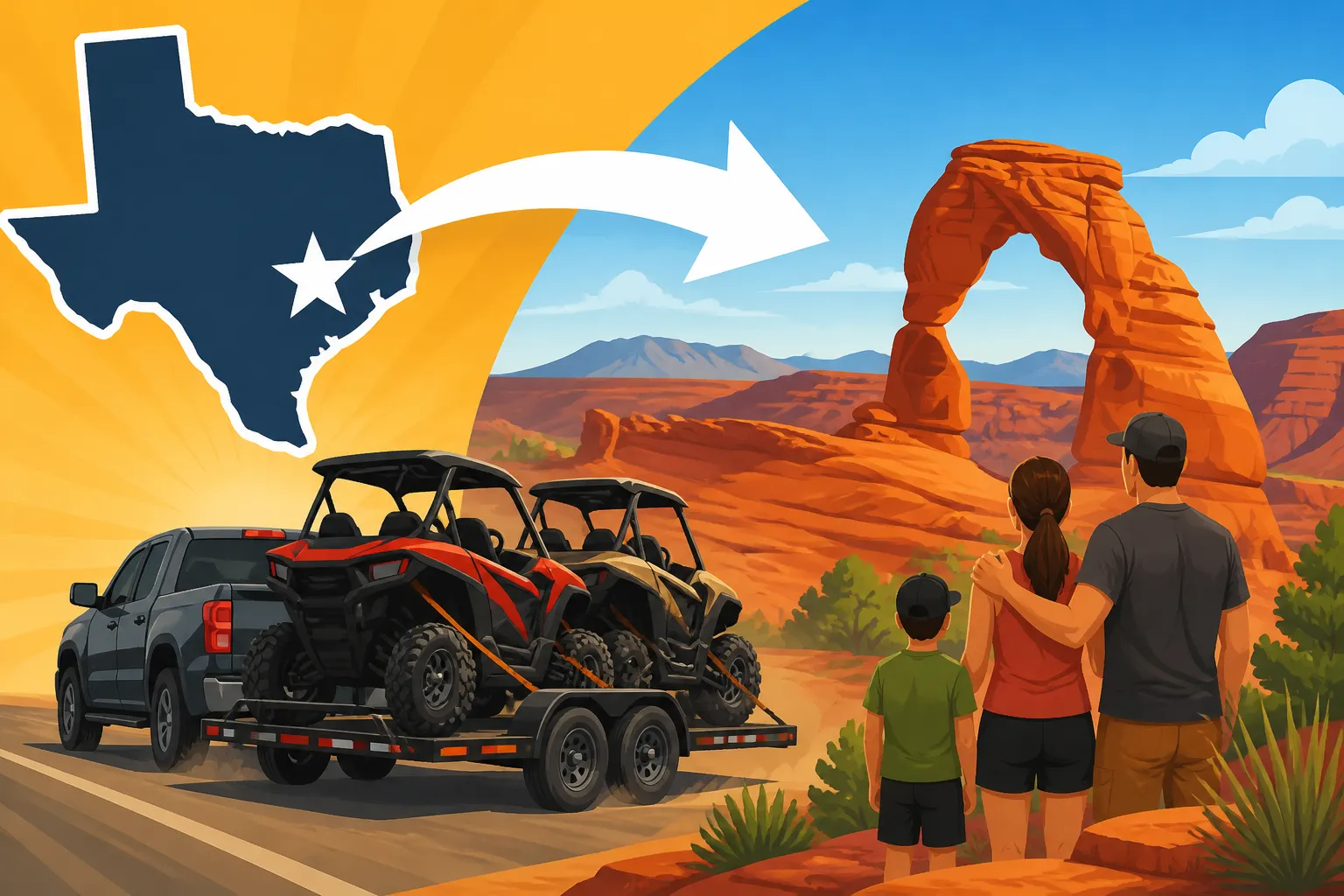
A Texas plate, title, or registration does not automatically cover an ATV or UTV on Utah trails. Families towing their machines across state lines need to sort out Utah’s nonresident permit, rider education requirements, and destination fees before unloading. Here’s how to prepare, what to carry, and what to check so paperwork doesn’t derail the first ride.
What Texas Families Need Before Riding in Utah
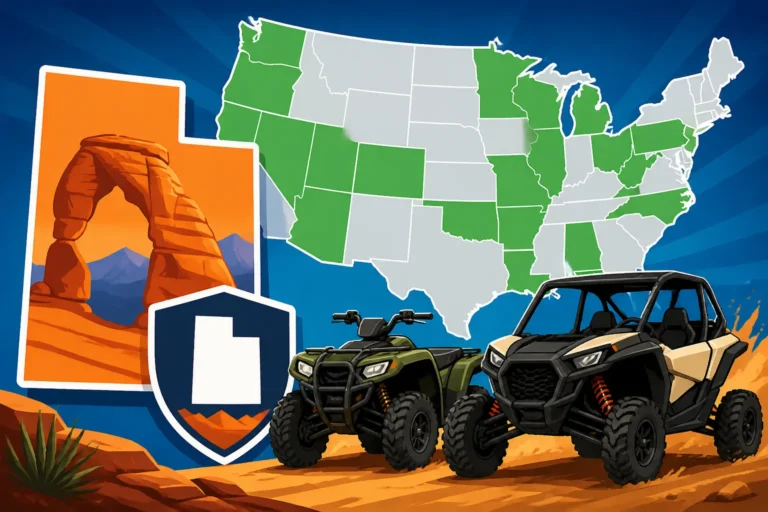
Utah does not treat an out-of-state OHV registration as a substitute for its nonresident permit. The state ended OHV reciprocity, so visitors should plan on obtaining the required Utah permit for each eligible off-highway machine they bring to ride on public land. The details are explained in Utah’s Non-Resident OHV Permit Explained and Utah Ended OHV Reciprocity: What Visitors Do Now.
This is separate from the paperwork that proves who owns the machine. A Texas title or other ownership record may help establish ownership, but it does not replace a Utah riding permit. Likewise, a Texas plate or registration does not automatically make an ATV or UTV legal on every Utah trail. Check Who Needs a Utah Non-Resident OHV Permit if you’re unsure how the rule applies to a specific machine.
| Item | What it is for | What it does not replace |
|---|---|---|
| Utah nonresident OHV permit | Allows an eligible visiting machine to meet Utah’s permit requirement | Trailhead, state park, or recreation-area entry charges |
| Texas ownership or registration records | Helps document ownership and the machine’s home-state status | Utah’s nonresident permit |
| OHV education certificate | Shows that a rider meets applicable education requirements | The permit for the machine |
| Riding-area payment or reservation | Covers access at a specific destination when required | The statewide nonresident permit |
| Street-legal registration, if applicable | Relates to road use under the relevant rules | Permission to use a closed route or access restricted land |
Before buying permits, make a list of every ATV and UTV that will be ridden. The permit requirement is tied to the machine, not just to the family or the person towing the trailer. If several family members take turns riding one machine, that does not mean each rider needs a separate machine permit. If the family brings several machines, check the permit process for each one.
A fully street-legal vehicle may be treated differently from a machine registered only for off-highway use, but a plate is not a blanket pass for trail riding. Confirm whether your exact registration and intended routes affect the permit requirement. Also check the rules for the land manager and recreation area: a route can have restrictions that a registration or permit cannot override.
Buy the permit through the current official Utah process and follow its instructions for dates, machine details, and display. Keep the confirmation and any receipt. If the permit must be displayed on the machine, attach it as directed rather than leaving it in the truck or trailer. The instructions and current purchase process are covered in Buying the Non-Resident Permit Online.
Check Rider Education Rules Before the Trip
The machine’s permit is only one part of the preparation. Utah has OHV education requirements for riders, and age can affect what a rider needs and whether an adult must supervise. Don’t assume a Texas course, certificate, or family riding practice automatically meets Utah’s requirements.
Check whether each person who plans to operate an OHV needs a Utah certificate or whether Utah accepts their existing certificate. The rules may vary by age and by the type of rider, so verify each rider separately. The practical starting points are The Utah OHV Education Certificate, Certificates From Other States Utah Accepts, and Utah OHV Rules for Visiting Families.
Families with children should be especially careful not to treat a child’s passenger eligibility as permission to operate a machine. Operating rules, supervision requirements, and passenger rules are separate questions. Before loading the trailer, make a simple list of who will drive, who will ride as a passenger, and which machine each person will use. If an adult expects to supervise, check the current rule for what that supervision must involve.
Keep required certificates accessible during the ride, not only in a folder at home. A phone image may be useful as a backup, but don’t rely on it as the only proof unless the applicable instructions allow digital proof. Remote trail areas may have poor or no cell service, and a dead battery can turn an easy document check into a frustrating problem.
A family document kit can include:
- Utah permit confirmations and any printed permits
- OHV education certificates for riders who need them
- Texas ownership or registration documents
- Identification and emergency contact details
- Copies of reservations or riding-area receipts
- A paper copy of essential information as a backup
Keep paperwork dry and easy to find. A sealable document pouch in the tow vehicle can hold the originals, while a separate copy travels with the riding gear. A waterproof pouch from an outdoor retailer or Amazon can be useful, but a basic sealed folder works if it keeps documents protected from dust, rain, and spills. Avoid leaving original documents loose in a machine that may be parked away from the truck.
Separate Statewide Permits From Destination Fees
A Utah nonresident permit addresses the statewide permit requirement; it does not necessarily pay for entry to a state park, a managed OHV area, a campground, or a particular trailhead. Families planning a multi-stop trip should treat each destination as a separate check. The area may charge an entry or day-use fee, require a reservation, have a camping charge, or impose other access rules. See Day-Use Fees at Utah OHV Destinations for the difference between those charges and the statewide permit.
This distinction matters when budgeting and timing. A family can have every machine’s permit ready and still need to pay an entrance charge at the destination. Conversely, paying at a gate or buying a campsite does not automatically satisfy the nonresident OHV permit requirement.
Before leaving Texas, confirm the following for each planned riding area:
- Whether the area is open to your type of machine
- Whether the route allows your machine’s width and configuration
- Whether there is a separate entry or day-use charge
- Whether camping or parking requires a reservation
- Whether there are seasonal closures or local restrictions
- Whether the area has special rules for flags, helmets, noise, or riding conduct
Don’t assume an open-looking route is open to OHVs. Utah riding areas can include land managed by different agencies, and access rules can change between adjoining roads or trail segments. Use current maps and check official notices before towing a long distance. Utah OHV Trail Maps and How to Read Them and Checking Utah Trail Conditions Before You Tow can help with that planning.
A route can also be temporarily closed even when the broader area is open. Weather, maintenance, seasonal protections, and land-management decisions can affect access. Check close to departure and again before unloading. If signs or posted notices at the site differ from an older map or a saved route, follow the current on-site restrictions.
For a family visiting several destinations, keep a small trip worksheet: area name, permit or entry details, reservation information, planned route, and the closest place to obtain help. This is particularly useful when the trailer carries multiple machines and the group is relying on a specific staging area. It also makes it easier to notice if an area’s cost or access requirement is separate from the statewide permit.
A Practical Pre-Trip and Trailhead Checklist
Doing the paperwork in a deliberate order reduces the chance of reaching Utah with an unready machine or rider. Use this sequence before departure.
- List every machine. Record the make, model, identifying details, and home-state documentation for each ATV or UTV. Confirm that the machine is eligible for the route and intended riding area.
- Check the Utah permit requirement. Determine whether each machine needs a nonresident permit. If a machine is represented as street legal, verify how that status applies to your intended use instead of assuming the plate settles the question.
- Buy and prepare the permits. Use the official Utah process, check the permit details, and follow the display instructions. Save confirmations somewhere accessible offline.
- Review rider education requirements. Check the rules for each driver, including children and riders with certificates from another state. Carry whatever proof is required.
- Confirm destination access. Check opening status, route restrictions, reservations, entry payments, camping, and any machine-specific limits for each stop.
- Pack the documents together. Keep the required permit and certificate available during the ride, with ownership documents and receipts protected in the tow vehicle.
- Inspect the trailer and machines. Secure machines properly and confirm that the trailer, tie-downs, tires, lights, and towing setup are ready for the journey. At the destination, unload only where permitted.
- Check conditions again. Review current closures and notices before committing to a route. Make sure everyone in the group knows the plan and where to meet if separated.
At the trailhead, keep the permit attached to the correct machine and make sure riders know where their certificates and other proof are stored. Don’t leave essential paperwork buried under luggage or in a locked truck if the group is riding away from the parking area. Carry only what is practical on the machine, but have a clear plan for producing required proof if asked.
Visitors can also review What Utah Riders Must Carry on Public Land and Carrying Your Certificate and Permit on the Trail for a broader checklist. The exact documents and display details can depend on the situation, so check current Utah instructions rather than relying on an old trip post or advice from a friend who rode several seasons ago.
The main planning point is straightforward: handle the Utah permit, rider education, and destination access as three separate tasks. Texas paperwork can help document a machine, but it does not automatically satisfy Utah’s visitor requirements. Confirm the current rules before departure, keep proof accessible, and verify the route and area conditions before unloading.
Disclaimer
This article is for general informational purposes only and does not constitute professional advice. Laws, prices and regulations vary by location and change over time. Consult a qualified professional for guidance on your specific situation.