Utah Dunes or Utah Mountains for a First Trip
Choosing between Utah’s dunes and mountains for a first ATV or UTV trip can feel harder than it should: one promises wide-open sand, the other cool forests and winding trails. The best fit depends on your riding experience, machine, season, and comfort with changing terrain. This guide compares both options and helps you plan a first ride that feels fun rather than overwhelming.
Utah dunes and mountains offer very different first rides
What riding Utah dunes feels like
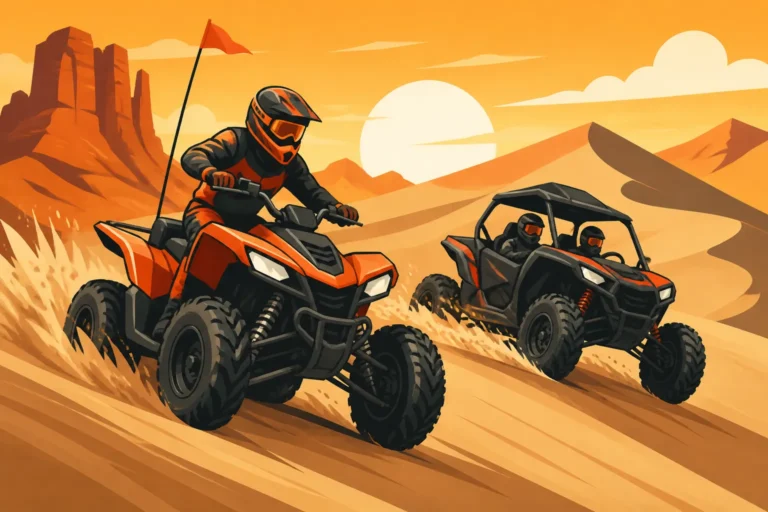
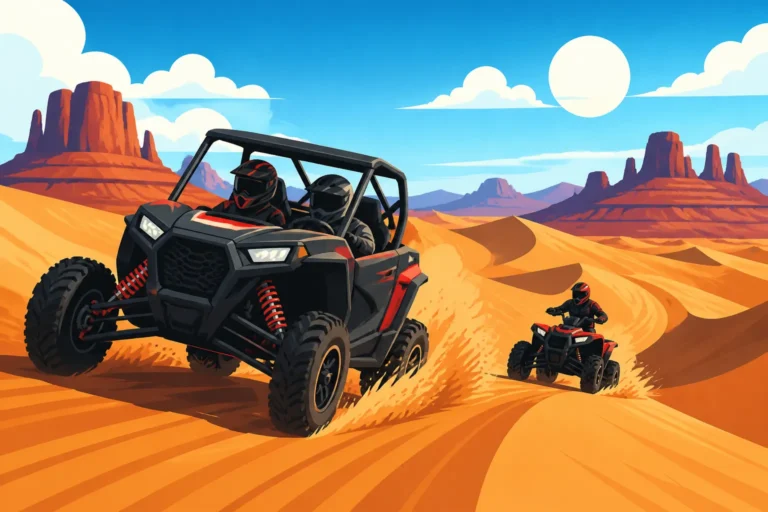
At places such as Sand Mountain near Hurricane, Little Sahara near Nephi, and Coral Pink Sand Dunes near Kanab, the landscape itself is the main event. You ride across open sand, climb and descend slopes, and choose routes that may change as wind reshapes the surface. It can feel freeing compared with following a narrow trail, but dunes are not automatically easy just because there are fewer trees.
Sand can be forgiving when a tire slips, but it also makes machines work hard. Soft sections, steep faces, and shifting traction can catch a new rider by surprise. A machine may bog down where the sand is deep, and a climb that looks straightforward from below can feel intimidating once you are partway up. On a UTV, the passenger may feel every abrupt turn or drop; on an ATV, balance and throttle control matter even on open ground.
Dunes also require awareness of other riders. People may approach from directions you cannot easily predict, especially near popular climbs and play areas. Keep a generous distance, avoid stopping where another rider is likely to crest a hill, and don’t assume you can see over a dune’s far side. A whip flag and other required equipment help make a machine more visible, but they do not replace cautious riding.
For a first visit, it can help to choose a flatter area and spend time learning how your vehicle responds before attempting a climb. Consider making the first session short. Sand riding can be physically tiring, and heat, wind, and dust can wear you down faster than expected. For destination-specific planning, start with Utah’s Sand Dune Riding Areas and Are Little Sahara’s Dunes Good for Beginners?.
What riding Utah mountains feels like
Mountain rides are generally about following routes through varied landscapes rather than picking a line across open sand. Central Utah’s Paiute Trail system, forest routes near Fishlake, and higher-elevation roads in the Uinta Mountains offer a different kind of first trip: tree cover, changing views, and routes that may pass through meadows, rocky stretches, or small communities.
A marked route can feel more predictable than an open dune field, but that doesn’t mean every mountain trail is beginner-friendly. Narrow sections, loose rock, steep grades, water crossings, and blind turns can all call for slow, deliberate driving. Some routes are remote, too. A trail that seems easy on a map may take longer than expected because of road conditions, elevation, traffic, or stops along the way.
Mountain conditions can change with altitude and season. A sunny day in a lower valley may feel cool higher up, and snow can linger on some routes while lower areas are already dry. Weather can also build quickly. Check trail conditions and closures before towing out, and make a backup plan in case a route is muddy, blocked, or outside your comfort zone. Best Utah Rides for a Family With Teenagers and Northern Utah OHV Areas Season by Season can help narrow down the kind of ride you want.
Compare the terrain before choosing your first destination
There isn’t one universally better choice. A first-time rider who wants space to practice may prefer a broad, manageable area of sand. Someone who enjoys scenic drives and wants a route to follow may feel more comfortable in the mountains. Your vehicle, group, and timing matter just as much as the landscape.
| Factor | Utah dunes | Utah mountains |
|---|---|---|
| Typical ride | Open sand, slopes, and changing lines | Marked or mapped routes with varied terrain |
| Main challenge for beginners | Soft sand, steep climbs, visibility, and other riders | Loose rock, grades, narrow sections, and route-finding |
| Good fit for | Riders who like open space and want to practice vehicle control | Riders who prefer scenery and a defined route |
| Weather concerns | Heat, wind, dust, and soft sand | Cooler temperatures, storms, snow, and muddy conditions |
| Planning focus | Sand conditions, visibility, machine capability, and nearby riding traffic | Route length, elevation, closures, fuel, and remoteness |
| First-trip approach | Start on flatter ground and avoid steep climbs | Choose a known, moderate route and turn around when needed |
Choose dunes if open space appeals to you
Dunes may suit you if you like the idea of exploring at your own pace and are willing to learn how sand changes your vehicle’s handling. A wide, less demanding area gives you room to practice gentle turns, gradual climbs, and controlled stops. It’s still important to avoid following faster riders into terrain you haven’t assessed yourself.
A dune trip also rewards good preparation. Bring water, eye protection, and a way to keep dust out of your face. Check your machine and tires before unloading, and make sure everyone understands where the group will meet if riders get separated. If you’re unfamiliar with the area, an offline map from a tool such as onX Offroad can help you understand nearby routes and orient yourself when cell service is unreliable. Confirm route access and closures through appropriate land managers rather than treating any app as the final authority.
Think honestly about how you respond to steep slopes. If a climb makes you uneasy, skip it. There is no requirement to ride the biggest face to have a worthwhile day. Families and mixed-skill groups often have a better time when they agree in advance that each person can choose an easier line or take a break without pressure.
Choose mountains if you prefer a route and changing scenery
Mountain riding may be a better match if you like following a route, stopping for views, and riding through a landscape that changes as you gain or lose elevation. The experience can feel more like a scenic journey than a practice session, particularly when the group chooses a route suited to its slowest or least experienced rider.
That said, route selection matters. Check distance, elevation, surface, and access before you leave. A long loop may sound appealing but can become stressful if a passenger is uncomfortable, a machine has a problem, or the group is moving slower than expected. Make sure the route has reasonable places to stop and consider choosing a shorter out-and-back ride for your first outing.
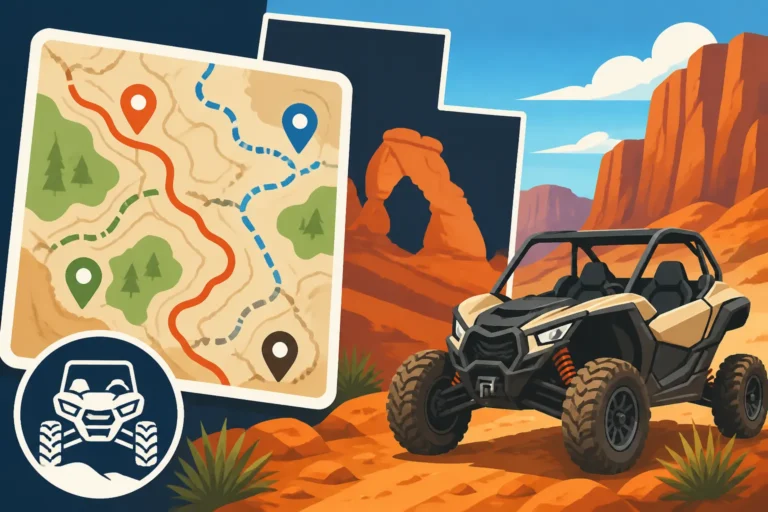
Maps are especially useful when a trail network has forks or connects to roads with different access rules. onX Offroad can help with route awareness and offline navigation, but download the information before you lose service and carry a backup plan. For map-reading basics, see Utah OHV Trail Maps and How to Read Them and Downloading Utah Trail Maps for Offline Use.
Plan a first ride around your group, not the postcard
Match the destination to your machine and passengers
A vehicle that works well on one kind of terrain may feel less comfortable on another. Sand places a steady demand on the machine and can require careful momentum management. Mountain routes may call for ground clearance, controlled braking, and enough capability for the route’s rocks or grades. Before choosing a destination, check your vehicle’s manual and be realistic about its condition, tires, and passenger capacity.
Passengers have a vote, too. A nervous passenger may enjoy a slow forest route more than a steep dune climb, while someone who gets motion sick might prefer a shorter ride with planned breaks. For a family outing, make sure everyone has properly fitting protective equipment and understands basic ride expectations: stay with the group, keep a safe following distance, and speak up before discomfort turns into a problem.
If your group has different ability levels, agree on a conservative pace. The most confident driver shouldn’t set the day’s speed for everyone else. Choose a destination with options to stop or shorten the ride, and avoid making a first trip depend on completing one ambitious loop. For extra planning ideas, see What to Carry on a Utah Day Ride and Water to Pack for a Summer Utah Ride.
Check access, conditions, and navigation before departure
Utah riding areas can involve different land managers, route designations, fees, and rules. Check the destination’s current access information, local restrictions, and any closures before you travel. A line shown on a map does not necessarily mean a route is open to your machine. If the ride crosses public lands or connects to a town, confirm what applies to each section.
Build a simple plan with a start point, intended route, turnaround time, and backup option. Share it with someone who is not riding with you. Before leaving, save maps for offline use and make sure your phone or navigation device is charged. onX Offroad may be useful for viewing mapped routes, but keep a separate record of the destination and don’t rely on cell coverage to navigate.
Pack for the conditions rather than the forecast at the trailhead. Dune riders may need to prepare for sun, wind, and blowing sand; mountain riders may need an extra layer and a plan for changing weather. In either setting, bring more water than you expect to use, basic recovery and repair supplies suited to your machine, and a way to contact help where possible. Checking Utah Trail Conditions Before You Tow and Trail Closures Utah Riders Should Check First are useful planning stops before loading up.
Make the first day easier with a conservative ride plan
Use a simple step-by-step plan
- Pick one riding area. Don’t try to combine multiple distant destinations on your first trip. Choose dunes or mountains based on the experience your group actually wants.
- Choose a manageable route or practice area. Look for terrain that leaves room to stop, turn around, or take a break without committing to a difficult section.
- Check access and conditions. Review land-manager information, closures, route rules, and weather. Confirm whether permits, fees, or machine requirements apply.
- Prepare the machine. Check fuel, tires, brakes, lights, belts or chains as applicable, and essential safety equipment. Address unusual noises or maintenance issues before the ride.
- Set group expectations. Choose a lead rider and a sweep rider if the group is large enough. Agree on spacing, hand signals, rest stops, and what to do if someone gets separated.
- Start slowly. Spend the first part of the day learning the terrain and how the vehicle behaves. Increase difficulty only if everyone feels comfortable.
- Turn around early if needed. Weather, fatigue, mechanical issues, or a route that feels harder than expected are all good reasons to change plans.
This approach can feel overly cautious when you’re excited to ride, but it usually leads to a better day. A first trip is partly about discovering what your group enjoys. You may find that the dunes are more tiring than expected, or that a mountain route with repeated rocky sections isn’t as relaxing as it looked in pictures. Adjusting the plan is not a failure; it’s how you learn what to book or explore next time.
Common first-trip mistakes to avoid
One common mistake is choosing a destination because it looks dramatic online, without checking whether the route suits your experience. A famous climb or long loop may be memorable for skilled riders but stressful for a new driver. Pick a route for the day you’re planning—not for the image you want to bring home.
Another is underestimating time and conditions. Riders may plan a long route and forget to account for unloading, stops, navigation, slow sections, and getting back before dark. In the mountains, elevation and weather can affect comfort; in the dunes, heat and dust can drain energy. Leave a margin in your schedule instead of riding until the last possible minute.
Finally, don’t assume a familiar-looking map or a friend’s old route description tells the whole story. Routes and access conditions can change, and a route that suited one machine may not suit another. Use onX Offroad or another mapping option as part of your preparation, check official information, and make decisions on the ground based on conditions you can see.
For a first Utah ATV or UTV trip, choose dunes if you want open terrain and are ready to learn sand riding at a cautious pace. Choose mountains if a mapped route, cooler scenery, and a more journey-like ride sound better. Either can be a great introduction when you select terrain that fits your group, check conditions, and give yourself permission to keep the day simple.
Disclaimer
This article is for general informational purposes only and does not constitute professional advice. Laws, prices and regulations vary by location and change over time. Consult a qualified professional for guidance on your specific situation.