Camping Inside Sand Hollow State Park
A Sand Hollow riding trip can unravel quickly when your campsite is farther from the dunes than expected, your trailer will not fit, or you assume you can ride directly from camp. This guide explains how to plan camping inside Sand Hollow State Park, choose the right setup, and prepare for a comfortable Utah ATV or UTV stay near Hurricane.
What to expect when camping at Sand Hollow
Camping and riding are connected, but they are not the same thing
Sand Hollow State Park sits near Hurricane in southwestern Utah, within easy reach of St. George and Washington. The park is popular with boaters, swimmers, and off-highway vehicle riders, but camping inside the park does not automatically mean every campsite is beside a trail or that you can drive wherever you like. Camping areas, access roads, shoreline areas, and OHV routes have different purposes and rules.
Before reserving, look closely at the park’s current campsite information and map. Check the site’s location, permitted vehicle types, available facilities, and space for your tow vehicle and trailer. If riding Sand Mountain is the main reason for your visit, confirm how you will get from the campsite to the riding area rather than assuming the route begins at your site. The guide to [Utah's Sand Mountain and Its Red Sand](Utah's Sand Mountain and Its Red Sand) can help you understand the riding area you are planning around.
The same distinction matters for day-use access. Park camping, state park entry, and OHV riding access may involve separate rules or fees. Review the details for your dates before you arrive, especially if your group expects to move between the campground, reservoir, and dunes during the same stay. [Day-Use Fees at Utah OHV Destinations](Day-Use Fees at Utah OHV Destinations) offers useful context on why access costs should be part of the trip budget.
Choose your camping style around your machine and group
Your ideal site depends on more than whether you are sleeping in a tent or RV. A family towing a wide side-by-side may need more maneuvering space than a couple arriving in a pickup with a small tent. Before booking, check the site dimensions and access notes, and think through the whole setup: tow vehicle, trailer, machine, camping gear, and room to open doors or unload safely.
If you are traveling with friends, compare everyone’s equipment before selecting a site. Two vehicles and multiple trailers can take up more room than the group expects, even when the sleeping arrangements are simple. Ask the park about restrictions or fit questions if the listing does not make them clear. Do not count on being able to park extra vehicles or stage equipment outside the designated site.
| Camping setup | What to check before reserving | Planning consideration |
|---|---|---|
| Tent or small vehicle setup | Site surface, shade, vehicle access, and nearby facilities | Desert exposure can make shade and water planning important |
| RV or trailer | Site length, hookup details, turning space, and access restrictions | Include the tow vehicle in your space calculation |
| UTV with a separate trailer | Parking arrangement, unloading space, and route to riding access | Confirm whether you can move the machine where you intend to ride |
| Group with several vehicles | Group-site rules, vehicle limits, and shared space | Coordinate equipment and arrival plans before booking |
Reserve a site that works for your trip
Match the campsite to your comfort needs
Campsite names can sound similar while offering different layouts or amenities, so read each listing rather than choosing based on a general campground label. Confirm what is provided, what you need to bring, and whether the site suits your sleeping setup. If you rely on electrical hookups, water access, or a particular kind of restroom, verify those details directly in the reservation information instead of assuming every site has the same facilities.
For a first visit, a more developed campsite may make the trip easier, especially if you are traveling with children or arriving after a long tow. A simpler site might suit a group that already carries its own gear and is comfortable with fewer conveniences. Either way, remember that Sand Hollow is a desert destination: shade, drinking water, dust protection, and a plan for hot afternoons can matter more to comfort than the campsite label.
If your trip includes both riding and time at the reservoir, consider how far you will need to travel between activities. The park setting can make it tempting to pack every day full, but unloading and loading machines, preparing meals, and managing sandy gear take time. A realistic itinerary leaves room for breaks and avoids turning a relaxing camping stay into a series of rushed departures.
Book with dates, arrival, and trailer logistics in mind
Popular weekends and holiday periods can bring heavy demand to Southern Utah recreation areas. Check availability as soon as you have firm dates, and read the cancellation and arrival instructions before you pay. If you expect to arrive late, make sure you understand the park’s check-in process and any rules about entering after hours. Do not assume that a reservation guarantees a particular view or exact site layout unless the listing says so.
Build the route into your arrival plan. If you are towing from St. George, Hurricane, or farther away, allow time for fuel, food, and a careful final approach. Roads and parking areas can feel more demanding with a long trailer, particularly when other visitors are arriving or unloading. The route overview in [Getting to Sand Mountain From St. George](Getting to Sand Mountain From St. George) is a helpful companion when you are organizing regional travel, while [Utah Trailhead Parking That Fits a Trailer](Utah Trailhead Parking That Fits a Trailer) is useful for thinking through trailer access beyond camp.
Pack so that the gear you need at arrival is easy to reach. Keep leveling blocks, campsite lighting, drinking water, and basic food accessible instead of buried under riding equipment. If the machine is on a trailer, secure loose items before you tow and choose a safe, level place to unload. A few minutes spent organizing at home can save a lot of rummaging in the dust.
Plan your riding days from camp
Confirm routes and riding access before unloading
Sand Mountain is a major draw for OHV visitors, but route access can depend on where you are, what roads are open, and what rules apply to your machine. Check official park and land-management information before your trip, and confirm that the route you intend to use is appropriate for your vehicle. A trail shown in a general mapping app does not, by itself, establish that a route is open or legal.
A navigation tool such as onX Offroad can help you review route options and keep track of your position, particularly when you are trying to understand how the dunes relate to roads and staging areas. Use it as a planning aid, not as a substitute for posted signs, official maps, or current closure notices. Save maps for offline use before leaving town because cell reception can be unreliable in remote riding areas. [Downloading Utah Trail Maps for Offline Use](Downloading Utah Trail Maps for Offline Use) explains why an offline plan is worth preparing.
Before heading out, agree on a meeting point and a return time with your group. A simple plan helps if riders become separated or one machine needs attention. Keep your phone charged, bring water and basic recovery supplies, and carry the required registration and permit documentation for your situation. [What to Carry on a Utah Day Ride](What to Carry on a Utah Day Ride) provides a broader packing checklist for time on the trail.
Prepare for sand, heat, and busy riding areas
Sand riding can be tiring, especially for people who are new to dunes or are operating a heavier machine. Start conservatively, stay within your ability, and avoid following another rider’s line simply because it looks easy from a distance. Give other vehicles room, use required safety equipment, and make sure your group understands how it will communicate before entering a busy area.
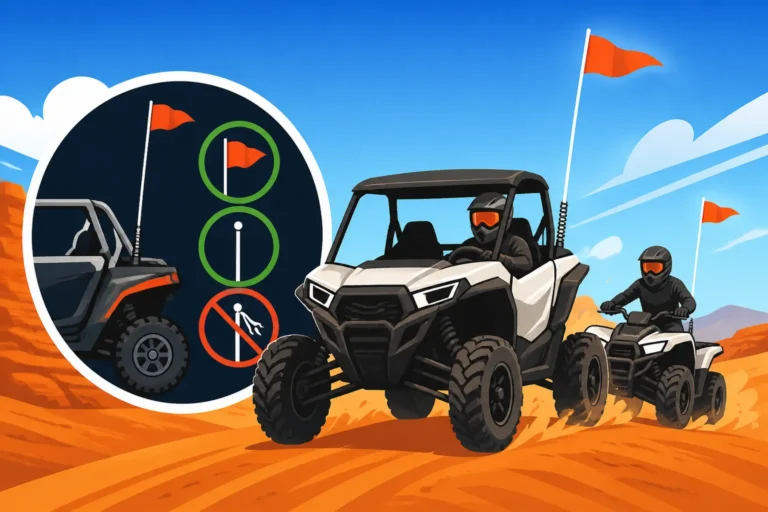
A whip flag is an important visibility aid in dune environments, and riders should check the rules for the area and fit their machine appropriately. You can review the topic in [Whip Flag Rules at Sand Hollow](Whip Flag Rules at Sand Hollow). Also talk through basic hand signals and what to do if someone stops or needs help. Agreeing on those details at camp is much easier than trying to coordinate in wind, dust, and engine noise.
Heat and sun deserve serious attention. Carry more water than you think you will need, use sun protection, and plan breaks rather than waiting until someone feels unwell. Sand and dust can get into food, bedding, and vehicle interiors, so seal snacks and bring bags or containers for dirty gear. If conditions change or the route feels beyond your group’s experience, turn back early. [Checking Utah Trail Conditions Before You Tow](Checking Utah Trail Conditions Before You Tow) is a useful reminder to check conditions before committing to a long drive and ride.
Make camp comfortable and keep the stay low-stress
Set up with dust, noise, and desert weather in mind
A little campsite organization goes a long way at a dusty OHV destination. Keep sleeping gear zipped away during the day, store food in closed containers, and create one place for helmets, goggles, gloves, and riding clothes. A small brush or cloth for removing grit can help keep sand from spreading through the tent or RV. If you are camping with children, give them a clear area to play away from trailers, unloading zones, and vehicle traffic.
Desert evenings can feel different from the heat of the afternoon. Bring clothing layers and check the forecast before leaving, rather than packing only for the daytime temperature. Secure lightweight items so wind does not scatter them, and keep the campsite tidy. It is easier to enjoy a quiet evening when you are not chasing napkins, bags, or loose equipment across the site.
Respect other campers as well as the park. Keep generator and music use within posted rules, observe quiet hours, and avoid driving through campsites or using a neighbor’s space as a turnaround. At a busy destination, considerate habits matter: many visitors are sharing the same limited facilities and trying to rest before an early ride.
Use a simple pre-trip checklist
Before leaving home, confirm your reservation, campsite details, park access instructions, and the rules that apply to your machine. Check that your trailer lights and tires are ready for the drive, and make sure your registration and any required riding permits are in order. If you are bringing an out-of-state machine, review the visitor requirements in [Utah's Non-Resident OHV Permit Explained](Utah's Non-Resident OHV Permit Explained) before setting off.
When you arrive, locate the campground facilities, identify the appropriate route to your planned riding area, and check posted notices. Keep your machines in designated places and follow signs even if another visitor appears to be taking a different route. If anything about access or site use is unclear, ask park staff before riding or moving equipment. It is much easier to adjust plans at camp than to discover a problem after your group has scattered across the dunes.
A smooth Sand Hollow camping trip comes down to a few practical choices: book a site that fits your actual setup, verify how riding access works, prepare for sun and sand, and leave room in the schedule for the unexpected. With those pieces handled, you can spend less time troubleshooting logistics and more time enjoying the area around Hurricane.
Disclaimer
This article is for general informational purposes only and does not constitute professional advice. Laws, prices and regulations vary by location and change over time. Consult a qualified professional for guidance on your specific situation.