Spring Break Crowds on Moab Trails
Spring break can turn a Moab ride into a stop-and-go day: busy trailheads, slower-moving groups, limited trailer parking, and long waits at popular obstacles. A little planning makes a big difference. This guide explains when crowds tend to build, how to choose a trail and staging plan, and what to do if your preferred route feels too busy.
Why Moab trails get busy during spring break
Expect a mix of riders and experience levels
Spring break brings families, first-time visitors, rental groups, and experienced riders to the same roads and trails. Some people arrive with a carefully planned route; others are figuring out trail signs and machine controls as they go. That mix is normal, but it can mean slower progress and more stopping than you might expect from a map.
Popular areas such as Sand Flats Recreation Area draw riders looking for well-known slickrock routes, including Hell’s Revenge and Fins and Things. Nearby trailheads and access roads can also feel crowded when several groups arrive around the same time. Even outside a holiday weekend, pleasant weather and school breaks can concentrate visitors into a narrow window.
Crowds aren’t only about the number of machines on a route. A narrow section, steep obstacle, viewpoint, or confusing junction can slow everyone behind it. A group taking time to choose a line may be doing exactly the right thing for its experience level; the frustration comes when following groups have nowhere safe to pass.
Timing and logistics matter as much as the route
The most popular trailheads can fill or become congested, especially when many visitors start their day at similar times. Arriving early may give you more room to unload and begin riding, but it is not a guarantee of an empty trail. Later in the day, traffic may ease on some routes while other riders are still returning or stopping at scenic spots.
Build flexibility into the schedule. If your group has a fixed lunch reservation, a long drive back to a campground, or children who tire quickly, don’t plan a full day around a trail that may move slowly. A shorter route can be a better spring-break choice than trying to squeeze in a demanding ride before dark.
Parking and unloading deserve their own plan. A trailer that is easy to maneuver in an open lot can become stressful when spaces are tight and other vehicles are waiting. Review [Where to Stage a Trailer in Moab] and [Utah Trailhead Parking That Fits a Trailer] before you tow into town, and avoid blocking road access while you unload.
Choosing a trail when crowds are likely
Match the route to your group, not the crowd
A busy day is a poor time to discover that a trail is beyond your group’s comfort level. Pick a route based on the least-experienced driver and passenger, your machine’s capabilities, and how everyone feels about exposure, steep climbs, and technical obstacles. A route that looks manageable to an experienced driver may feel very different to someone encountering slickrock for the first time.
Fins and Things can be a useful introduction for riders building confidence on slickrock, but “beginner-friendly” should never mean effortless or risk-free. Read about the route in [Fins and Things for First-Time Slickrock], then decide whether its terrain suits your actual group. If anyone is uneasy, choose a less demanding outing rather than letting the crowd or a tight schedule pressure them into continuing.
Hell’s Revenge is famous for a reason, but it includes steep slickrock features and requires careful driving. It is not a route to choose just because other machines are heading that way. Review [Hell's Revenge, Utah's Signature Slickrock] and be honest about experience, vehicle setup, and passenger comfort before committing.
Compare routes by length, width, and difficulty
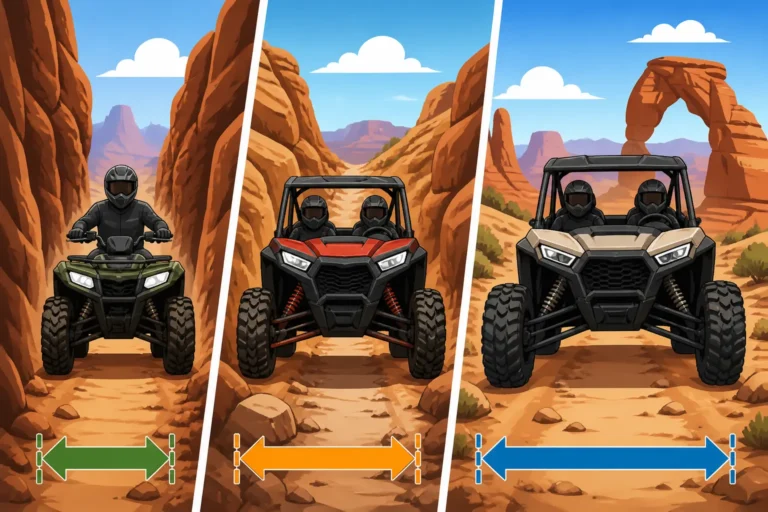
A route’s name alone doesn’t tell you whether it will fit your day. Check its length, surface, technical sections, likely turnaround points, and whether your side-by-side can fit comfortably. Some routes are more complicated for wider machines, and tight sections can create bottlenecks when groups meet or stop.
| What to compare | Why it matters on a crowded day | Planning question |
|---|---|---|
| Difficulty | A difficult obstacle can slow a line of riders | Can everyone in the group handle the hardest section? |
| Machine width | Narrow sections may limit passing or turning around | Does the route suit the widest machine in your group? |
| Ride length | Slow traffic can stretch the day | Do you have enough daylight and energy for the full route? |
| Staging access | Busy lots can make unloading difficult | Can your trailer fit without blocking other users? |
| Exit options | A group may need to shorten the ride | Is there a reasonable way to turn back if needed? |
For a manageable outing, use [Moab Trails That Fit a Half Day] as a starting point and compare options before you leave your lodging. A shorter ride is not a failed ride. It can leave time for a meal, a rest, or a second outing on a quieter route rather than turning the day into a race.
Keep a backup route ready
Choose a main route and at least one alternative before loading the machines. If the staging area is packed, the route looks beyond your group’s ability, or a closure changes your plan, you can make a calm decision instead of improvising in a crowded parking lot.
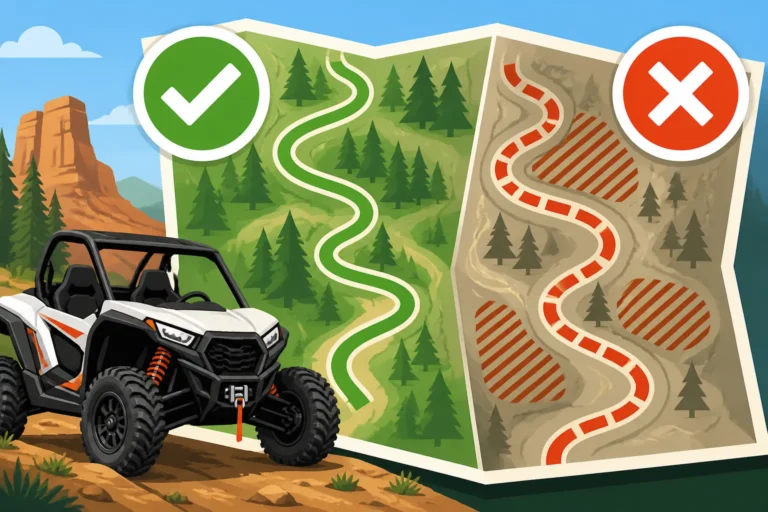
Use a reliable map for orientation and route planning, but don’t treat any app as permission to travel wherever a line appears. onX Offroad can help you review routes and save map information for areas where cell service may be unreliable. Cross-check the route against current land-manager information, posted signs, and closures. A mapped track does not override a closed gate or a route restriction.
Before towing, check [Checking Utah Trail Conditions Before You Tow]. Conditions can change with weather, maintenance, temporary closures, or local restrictions. Keep your backup route within your group’s ability and close enough to your launch point that changing plans doesn’t create a new logistical headache.
How to ride considerately when trails are crowded
Give other groups room and avoid creating a bottleneck
Stay patient when a group ahead is moving slowly. On a narrow or technical section, the safest choice may be to wait until there is a clear, legal, and suitable place to pass. Don’t pressure another driver by crowding their machine or revving close behind them. That can make an already stressful obstacle more difficult.
When your group stops, pull completely out of the travel path where it is safe to do so. Keep machines together and avoid spreading across a junction or blocking access for other trail users. If you need to regroup, choose a broad, visible area rather than stopping just beyond a blind corner or on a steep section.
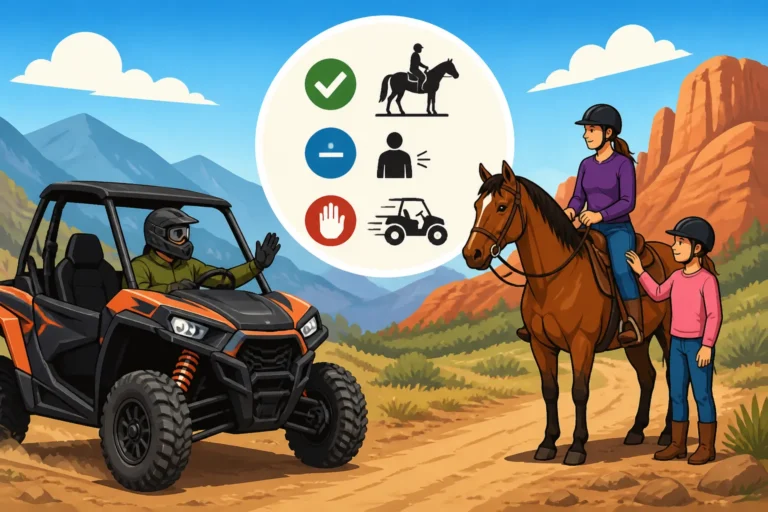
If you’re passing, communicate clearly and wait for the other driver to acknowledge you. Follow posted signs and local rules, and don’t assume that a wide-looking shoulder is a legal or safe place to leave the route. On crowded days, a few minutes of courtesy can prevent a long line of machines from forming behind your group.
Prepare for slower travel and changing conditions
Bring more water, food, and warm or sun-protective layers than you think you’ll need for a quick ride. Spring weather can vary, and delays may mean spending more time exposed to sun, wind, dust, or cooler temperatures. Carry basic recovery and repair supplies appropriate to your machine and route, and tell someone where you plan to ride.
Save your route information before leaving cell coverage. A map app such as onX Offroad may be useful for offline reference, but download what you need in advance and keep a backup way to navigate. Don’t count on being able to load a map, make a call, or find a route update from every trail junction.
Set a firm turnaround time, especially if your group includes young riders or passengers who are new to off-road travel. A slower pace is a reason to shorten the loop, not to ride faster. [What to Carry on a Utah Day Ride] can help you think through essentials, and [Utah Trail Maps and How to Read Them] offers more context for route planning.
A practical spring-break plan for a Moab ride
Before you leave your lodging
First, confirm the day’s route and an alternate option. Check current access information, weather, and any posted restrictions. Make sure the route fits the widest machine, the least-experienced rider, and the amount of time your group actually has.
Next, sort out your staging plan. Know where you intend to unload, whether the trailer can fit, and how you’ll keep the access lane clear. If the preferred area is already congested, be willing to choose the alternate route rather than circling, blocking traffic, or unloading somewhere unsuitable.
Finally, agree on a few group basics: who leads, who rides last, where you’ll regroup, and what signal means someone needs to stop. Keep the pace comfortable and make sure everyone knows they can ask to turn around without being criticized.
If the trailhead or route is busier than expected
Pause somewhere safe and reassess before entering a crowded route. Ask whether the group has enough time, whether the conditions suit your riders, and whether there is a nearby alternative with suitable staging. Don’t let the effort of getting there force you into a ride that feels wrong.
If you’re already on the trail, keep space between machines and take turns through narrow or technical sections. Stay on the established route, respect signs and closures, and avoid creating new bypasses around obstacles or congestion. When you meet other users, slow down and give them room.
If the day becomes tiring, turn back while the group is still in good shape. That is often the smartest decision, particularly when traffic, dust, or delays have stretched the ride. A memorable Moab trip doesn’t depend on completing the most famous trail; it depends on getting everyone back safely and wanting to ride again.
Disclaimer
This article is for general informational purposes only and does not constitute professional advice. Laws, prices and regulations vary by location and change over time. Consult a qualified professional for guidance on your specific situation.