Kanab Area Trails and Hog Canyon
Kanab is a tempting base for an off-road trip, but the area’s routes don’t all ride the same way: some are sandy and open, while others are rocky, narrow, or subject to access limits. This guide explains how to plan a ride around Kanab, what to expect at Hog Canyon, and how to check that your route, machine, and paperwork are a good fit.
Planning an ATV or UTV ride from Kanab
Understand how the riding areas fit together
Kanab sits in southern Utah near a mix of public land, state park recreation, and routes with different land managers. That variety is part of the appeal, but it also means there isn’t one simple “Kanab trail system” with a single set of conditions or access rules. Hog Canyon, for example, is a different kind of ride from the open dunes at Coral Pink Sand Dunes State Park.
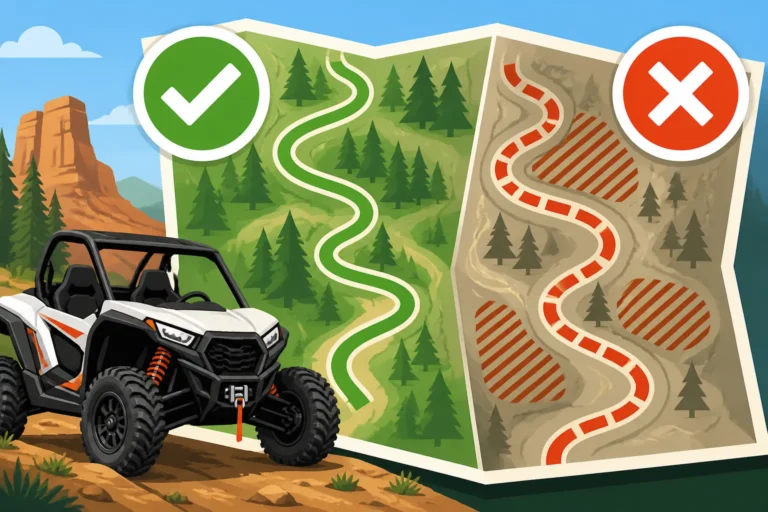
Before you unload, identify the exact area and route you plan to ride. Confirm whether it is open to your type of machine, whether it is a designated OHV route, and whether the starting point you chose is an authorized place to park and unload. A road that appears on a map may be closed to motorized travel, may cross private property, or may have restrictions that aren’t obvious from the trailhead.
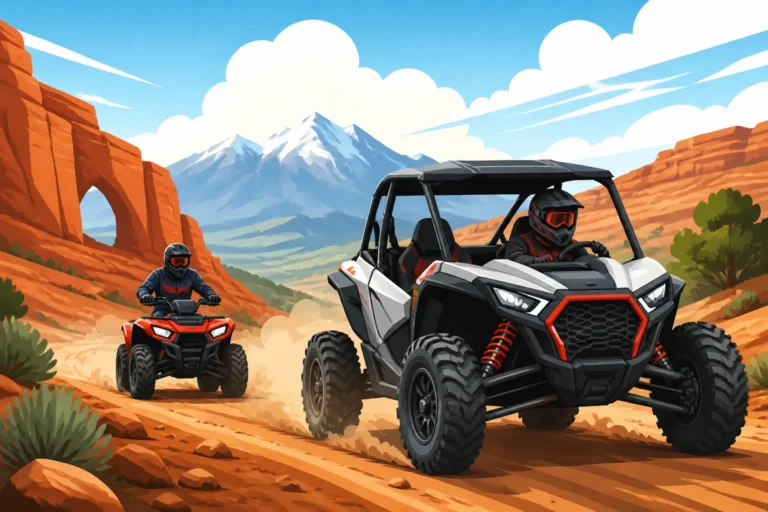
It helps to plan around your group rather than choosing a route just because it’s nearby. A family with young riders may prefer a straightforward outing with room to stop and regroup. An experienced driver looking for rocky terrain may be more interested in Hog Canyon, provided the machine and passengers are prepared for the challenge. For a broader look at the region, see [Kanab Area Trails and Hog Canyon] and [Best ATV and UTV Trails in Utah].
Check maps and land-manager information before you leave
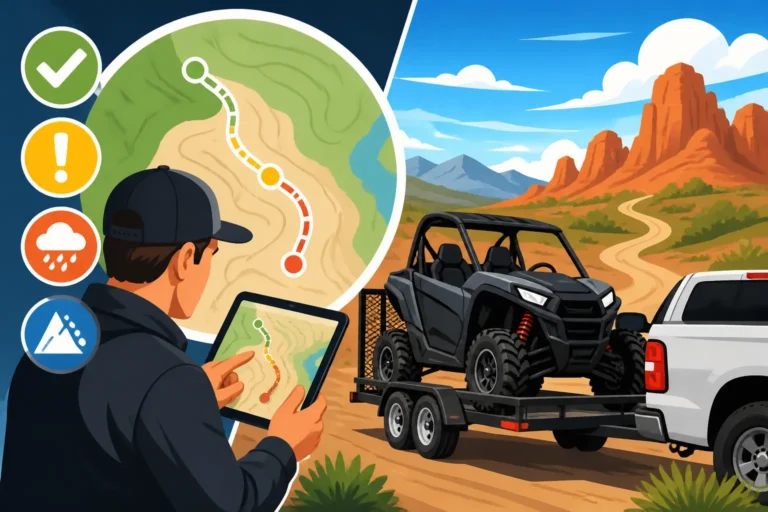
A navigation app is useful, but it should be one part of your planning rather than the only authority you rely on. Compare your planned route with the relevant official motor vehicle map and any current notices from the agency or recreation area that manages it. Route markings, closures, seasonal restrictions, and trailhead access can change, so a track saved from an old trip may not reflect today’s permitted access.
Tools such as onX Offroad can help you view mapped routes, understand how trails connect, and save information for offline use. That is especially handy in the Kanab area, where cell service can be unreliable once you leave town. Still, use the app as a planning aid and verify route access with the land manager. A route drawn on a screen is not proof that every segment is open to motorized travel.
Before driving south or west out of town, download maps and save the key trail junctions you’ll need. Make a note of your planned turnaround point, alternate route, and expected return time. For a step-by-step approach to reading route maps, see [Utah OHV Trail Maps and How to Read Them] and [Reading a Motor Vehicle Use Map]. If you’re checking conditions before towing, [Checking Utah Trail Conditions Before You Tow] is a useful companion.
Match the ride to your group and your machine
A trail’s difficulty isn’t determined by the name on a map alone. Surface conditions, recent weather, vehicle width, tire setup, ground clearance, rider experience, and passenger comfort all affect how difficult a route feels. A stretch that seems manageable on a quiet day can become stressful when the group is tired, visibility is poor, or a vehicle is too wide for a narrow section.
Be honest about the least experienced driver and least comfortable passenger in your group. If they would be anxious about a steep or uneven section, choose a route that allows a comfortable pace and easy stops. On a group ride, the person with the most capable vehicle shouldn’t automatically set the day’s ambition. The whole group needs enough time, fuel, water, and confidence to complete the route safely.
It’s also worth checking that your machine is suitable for the planned terrain. A two-seat UTV, a wide four-seat side-by-side, and a small ATV may have very different options on the same route. If you’re still comparing destinations, [Choosing Between Moab and Sand Hollow] and [Choosing Between the Paiute Trail and the Swell] offer a useful way to think through what kind of riding day your group wants.
What to expect on the Hog Canyon ride
Treat Hog Canyon as a terrain choice, not just a nearby trail
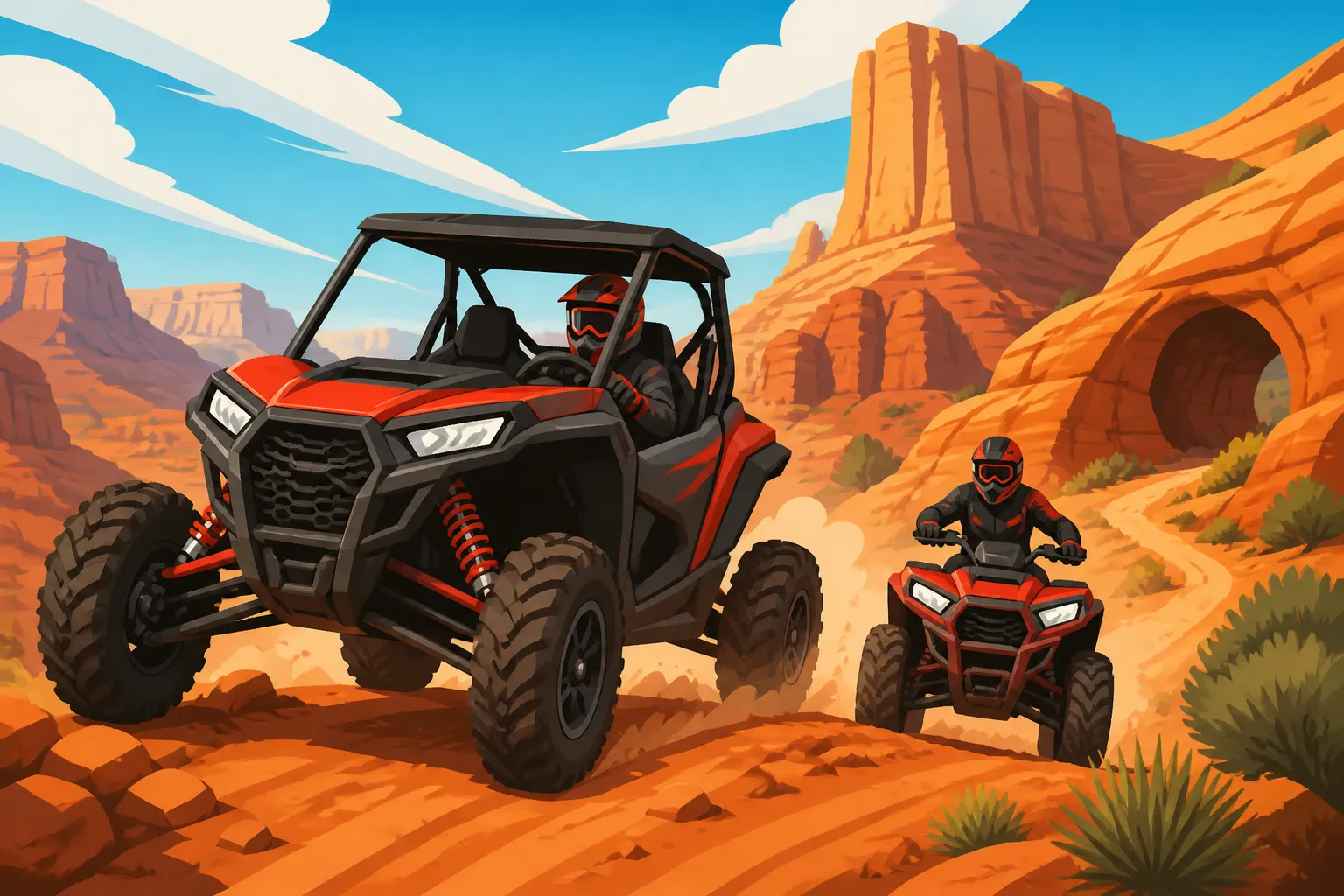
Hog Canyon is often considered by riders looking for a more involved outing near Kanab. It is not the same sort of experience as cruising over open sand. The route’s character can include rocky, uneven terrain and sections where careful line choice matters. Conditions and difficulty can vary, so don’t assume a route is easy simply because it is close to town or popular with other riders.
A good approach is to look at the route details and recent local information before committing. Check the length and elevation profile shown on your map, note any junctions that could lead you away from the intended route, and find out whether the route is currently open. If you’re uncertain about a particular section, ask a knowledgeable local source or choose a less demanding route for the day.
Hog Canyon may be a poor fit for a group that wants a relaxed first ride, is carrying passengers who dislike rough terrain, or is using a machine with limited clearance or an unsuitable width. A change in weather can also affect how comfortable a rocky route feels. Give yourself permission to turn around. Reaching a viewpoint or completing every segment is never more important than having enough daylight and energy to return safely.
Prepare for slow, careful driving
On technical ground, a steady pace is usually more useful than trying to make up time. Keep enough distance from the vehicle ahead to see the terrain and avoid dust, but stay close enough that the group doesn’t become separated at junctions. Agree on a simple regrouping routine before starting: for example, stop at major intersections and wait until the last vehicle arrives before continuing.
Drivers should keep their attention on the route rather than on a phone or passenger conversation. Passengers can help by watching for hazards and giving calm, clear directions, but avoid shouting conflicting instructions in a difficult section. If your group includes several vehicles, designate a lead and a sweep driver, and make sure everyone knows the route or has a way to follow it.
Don’t let a difficult section turn into a crowd around one vehicle. Park in a safe place where possible, keep people clear of moving machines, and take time to consider the line before proceeding. If a vehicle becomes stuck or has a mechanical issue, avoid improvising a recovery that could injure someone or damage the machine. Carry suitable recovery gear, know how to use it, and review [Getting Unstuck Alone in the Utah Desert] before heading into remote terrain.
Know when to shorten the outing
A sensible Hog Canyon plan includes a turnaround time, not just a destination. Set it before leaving, while everyone is fresh and still thinking clearly. If the group is moving more slowly than expected, the weather shifts, or a vehicle develops a problem, turn around early rather than relying on a last-minute push to finish the route.
A short ride can become a long day if you lose time at a junction, stop to address a mechanical issue, or find the trail more demanding than expected. Keep an eye on daylight and remember that the return leg takes time too. Don’t count on a phone signal for navigation or emergency communication, and don’t separate from the group to scout ahead unless you have a clear, agreed plan.
If anyone in the group is uncomfortable, treat that as useful information rather than a complaint to brush aside. A passenger who is tense on a rough section may be telling you the group’s pace or route choice needs to change. A successful outing is one where everyone gets back safely, even if that means skipping part of the planned route.
Choosing between Hog Canyon and nearby riding options
Compare the ride style before you choose
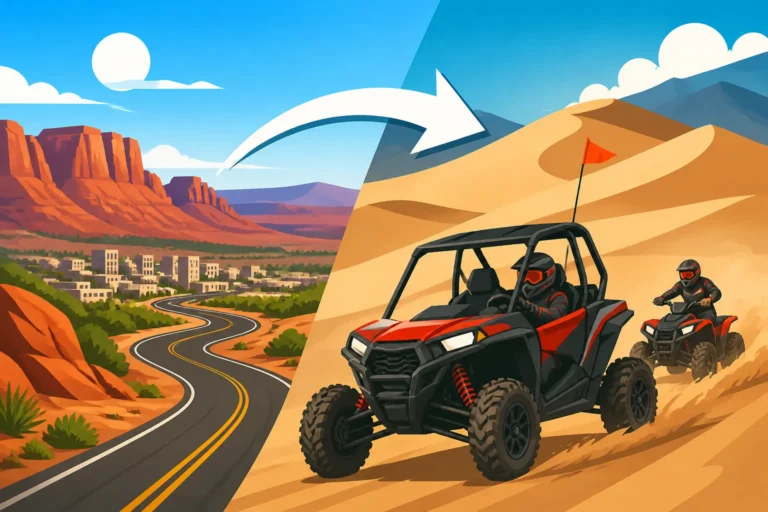
Kanab works well as a base because it gives riders access to different types of outings. But “near Kanab” doesn’t automatically mean “similar ride.” Hog Canyon calls for a different mindset than a dune day, and a route across public land may involve more navigation than a managed recreation area.
| Riding option | General experience | A good fit for | Planning detail to verify |
|---|---|---|---|
| Hog Canyon | More involved terrain where route choice and careful driving matter | Riders prepared for a slower, potentially rougher outing | Route access, conditions, machine suitability, and turnaround options |
| Coral Pink Sand Dunes State Park | Sand-focused riding in a designated recreation area | Groups looking for dunes and a managed recreation setting | Park access, riding boundaries, fees, and current conditions |
| Other designated public-land routes near Kanab | Conditions vary by route and land manager | Riders who want to tailor a trip to their time and experience | Whether each route is open to motorized use and where it connects |
Coral Pink Sand Dunes State Park offers a noticeably different day from Hog Canyon. The dunes are the attraction, and riders should learn where motorized use is allowed, where to unload, and what site-specific requirements apply. Don’t assume the whole landscape is open for riding just because a portion of it is designated for OHV use.
A public-land route may be a better choice for a scenic outing or a ride that can be adjusted to the group’s ability, but only if you’ve checked the route carefully. Make sure your intended track doesn’t rely on an unauthorized shortcut or cross a restricted area. For details on the dunes and travel planning, see [Coral Pink Sand Dunes State Park for OHVs] and [Getting to Coral Pink From Kanab].
Build a flexible day instead of packing in too much
It can be tempting to combine several areas into one ambitious day, especially when you’ve driven a long way to southern Utah. In practice, loading, unloading, route-finding, breaks, and trail conditions all take time. Pick one main ride and treat a second location as an optional alternative, not an obligation.
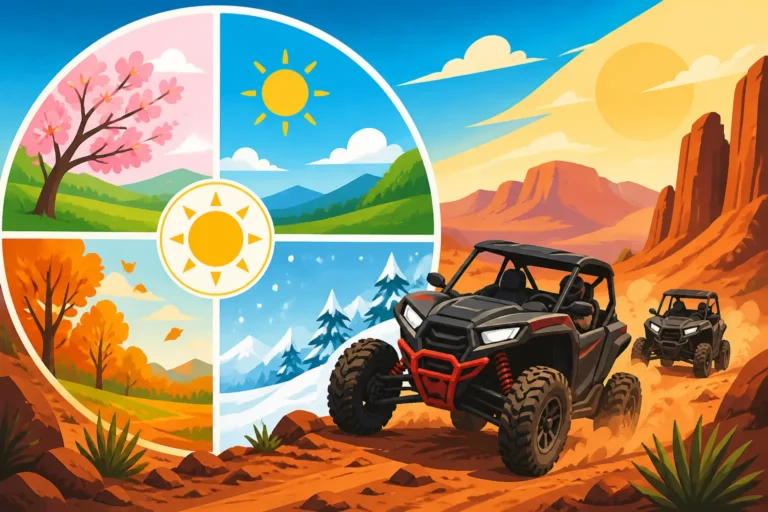
If you’re deciding between two areas in the morning, check the wind, weather, surface conditions, and the group’s energy level. A windy day might change how pleasant a dune ride feels. A forecast shift or a late start may make a slower route a poor choice. Choose the outing that suits the day you actually have, rather than the itinerary you wrote at home.
For a first visit, keep enough room in the plan for a relaxed lunch, a fuel stop, and a return before dark. If the ride is going smoothly, you can enjoy the stops without feeling rushed. If something takes longer than expected, you’ll have the flexibility to shorten the day without putting the group under pressure.
Use local knowledge carefully
Local businesses, land managers, and experienced riders can offer helpful context about access, weather, and the character of a route. Ask specific questions: Is the route open to the kind of machine you’re riding? Are there current closures? Is the trailhead suitable for a trailer? What should a first-time visitor know about the return route?
Treat informal recommendations as a starting point, not a substitute for checking access rules. A rider may be describing a route they rode under different conditions, or may use a shortcut that isn’t permitted. If a recommendation conflicts with posted signs or an official map, follow the official restriction and choose another route.
onX Offroad can be helpful for comparing a suggested route with your planned track and keeping your group oriented at junctions. Save the map in advance and check it against land-manager information before the ride. Keep the app’s role clear: it can support navigation, but it does not replace signs, closures, or permission to use a route.
Safety, gear, and access preparation
Bring what a desert ride actually calls for
A ride near Kanab can expose you to heat, dust, changing weather, and long stretches away from services. Bring more water than you think you’ll need, along with food, sun protection, and clothing suited to the forecast. Eye protection matters in dust, and a helmet should fit properly and be appropriate for the rider. If you’re carrying passengers, make sure each person has the safety equipment the machine and local rules require.
Basic vehicle preparation can prevent a small issue from becoming a stressful recovery. Check tires, steering, brakes, lights, fuel, and any required safety equipment before leaving town. Carry a tool kit suited to your machine, a tire repair option, a first-aid kit, and a way to communicate when cell service drops. Keep the gear secured so it cannot shift into a passenger’s space or interfere with controls.
Pack with the route in mind. A family ride with frequent stops may call for extra snacks, layers, and supplies for children. A remote or technical ride calls for more attention to recovery equipment, navigation, and emergency planning. See [What to Carry on a Utah Day Ride] for a practical checklist, and adapt it to your group and route rather than treating any list as one-size-fits-all.
Check access, registration, and rider requirements
Before riding, confirm that your machine and each rider meet the requirements for the place and type of riding you plan to do. Utah registration, visitor permits, education requirements, and recreation-area rules may apply differently depending on the rider, machine, and location. Don’t assume a registration or permit from another state automatically covers every Utah riding situation.
If you’re visiting from outside Utah, check the current nonresident OHV requirements before your trip and make sure you understand how any permit must be carried or displayed. Riders should also confirm whether their machine is considered off-highway or street legal for the route they plan to use. Riding from a motel to a trailhead on public roads is not automatically allowed just because the destination is an OHV area.
Check posted rules at the trailhead and follow signs along the route. Stay on designated roads and trails, respect private property, close gates as you found them when permitted to pass, and avoid creating new tracks around obstacles. If you’re unsure about a boundary or closure, stop and verify rather than riding through and sorting it out later. [Trail Closures Utah Riders Should Check First] and [What Utah Riders Must Carry on Public Land] can help you prepare.
Make an emergency plan before setting out
Tell someone who isn’t riding with you where you’re going and when you expect to return. Share the trailhead or staging area, your planned route, and the time you’ll check in. Agree on what that person should do if they don’t hear from you. This simple step matters when the ride takes place beyond reliable cell coverage.
Within the group, make sure every driver knows the plan and has access to navigation. Keep a fully charged phone, but don’t rely on it as your only way to find the route or call for help. If you’re traveling into a remote area, consider whether a satellite communicator is appropriate for your group and whether everyone knows how to use it.
If someone is injured or a vehicle becomes disabled, pause and assess the situation before moving anyone or attempting a recovery. Avoid putting another rider in danger by rushing into a difficult pull or driving an unfamiliar route to seek help. Keep your location details available, conserve water and battery, and follow your emergency plan. A well-planned ride leaves room for the unexpected instead of assuming everything will go perfectly.
A practical Kanab ride-day checklist
The evening before
Choose your primary route and a simpler backup option. Verify access with the appropriate land manager, review your map, and save the route offline. Check the forecast and any notices that could affect the ride. If you’re planning Hog Canyon, make sure everyone understands that the outing may involve slower, rougher driving than a relaxed scenic cruise.
Inspect the machine and pack clothing, water, food, safety gear, navigation, and recovery supplies. Confirm that the trailer is secure and that the tow vehicle has what it needs for the drive. Write down the trailhead location and your expected return time so you’re not relying on a phone connection to retrieve basic information.
Let the group know what to expect, including the likely pace and the option to turn around. This conversation is especially helpful when some riders are experienced and others are new. Setting expectations ahead of time can prevent a nervous passenger or an underprepared driver from feeling pressured once the group is on the trail.
At the staging area
Before unloading, check posted signs and confirm that you’re at the intended access point. Give the group a final reminder about the route, regrouping stops, turnaround time, and emergency plan. Make sure helmets and other protective equipment fit, passengers know how to use restraints, and loose gear is secured.
Look at the conditions in front of you, not only the forecast. If the route is wetter, windier, dustier, or more difficult than expected, adjust the plan. A quick decision to use the backup route can save a long, uncomfortable day. If signage or conditions don’t match what you expected, stop and verify rather than proceeding on assumption.
onX Offroad or another offline mapping tool can help each driver follow the route, but make sure the group knows what to do if devices disagree or a track appears to lead onto a restricted route. Keep the official map and posted information in mind, and regroup before uncertain junctions.
After the ride
Once back at the staging area, account for every person and machine before leaving. Check for tire damage, loose parts, or other issues that could affect the drive back to Kanab. If you found a closure, damaged sign, or confusing junction, report it through the appropriate land-management channel rather than treating it as a reason to make your own route around it.
Review what worked for your group. Maybe Hog Canyon was a great fit, or perhaps the rough sections made a dune day or gentler route a better choice next time. Keep notes about the trailhead, turnaround point, water needs, and any access details you’ll want to verify again. That record can make your next visit smoother without assuming that conditions or rules will remain unchanged.
The best Kanab ride is not necessarily the longest or most challenging one. It’s the outing that matches your group, respects route access, and leaves you with enough energy to enjoy the drive back and plan the next day.
Disclaimer
This article is for general informational purposes only and does not constitute professional advice. Laws, prices and regulations vary by location and change over time. Consult a qualified professional for guidance on your specific situation.