Fillmore Roads Open to OHV Traffic
It's incredibly frustrating when you're visiting a new area with your ATV or UTV, eager to hit the trails, but you're unsure if you can even legally drive through town to get to the trailhead, or pop into a local diner. The rules can feel like a tangled mess of state laws and local ordinances, leaving you guessing. This guide is here to clear up that confusion specifically for Fillmore, Utah, helping you understand which roads are open to OHV traffic and how to navigate the town legally.
The Foundation: Utah's Statewide Street-Legal OHV Law
Before we dive into the nitty-gritty of Fillmore, it's crucial to understand the overarching state law that allows street-legal OHVs on many public roads across Utah. Back in 2017, Utah passed legislation allowing properly equipped and registered off-highway vehicles to operate on public roads with speed limits of 50 mph or less. This was a game-changer for riders, opening up a whole new world of access to trails directly from towns and lodging.
This statewide law applies to any county or municipality unless they specifically pass their own ordinances to restrict or open roads differently. So, while the 50 mph rule is the general guideline, local jurisdictions have the power to fine-tune what that means for their streets. This is where the confusion often kicks in for riders trying to plan a trip. You might think you're good to go everywhere, only to find a "no OHV" sign in a specific town.
The beauty of this law, when applied, is the seamless transition it offers. Imagine rolling out of your motel in Fillmore, grabbing a quick breakfast, and then heading straight to the mountain trails without ever having to load your machine onto a trailer. It's about convenience and enhancing the overall riding experience. However, that convenience comes with the responsibility of understanding and adhering to both state and local regulations. You'll want to ensure your machine is fully compliant with all the required safety equipment before you even think about hitting the pavement.
Essential Equipment for Street-Legal Status
To even be considered street-legal in Utah, your OHV needs to meet specific equipment requirements, mirroring those of a standard vehicle. This isn't just about having a license plate; it’s about making sure your machine is safe for shared roads. The Utah Highway Patrol and local law enforcement are well-versed in these requirements, and they will check.
First and foremost, you need proper headlights and taillights. These aren't just for looking cool on the trail; they're essential for visibility on public roads, especially as dusk approaches or on overcast days. Your machine must also have brake lights, signaling clearly when you're slowing down. Imagine cruising down Main Street in Fillmore and suddenly stopping; without working brake lights, you're a hazard waiting to happen. Many riders opt for aftermarket kits from companies like SuperATV to ensure all lighting components are up to snuff.
Beyond lighting, turn signals are non-negotiable. Hand signals might work in some off-road contexts, but on a busy street, clear electronic turn signals are a must for safety. You also need a horn that's audible from at least 200 feet away to alert pedestrians or other drivers. Mirrors are also critical, providing a clear view of traffic behind and to your sides. And don't forget a windshield or eye protection – flying debris on paved roads at higher speeds is no joke. A properly functioning speedometer, at least one brake system, and a license plate light are also on the list. For a full breakdown, check out [Utah Street-Legal ATV Equipment Requirements].
Registration and Licensing Requirements
Even with all the right gear, your machine isn't street-legal until it's properly registered and you, as the driver, are correctly licensed. In Utah, this means having your OHV registered with the Division of Motor Vehicles (DMV) and displaying both an OHV decal and a street-legal license plate. The registration process ensures your machine is recognized by the state as a legitimate vehicle, whether on or off the road.
When you register your OHV, you'll go through a specific process that includes title verification, possibly a VIN inspection, and payment of various fees. It's similar to registering a car, but with the added layer of OHV-specific details. You can learn more about the specifics in [How to Register an ATV or UTV in Utah]. Once registered, you'll receive your unique street-legal license plate, which must be mounted in a clearly visible location, and an OHV decal, usually placed on the rear of the machine.
As for the driver, you need a valid driver's license to operate a street-legal OHV on public roads in Utah. This isn't just a learner's permit or an OHV education certificate; it's a full-fledged driver's license. If you're a minor, special rules apply regarding age and supervision, so it's always best to check the current regulations before you hit the road. Insurance is also a critical component: your street-legal OHV needs liability insurance, just like any other vehicle operating on Utah roads. Don't skip this step, as it protects you and others in case of an accident.
Specific Rules for Fillmore City Streets
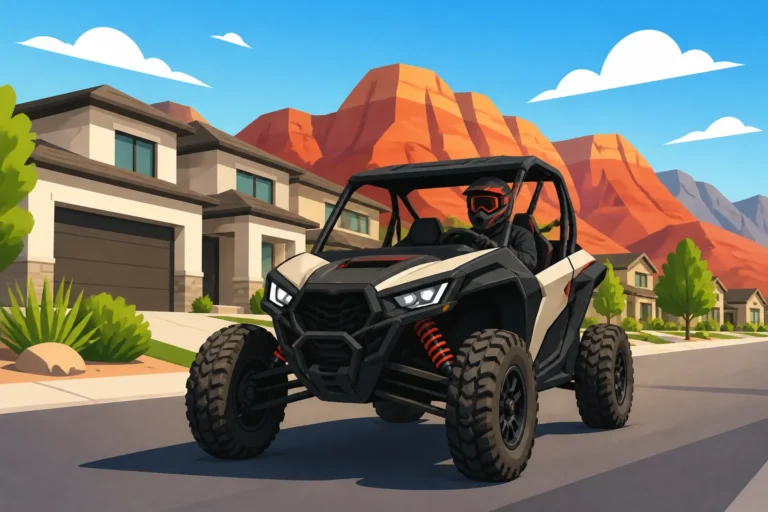
Now that we've covered the statewide context, let's zoom in on Fillmore itself. Millard County, where Fillmore is located, has generally embraced the street-legal OHV law, making it a very OHV-friendly destination. Fillmore City specifically allows street-legal OHVs on most of its city streets. This means you can often ride directly from your lodging or a local business right to the canyon mouths that lead to the expansive trail systems like the Paiute ATV Trail.
However, "most" doesn't mean "all." Like many towns, Fillmore maintains some specific restrictions, often related to higher-traffic areas, state highways that pass through town, or designated school zones during certain hours. It’s always best to look for signage. If you see a sign that explicitly prohibits OHVs on a particular street, that sign overrides the general rule. Common sense and courtesy also play a huge role here. Even where legal, roaring through a quiet residential street at full throttle isn't a good look for the OHV community.
The general allowance in Fillmore is a huge benefit for riders. It simplifies logistics, reduces wear and tear on trailers, and allows for a more immersive experience in the community. You can literally fuel up your machine, grab supplies, and head to the trails seamlessly. This makes Fillmore an excellent base camp for exploring central Utah's renowned OHV opportunities.
Which Roads Are Open?
Generally, roads within Fillmore with a posted speed limit of 50 mph or less are open to street-legal OHVs. This covers the vast majority of local streets and many county roads that connect directly to the trails outside of town. Think of the streets connecting motels, restaurants, and gas stations to the main arteries leading out of the city. For example, if you're staying at a hotel off Main Street and want to get to the Canyon Road leading to the Paiute Trail, you'll typically be able to ride your street-legal machine directly there.
However, state highways that pass through Fillmore often have different rules, particularly where the speed limit exceeds 50 mph. While you can typically cross a state highway where the speed limit is higher, riding along it for an extended distance might be restricted. For example, if a section of a state route in Fillmore has a 65 mph limit, you would not be able to ride your street-legal OHV on that specific stretch of road, even if it's within city limits. Always pay close attention to posted speed limits and any specific signage.
| Road Type | Typical Status for Street-Legal OHVs | Important Caveats |
|---|---|---|
| Local City Streets | Generally Open | Speed limit 50 mph or less; Watch for specific "No OHV" signs. |
| County Roads | Generally Open | Speed limit 50 mph or less; Watch for specific "No OHV" signs. |
| State Highways (e.g., US-50) | Crossing Allowed | Riding along higher speed sections (over 50 mph) is prohibited. |
| Residential Streets | Generally Open | Be mindful of noise; prioritize safety and courtesy. |
| School Zones | Restricted During School Hours | Exercise extreme caution; obey all traffic laws strictly. |
Where Restrictions Apply
While Fillmore is generally welcoming, certain areas or conditions will still mean "no entry" for your OHV. As mentioned, state highways with speed limits exceeding 50 mph are typically off-limits for continuous travel, even if they bisect the city. You might be allowed to cross them at an intersection, but not travel down the highway itself. This is a common rule across Utah.
Another area of concern is school zones. While you might technically be able to ride through a school zone outside of active school hours, it's highly advisable to avoid them completely when children are present. Local law enforcement takes school zone safety very seriously, and any perceived risk could lead to a citation. The safest approach is to reroute if possible, especially during drop-off and pick-up times. Think about the local high school or elementary schools in Fillmore; these are areas to navigate with extra caution or avoid.
Finally, always be on the lookout for specific signage posted by the city. While rare in OHV-friendly towns like Fillmore, a specific block or street might have a unique restriction for a reason (e.g., historical district, high pedestrian traffic, construction). These signs are the final word, so keep your eyes peeled. If in doubt, park your machine and walk, or ask a local for clarification.
Navigating Fillmore and Connecting to Trails
The primary reason most OHV riders want to use city streets in places like Fillmore is to connect to the incredible trail systems nearby. Fillmore is often considered a gateway to the Paiute ATV Trail, one of the longest and most famous ATV trail systems in the country. Being able to ride from your lodging through town directly to a trailhead is a massive convenience that enhances the overall adventure.
This seamless connection allows riders to explore more of the area without the hassle of constantly loading and unloading machines. You can spend your morning on the dusty trails of the Paiute, come back to Fillmore for lunch, refuel, and then head out for an afternoon loop in a different direction. It turns the city into an integral part of your riding experience, rather than just a parking lot for your trailer.
However, even with open roads, knowing the best routes to and from the trails is essential. You want to pick routes that minimize traffic, respect residential areas, and get you to your destination efficiently and safely. Plotting your course before you leave is always a good idea.
Best Routes Through Town
When planning your route through Fillmore, aim for the most direct paths that avoid heavily congested areas or main shopping districts if possible. Often, major cross streets or roads leading directly out of town toward the canyons are your best bet. For example, if you're coming from the north and want to head to the trails east of Fillmore, you might use a specific arterial road rather than cutting through the deepest part of the city's downtown.
Utilize GPS or mapping apps on your phone or a dedicated GPS unit. Many riders download offline maps of the area, including city streets and the surrounding trail networks, so they're not reliant on spotty cell service. This allows you to plan out your ride, identifying legal street routes and the closest trail access points. Think of how you would navigate a car through an unfamiliar town, and apply similar logic to your OHV.
Always drive defensively and be highly visible. Wear bright clothing, keep your headlights on, and use your turn signals well in advance. Remember, while you might be used to other OHVs on the trail, other drivers in town might not be accustomed to sharing the road with side-by-sides or quads.
Accessing the Paiute ATV Trail
Fillmore serves as a fantastic hub for accessing the Paiute ATV Trail. Many entry points and spur trails connect directly from the canyons just outside Fillmore, leading you into the heart of the mountains. The ability to ride from your lodging in town directly to these trailheads is a huge advantage. You can check the local maps available at the Fillmore Visitor Center or online resources to pinpoint the closest and most convenient access points.
For instance, Canyon Road, which leads east out of Fillmore, is a common route for riders heading into the mountains. If you're staying in Fillmore, you might take a local street to connect to Canyon Road and then follow it until it transitions into a designated OHV route or official trailhead. This seamless transition is what makes towns like Fillmore so appealing to OHV enthusiasts.
Just remember that once you transition from paved city streets to dirt trails, the rules and etiquette change slightly. While you're on a trail, the focus shifts back to standard trail riding safety, respecting other users, and minimizing your impact on the environment. Make sure you have your [What Paperwork Utah Riders Must Carry] with you, as well as any necessary permits.
Essential Gear and Best Practices for City Riding
Riding your OHV on city streets isn't quite the same as tearing through the desert or climbing rocky trails. There are different considerations for safety, courtesy, and legal compliance. Having the right gear, beyond just the bare minimum for street-legal status, and adopting best practices will ensure a smoother, safer, and more enjoyable experience for everyone.
Think about how visible you are to other drivers, pedestrians, and cyclists. Your OHV might be smaller than a typical car, and its unique profile can sometimes make it less noticeable to others who aren't looking for one. Therefore, anything you can do to increase your visibility and predictability is a huge plus. This isn't just about avoiding a ticket; it's about avoiding an accident and being a responsible ambassador for the OHV community.
Remember that city riding involves more frequent stops, turns, and interactions with different types of traffic. Your machine needs to be in tip-top shape, especially its brakes and tires, to handle these demands safely. A pre-ride check before hitting the pavement is always a smart move.
Enhanced Visibility and Safety Gear
While the state requires basic lighting, consider adding extra measures for enhanced visibility when riding on city streets. Brightly colored machines, flags, or even additional LED lighting can make a significant difference, especially during dawn, dusk, or in adverse weather. Many riders choose to add a whip flag, not just for the dunes, but for increased visibility in urban settings, especially when navigating intersections.
Helmets are a critical piece of safety gear. While Utah's helmet laws have specific age requirements for street-legal OHVs, wearing one is always a good idea, regardless of age. An open-face helmet might offer better peripheral vision for city riding, but a full-face helmet provides more protection. Eye protection is also paramount, whether it's goggles or a full windshield, to shield your eyes from dust, bugs, and debris.
Gloves, long sleeves, and sturdy pants are also recommended. These not only protect you in the event of a fall but also shield you from sun exposure and road grime. Remember, you're not in an enclosed vehicle, so you're much more exposed to the elements. For an array of protective gear and street-legal accessories, you can explore options from companies like SuperATV.
Responsible Riding Etiquette
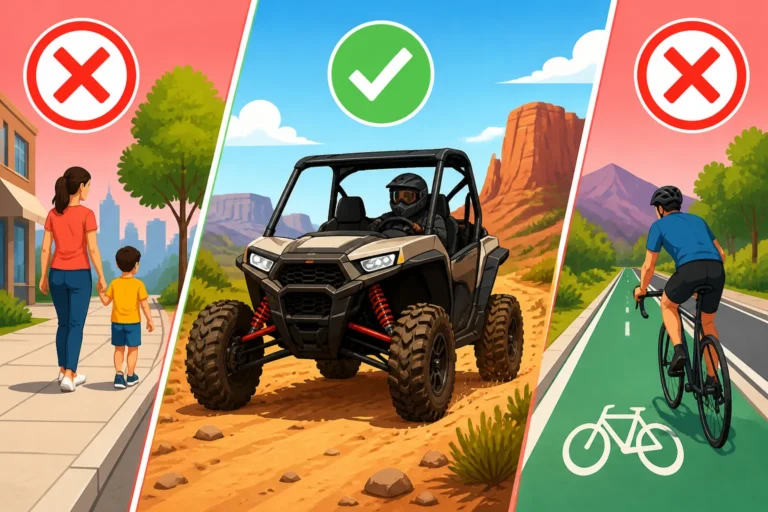
When riding your OHV on Fillmore's streets, remember that you are sharing the road with cars, trucks, bicycles, and pedestrians. This means adhering to all traffic laws, just as you would in a regular car. Obey speed limits, stop at stop signs and traffic lights, and yield the right of way. Aggressive driving or excessive noise can quickly turn public opinion against OHV access, so be a good neighbor.
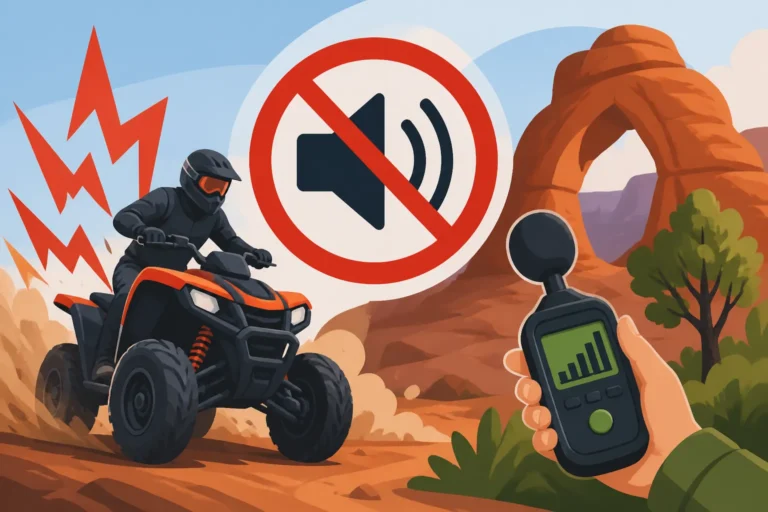
Noise is a particularly sensitive issue in residential areas. While your aftermarket exhaust might sound great on the trail, it can be disruptive in a quiet neighborhood. Be mindful of your throttle hand, especially when passing homes or businesses. Fillmore, like many small towns, prides itself on its peaceful atmosphere, and loud engines can quickly erode that.
Park your OHV responsibly. Don't block sidewalks, driveways, or fire hydrants. Treat your OHV like any other vehicle when it comes to parking. If you're stopping at a local business, try to park where you're not taking up excessive space or creating a nuisance. Your actions directly impact how the community views OHV riders as a whole. Being courteous and respectful goes a long way in ensuring continued access to these valuable riding areas.
Disclaimer
This article is for general informational purposes only and does not constitute professional advice. Laws, prices and regulations vary by location and change over time. Consult a qualified professional for guidance on your specific situation.