Adding a Street-Legal UTV to a Car Policy
So, you've done it. You've navigated the often-confusing world of making your UTV street-legal here in beautiful Utah. You've got the turn signals, the horn, the mirrors, and you’re ready to cruise through towns like Moab or Kanab on your way to the trailhead. But then comes the next hurdle: insurance. It's not always as simple as a flick of a switch, and many riders get frustrated trying to figure out how to properly cover their newly road-worthy machine. This guide is here to help you understand your options for insuring a street-legal UTV, particularly focusing on whether it can be added to your existing car policy.
Why Insuring a Street-Legal UTV Can Feel Like a Puzzle
Getting your off-highway vehicle (OHV) ready for the pavement is a fantastic way to maximize your riding experience in Utah, but when it comes to insurance, you're entering a bit of a grey area for many traditional providers. It's not quite a car, but it's not strictly an off-road machine anymore, either. This middle ground is where the confusion often begins, leaving many riders scratching their heads.
The Hybrid Nature of a Street-Legal Machine
Think about it: your UTV was designed primarily for rugged terrain, for climbing slickrock, and for conquering dunes. Now, it's also capable of driving on a paved road, obeying traffic laws, and sharing the asphalt with cars, trucks, and motorcycles. This dual nature means it carries different risks than either a purely off-road vehicle or a standard automobile. An insurance company has to assess not only the risks associated with off-road use, but also the very different liabilities that come with operating on public roads. It's a blend of two distinct risk profiles, and not all insurance products are set up to handle that seamlessly.
Many standard auto insurance policies are structured around typical passenger vehicles. They have specific clauses and definitions for what constitutes a "car" or "truck." A UTV, even one that's been converted, often doesn't fit neatly into these established categories. This can lead to insurers declining to add it to an existing policy or requiring a separate, specialized policy altogether. It's not that they don't want to insure you; it's that their existing frameworks might not be equipped to rate or cover your unique machine properly. When you think about [Utah Street-Legal ATV Equipment Requirements], it's clear these aren't just minor tweaks; they fundamentally change how and where the vehicle can be used.
Understanding the Limitations of Your Current Car Policy
Your current car insurance policy is tailored to the vehicle(s) listed on it. This policy typically has specific terms regarding what kind of vehicle it covers, its primary use, and the types of losses it will pay for. For example, if you have a policy for your pickup truck, it's designed to cover risks like collisions on paved roads, theft from a driveway, or liability if you cause an accident with another road vehicle. It doesn't usually account for things like roll-overs on a trail, damage from hitting a rock crawling in the desert, or even the unique parts often found on an off-road machine.
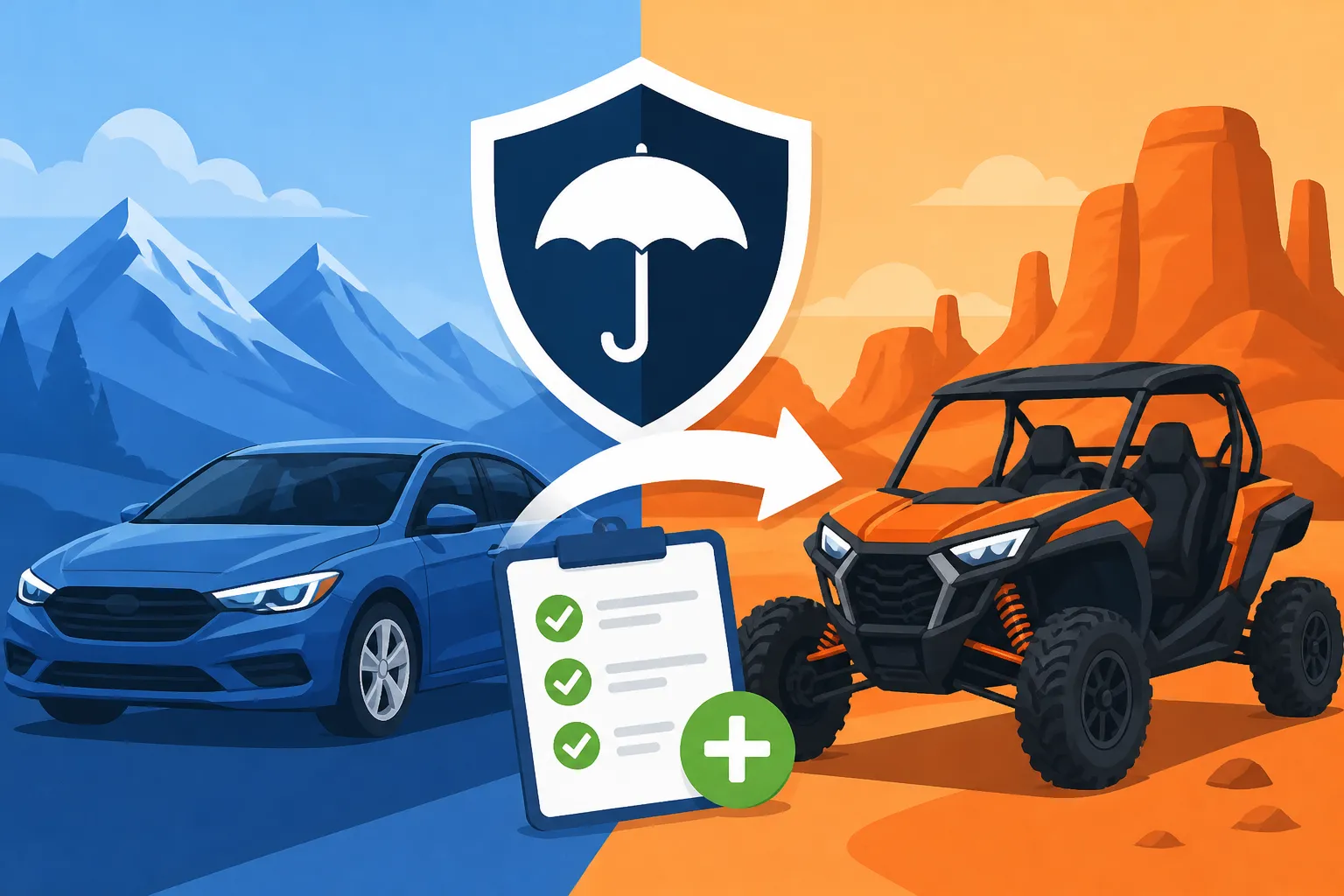
When you ask to add a UTV, even a street-legal one, to this policy, you're asking it to cover something outside its original scope. Some providers might have an endorsement or a rider they can add, but many will simply say no, or offer limited coverage that only applies to the "street-legal" aspects and not the off-road use. It's crucial to read the fine print and discuss your specific usage with your agent. Don't assume that because your UTV now has a license plate, your existing car insurance will automatically treat it like a car. This is where riders often get surprised, thinking they're covered when they might only have partial protection, or none at all, for certain scenarios. You need to ensure the coverage extends to both the street and the trail, especially if you plan on [Riding Through Town to the Trailhead in Utah] frequently.
Exploring Your Options: Adding to Car Policy vs. Separate Policy
When it comes to insuring your street-legal UTV, you generally have two main paths to explore. Each has its own set of advantages and potential drawbacks, and what works best for one rider might not be the ideal solution for another. It really depends on your specific vehicle, your insurance provider, and your riding habits.
Attempting to Add It to Your Existing Auto Policy
The idea of simply adding your street-legal UTV to your current car insurance policy is appealing because it seems straightforward and could potentially save you money on administrative fees or multi-policy discounts. For some riders, this might even be a viable option, but it's rarely as simple as just calling your agent and saying, "Add my UTV, please."
Firstly, you need to understand that not all insurance companies will allow this. Many standard auto insurers classify UTVs (even street-legal ones) as recreational vehicles or off-highway vehicles, which fall under a different underwriting umbrella than a typical car. If they do allow it, the coverage might be limited. For example, they might only cover the UTV when it's being operated on public roads and specifically exclude any damage or liability incurred during off-road use. This is a critical distinction that can leave you exposed if you still plan to hit the trails. So, while it might seem like a single policy, you might essentially be getting two different types of coverage bundled together, or only coverage for one aspect of your riding. Always ask detailed questions about off-road coverage if your UTV is primarily for trail riding. Insurers might view your machine differently once it's undergone a [Street-Legal Conversion Costs in Utah].
Another point to consider is how claims will be handled. If your UTV is on your auto policy and you have an accident on a trail, will it impact your auto policy's claims history and potentially raise your car insurance rates? These are the nuances that can make what seems like a simple solution quite complex. It's often worth asking your current provider if they offer a specific "street-legal OHV endorsement" or a "recreational vehicle" rider that extends full coverage, both on and off-road, rather than trying to force it into a standard auto slot.
Opting for a Standalone OHV/Motorcycle Policy
For many street-legal UTV owners, getting a separate, dedicated off-highway vehicle (OHV) or motorcycle policy is often the most comprehensive and straightforward solution. These policies are specifically designed to cover the unique risks associated with riding ATVs, UTVs, dirt bikes, and other recreational vehicles, whether they're on the trail or, in the case of street-legal conversions, on public roads.
A dedicated OHV policy typically offers a broader range of coverage options tailored to your machine. This can include collision coverage for accidents off-road, comprehensive coverage for theft or vandalism (even when parked at a remote trailhead), and liability that extends to both street and trail use. Many of these specialized policies also understand the value of aftermarket parts and accessories – from lift kits to specialized lighting, even robust components from brands like SuperATV – and can provide coverage for these modifications, which might not be adequately covered by a standard car policy. When you've invested in a quality SuperATV windshield or a full-cab enclosure for street use, you want to know it's protected.
While a separate policy might mean an additional premium, it often provides peace of mind knowing that your UTV is fully protected regardless of where you're riding it. Furthermore, a claim on your OHV policy typically won't impact your car insurance rates, keeping those separate. Many insurance companies that offer car insurance also offer OHV policies, and you might even qualify for a multi-policy discount by bundling them, giving you the best of both worlds: specialized coverage and potential savings. You'll want to ensure you meet the [Liability Limits Utah Requires on the Road].
Here's a quick comparison of the two main approaches:
| Feature | Adding to Car Policy (If Available) | Standalone OHV/Motorcycle Policy |
|---|---|---|
| Ease of Setup | Potentially simpler if your current insurer allows it | May require new application, but designed for these vehicles |
| Coverage Scope | Often limited to road use; off-road risk may be excluded | Comprehensive, covers both on-road and off-road risks |
| Aftermarket Parts | May not cover modifications adequately | Often includes options for custom parts & accessories |
| Impact on Auto Rates | Claim could potentially affect car insurance premiums | Claims typically stay separate, not impacting auto rates |
| Specialization | Hybrid approach, trying to fit a square peg in a round hole | Tailored specifically for recreational and street-legal OHVs |
| Pricing | Might be slightly cheaper, but potentially less coverage | Clearer pricing for specific OHV risks; potentially multi-policy discounts |
What to Consider When Shopping for Coverage
Finding the right insurance for your street-legal UTV isn't just about the cheapest price; it's about getting the right coverage that truly protects your investment and your peace of mind. With the unique nature of these machines, there are several key factors you'll want to keep in mind as you compare quotes and talk to agents.
Understanding Coverage Types: Liability, Collision, Comprehensive
Just like with your car, a good insurance policy for your street-legal UTV will typically include several types of coverage, each designed for a different purpose:
- Liability Coverage: This is perhaps the most critical component, especially for a street-legal machine. If you're involved in an accident on public roads and are found at fault, liability coverage pays for the other party's bodily injuries and property damage. Utah, like most states, requires minimum liability coverage for any vehicle operated on public roads. Without adequate liability, an accident could wipe out your savings. Remember, even if you're just [Riding Through Town to the Trailhead in Utah], you're still on public roads and subject to the same liability rules as any other vehicle.
- Collision Coverage: This pays for damages to your own UTV if it collides with another vehicle or object, whether that's another car on the road or a tree on the trail. For many riders, especially those with newer or higher-value machines, collision coverage is non-negotiable. If you've just invested in making your UTV street-legal, you'll want to protect that investment.
- Comprehensive Coverage: This covers non-collision damages to your UTV, such as theft, vandalism, fire, or damage from natural events like hail. UTVs are unfortunately a target for theft, especially when parked at remote trailheads or left on a trailer. Comprehensive coverage gives you an important layer of protection against these unforeseen circumstances.
Beyond these core coverages, also ask about:
- Uninsured/Underinsured Motorist Coverage: This protects you if you're hit by another driver who doesn't have insurance or doesn't have enough to cover your damages.
- Accessory and Custom Parts Coverage: This is hugely important for UTV owners. Aftermarket modifications like lift kits, upgraded wheels, lights, winches, sound systems, and especially street-legal conversion kits (e.g., from SuperATV) add significant value. Make sure your policy covers the actual replacement cost of these parts, not just the stock value of your machine. You've spent good money on these upgrades; they deserve to be insured.
Disclosing Street-Legal Modifications and Usage
When you're talking to an insurance agent, it's absolutely vital to be completely honest and thorough about your UTV's modifications and how you plan to use it. Don't gloss over the fact that it's street-legal or omit details about your aftermarket parts. Insurance policies are contracts based on the information you provide. If you misrepresent your vehicle or its use, a claim could be denied, leaving you with nothing.
Clearly state that your UTV has been modified to be street-legal and that you intend to use it on public roads in Utah. Provide a list of major modifications, especially those related to the street-legal conversion itself. Some agents might not be familiar with the intricacies of [Utah's Street-Legal ATV Inspection, Step by Step], so be prepared to explain that your vehicle meets all state requirements for road use. Discuss your typical usage patterns: will you primarily be trail riding and only using the road to get to trailheads, or do you intend to use it more frequently as a street vehicle? This information helps the insurer accurately assess the risk and determine the appropriate policy and premium. Transparency ensures that your coverage is valid when you need it most.
Comparing Quotes from Multiple Providers
Never settle for the first quote you receive, especially with a specialized vehicle like a street-legal UTV. The insurance market for recreational vehicles can vary widely between companies. Some providers specialize in OHV insurance and may offer more comprehensive coverage at competitive rates, while others might not fully understand the product and offer inadequate coverage or inflated prices.
Look for companies that are known for their ATV/UTV insurance products. Many major insurers, and even some niche carriers, have dedicated departments for recreational vehicles. It’s wise to get quotes from at least three different companies. When comparing, don't just look at the bottom-line premium. Scrutinize the deductibles, the coverage limits for each type of protection (liability, collision, comprehensive), and especially the specifics regarding aftermarket parts and accessories. Ask about any exclusions for off-road use, racing, or specific types of trails. A cheaper policy with significant exclusions isn't really cheaper if it leaves you exposed when an incident occurs. Remember, your goal is comprehensive protection for both the road and the trail. You'll also want to consider [Insurance for a Street-Legal Machine in Utah] specific to your needs.
Navigating the Application Process and Getting the Best Deal
Once you've done your research and understand the type of coverage you need, the next step is to actually go through the application process. This can sometimes feel a bit like jumping through hoops, but with a little preparation and persistence, you can secure the right insurance for your street-legal UTV without too much hassle.
Documents and Information You'll Need
When you're ready to apply for insurance, whether it's an add-on to your car policy (if available) or a standalone OHV policy, having all your ducks in a row will make the process much smoother. Here's a checklist of items you should have ready:
- Vehicle Identification Number (VIN): This is essential for any vehicle insurance. Make sure it's accurate.
- Make, Model, and Year of Your UTV: Be specific.
- Current Mileage (approximate): Some insurers ask for this.
- Proof of Ownership: This could be your title or bill of sale.
- Details of Street-Legal Conversion: Be prepared to list the specific parts and modifications you've made to meet Utah's street-legal requirements, such as DOT-approved tires, turn signals, horn, mirrors, and a license plate. Mention if you've used a comprehensive kit, perhaps from a reputable company. It’s also important to convey that you understand [The Utah Law Behind Street-Legal ATVs].
- Estimated Value of Aftermarket Accessories: If you've added significant aftermarket parts, know their approximate value for accessory coverage.
- Driver's License Information: For all operators of the UTV.
- Your Driving Record: Insurers will check this, so it's good to be aware of any recent incidents.
- Details of Any Prior OHV Insurance or Claims: If applicable.
Having these details readily available will not only speed up the application but also help the agent provide a more accurate quote and policy. The more information you can give upfront, the less back-and-forth there will be.
Asking the Right Questions to Your Agent
This is your opportunity to ensure you fully understand what you're buying. Don't be shy about asking detailed questions. A good agent will appreciate your thoroughness and be happy to explain everything. Here are some critical questions to pose:
- "Does this policy cover my UTV for both on-road and off-road use?"
- "What are the specific exclusions for this policy?"
- "How are aftermarket parts and accessories valued and covered?"
- "What are the deductible amounts for collision and comprehensive coverage?"
- "Are there any special requirements for operating my street-legal UTV, like [Helmet and Age Rules on Utah Roads], that impact my coverage?"
- "What is the process for filing a claim, and what documentation will I need?"
- "Does this policy offer any discounts for safety courses or multi-policy bundles?"
- "What kind of proof of insurance will I receive, and is a digital copy sufficient if a [Utah Officer Looks for on a Street-Legal ATV]?"
- "What happens to my coverage if I move to another state or temporarily use my UTV out of state?"
The answers to these questions will help you distinguish between policies and ensure there are no surprises down the line. It's much better to clarify everything now than to find out you're underinsured after an accident. Also, think about future needs, like [Renewing a Street-Legal ATV Registration], and how that might tie into your insurance.
Maintaining Your Policy and Staying Covered
Once your street-legal UTV is insured, your job isn't quite done. Insurance is an ongoing relationship, and there are a few things you can do to ensure you remain properly covered and potentially save money over time.
Firstly, review your policy annually. As your UTV ages, as you add more modifications, or as your riding habits change, your insurance needs might evolve. Premiums can also change from year to year. Taking a few minutes to review your policy and get updated quotes can make a big difference. If you've added significant upgrades, like a new sound system or enhanced suspension from SuperATV, make sure those are still covered adequately.
Secondly, update your policy after any major changes. Did you add a new driver to your household who will be operating the UTV? Did you install a significant new accessory? Did you make a material change to the UTV itself (e.g., a new engine)? Inform your insurance provider. Failure to do so could lead to a claim denial.
Finally, drive safely and responsibly. A clean driving record not only keeps you safe but also helps keep your insurance premiums lower. Avoid situations that could lead to claims, both on and off-road. Participating in recognized ATV safety courses can sometimes even qualify you for discounts with certain insurers. Staying on top of your insurance means more worry-free riding and a safer experience for everyone on the roads and trails of Utah.
Disclaimer
This article is for general informational purposes only and does not constitute professional advice. Laws, prices and regulations vary by location and change over time. Consult a qualified professional for guidance on your specific situation.