Insurance for a Street-Legal Machine in Utah
It's an exhilarating moment when you finally get your UTV or ATV set up to be street legal here in Utah. You’ve gone through all the steps, bought all the [Utah Street-Legal ATV Equipment Requirements], passed the inspection, and now you’re ready to hit both the trails and the pavement. But then a little voice in the back of your head pipes up, asking about insurance. And it's a valid question! Getting proper insurance for your street-legal machine isn't as simple as insuring your regular off-highway vehicle or even your car. There are unique challenges and considerations, and if you don't get it right, you could face some real headaches down the road. This guide is here to walk you through the ins and outs of insuring your street-legal ATV or UTV in Utah, ensuring you’re covered no matter where your adventures take you.
Understanding the Unique Insurance Needs of Street-Legal OHVs
When you decide to make your ATV or UTV street legal in Utah, you're essentially asking your machine to wear two very different hats. It’s still an off-highway vehicle, designed for rugged trails and adventurous terrain, but it’s also now a road-legal vehicle, sharing pavement with cars, trucks, and motorcycles. This dual nature is precisely what makes its insurance needs so distinct and often a point of confusion for riders. It’s not just about liability on the trail anymore; it’s about navigating the same insurance landscape as any other motor vehicle on public roads.
The Road Versus Trail Distinction in Insurance Policies
Think about it: most standard off-highway vehicle insurance policies are crafted specifically for machines that stay strictly off-road. They understand the risks associated with trail riding – rollovers, impacts with trees, getting stuck, or even damage from flying debris. But they don't typically account for the risks of driving on Main Street in Moab, or cruising through Kanab to get to Coral Pink Sand Dunes. These are two very different risk profiles, and standard policies often aren't designed to bridge that gap.
When you're riding on the road, you're subject to traffic laws, speed limits, and the general flow of traffic. The chances of getting into a fender bender with a passenger car, or even causing damage to public property, become much higher than they would be solely on a dirt track. This is where the standard OHV policy can fall short. Many policies will have clauses that explicitly exclude coverage if the incident occurs on a "public road" or "paved highway." It's critical to review your policy language carefully to ensure it explicitly covers your machine when operating as a street-legal vehicle. Without this clarity, you might find yourself in a really tight spot if an accident happens while you're driving to the trailhead.
Meeting Utah's Minimum Requirements for Road Use
Just like any other vehicle operating on Utah's public roads, your street-legal ATV or UTV must meet certain minimum insurance requirements. This isn't optional; it's the law. The state mandates specific levels of liability coverage to protect other drivers and their property in case you're at fault in an accident. These minimums are usually expressed in a series of numbers, like 25/65/15, which stands for:
- $25,000 for bodily injury liability per person: This covers medical expenses for someone injured in an accident you cause.
- $65,000 for total bodily injury liability per accident: This is the maximum the policy will pay for all injuries in a single incident.
- $15,000 for property damage liability per accident: This covers damage to another person's vehicle or property.
While these are the minimums, savvy riders often choose to carry higher limits. Why? Because accidents, especially those involving other vehicles, can quickly rack up costs that far exceed these basic figures. Imagine damaging a new pickup truck or causing serious injury to a pedestrian; those minimums would barely scratch the surface of the actual expenses. Being underinsured can leave you personally responsible for the difference, which could mean years of financial strain. It’s a peace of mind investment, really, knowing that you’re adequately protected.
What Happens When You're Off-Road with a Street-Legal Policy?
This is where it gets a little more complex, and where clear communication with your insurance provider is absolutely essential. Ideally, your street-legal OHV policy should cover your machine whether you're on the pavement or back on the dirt. The whole point of making it street-legal is to seamlessly transition between riding environments, so your insurance should reflect that flexibility.
However, some policies might differentiate, or even revert to "off-road only" coverage once you leave the pavement. You need to confirm with your insurer that collision, comprehensive, and other coverages still apply when you're on a designated trail, a gravel road, or even in the dunes. For instance, if you're out exploring the San Rafael Swell and you have an incident that's not your fault, you want to be sure your comprehensive coverage will kick in for things like theft or vandalism, just as it would on a paved road. If you're building out your machine with aftermarket parts from a company like SuperATV, you'll also want to make sure your policy covers those modifications, as they can significantly increase the value of your machine. Don't assume anything; get it in writing or have a detailed conversation with your agent.
Essential Types of Coverage for Your Street-Legal Machine
Just having "insurance" isn't enough when you're talking about a street-legal UTV or ATV. You need to understand the different components of a policy and choose the right mix to truly protect yourself, your machine, and your finances. It's about building a robust safety net that covers you for a variety of scenarios, both on and off the road.
Liability Coverage: The Non-Negotiable Foundation
Liability coverage is the bedrock of any automotive insurance policy, and it's absolutely mandatory for a street-legal OHV in Utah. As discussed, this coverage protects other people and their property if you are found to be at fault in an accident. It doesn't pay for damage to your own machine or your own medical bills.
Think of it this way: if you're cruising through town, perhaps on your way to a trailhead in Hurricane, and you misjudge a turn, clipping another vehicle, your liability coverage will step in. It pays for the repairs to their car and their medical expenses, up to your policy limits. Without it, or with insufficient limits, you would be personally on the hook for those costs. This is why many experienced riders opt for higher liability limits than the state minimums. While the state might say $25,000 per person is enough, a serious injury could easily top that. It's a calculation of risk versus peace of mind.
Collision and Comprehensive: Protecting Your Investment
While liability protects others, collision and comprehensive coverage protect your prized machine. These are typically optional coverages, but for most street-legal ATV and UTV owners, they are highly recommended, especially given the cost of these vehicles and the modifications many riders invest in.
-
Collision Coverage: This pays for damage to your own street-legal ATV or UTV resulting from a collision with another vehicle or object, regardless of who is at fault. So, if you hit a deer on a county road, or accidentally back into a pole at the gas station, collision coverage helps pay for the repairs to your side-by-side. Even a minor incident can result in thousands of dollars in repairs to body panels, suspension, or other components. If you've just dropped a bunch of cash on a new rig, or invested heavily in a lift kit or performance parts from SuperATV, this coverage is paramount.
-
Comprehensive Coverage: This is your protection against non-collision incidents. Think of things like theft, vandalism, fire, natural disasters (hail, floods, falling trees), and even hitting an animal. If your street-legal UTV is stolen from your garage or vandalized while parked at a trailhead, comprehensive coverage will typically help cover the cost of replacing or repairing it, minus your deductible. For those who own expensive machines or keep them stored in areas susceptible to these risks, comprehensive coverage is a no-brainer.
Uninsured/Underinsured Motorist Coverage
This type of coverage often flies under the radar, but it's incredibly valuable, especially when you consider how many drivers are on the road with inadequate insurance – or no insurance at all. Uninsured/Underinsured Motorist (UM/UIM) coverage protects you and your passengers if you're involved in an accident with someone who doesn't have insurance (uninsured) or whose insurance limits aren't high enough to cover your damages (underinsured).
Imagine this scenario: You're riding your street-legal quad down a paved road near Five Mile Pass, and another driver blows a stop sign, crashing into you. They only have the state minimum liability, but your medical bills and damage to your custom-built UTV exceed their coverage. Your UM/UIM policy would then kick in to cover the difference, up to your own policy limits. Without it, you might be left suing the at-fault driver to recover damages, which can be a long, drawn-out, and often fruitless process if they have no assets. It's an often-overlooked but crucial layer of protection for yourself and your riding companions.
Medical Payments or Personal Injury Protection (PIP)
These coverages help pay for medical expenses for you and your passengers, regardless of who is at fault in an accident. Medical Payments (MedPay) typically covers reasonable and necessary medical and funeral expenses up to a specified limit. Personal Injury Protection (PIP) can be broader, sometimes covering lost wages and other non-medical expenses in addition to medical bills.
While your health insurance might cover some of these costs, MedPay or PIP can provide immediate relief, often without deductibles or co-pays associated with your health plan. This is especially useful in the immediate aftermath of an accident when you might be facing emergency room visits, ambulance fees, or specialist consultations. Riding street-legal means you're exposed to higher-speed incidents with other vehicles, making these coverages even more important than they might be for a purely off-road machine.
Specialty Coverages for OHVs
Beyond the standard automotive coverages, some insurers offer specialty add-ons designed specifically for off-highway vehicles. These might include:
- Custom Parts and Equipment Coverage: If you've invested heavily in aftermarket accessories like winches, LED light bars, GPS systems, upgraded suspension from SuperATV, or custom wheels, standard policies might not cover their full value. This add-on ensures your modifications are protected.
- Trailer Coverage: If you haul your street-legal machine on a trailer, some policies offer coverage for damage to the trailer itself, or even for theft of the machine while it's loaded on the trailer.
- Roadside Assistance: Getting a flat tire or mechanical breakdown on a remote stretch of highway while en route to a trail can be a real hassle. Roadside assistance can be a lifesaver, providing towing services to the nearest repair shop.
- Rental Reimbursement: If your street-legal UTV is undergoing covered repairs, this can help cover the cost of a rental vehicle so you're not completely stranded.
These specialty coverages can truly round out your policy, providing peace of mind for the specific ways you use and maintain your street-legal machine. Always discuss these options with your agent to see what makes sense for your riding habits and your budget.
Factors That Influence Your Street-Legal OHV Insurance Premiums
Just like with car insurance, the cost of insuring your street-legal ATV or UTV isn't a one-size-fits-all number. Several factors come into play, influencing how much you'll pay for your premiums. Understanding these can help you make informed decisions and potentially find ways to keep your costs manageable while still ensuring adequate coverage.
Your Machine: Age, Value, and Modifications
The type of ATV or UTV you own plays a significant role in your insurance costs. Generally:
- Value: More expensive machines, especially newer models with higher MSRPs, will typically cost more to insure. Why? Because the potential payout for a total loss or extensive repairs is higher for the insurance company.
- Age: Older machines, while potentially less valuable in terms of market price, can sometimes be harder or more expensive to find parts for, which might affect rates. However, if they've depreciated significantly, collision and comprehensive might be cheaper.
- Engine Size and Performance: High-performance UTVs, especially those with larger engines and higher top speeds, are often seen as higher risk. The potential for more severe accidents, and thus larger claims, can lead to higher premiums.
- Modifications and Aftermarket Parts: If you've upgraded your side-by-side with extensive modifications – a lift kit, custom cage, turbocharger, or a host of SuperATV accessories – these add to its value and complexity. You'll need to ensure these modifications are specifically covered, which often requires an additional endorsement on your policy and can increase your premium. Failure to declare modifications could lead to a claim being denied or only paying out for the stock value of the machine.
Your Driving Record and Claims History
This is perhaps one of the most straightforward factors. Your personal driving record for all vehicles will be scrutinized by insurers. A history of traffic violations (speeding tickets, reckless driving, DUIs) or previous accidents, especially those where you were at fault, will almost certainly lead to higher insurance premiums. Insurance companies view these as indicators of higher risk.
Conversely, a clean driving record signals to insurers that you are a responsible driver, which can qualify you for lower rates and good driver discounts. Your claims history for past OHV incidents or even car accidents will also be considered. Multiple claims, even if they weren't your fault, can sometimes impact your rates, as they might indicate a higher propensity for being involved in incidents.
Where You Live and Ride
Your geographic location within Utah can also affect your insurance rates. Factors considered by insurers include:
- Population Density: Living in a more densely populated area, like Salt Lake City or Provo, might lead to higher rates due to increased traffic congestion and a higher likelihood of accidents involving other vehicles.
- Theft Rates: If your area has a higher rate of vehicle theft, your comprehensive coverage premium might be higher.
- Climate and Natural Disasters: Areas prone to specific weather events like heavy snow, hail, or wildfires might see slightly higher comprehensive rates.
- Primary Riding Areas: While less directly tied to your home address, if you frequently ride in high-traffic OHV areas known for accidents, this could indirectly be considered by some specialty insurers.
It's also worth noting that your garaging address is important. If you keep your street-legal UTV at a cabin in a remote area versus your primary residence, that information needs to be accurately provided to your insurer.
Deductibles and Policy Limits
These are two areas where you have direct control over your premium costs:
- Deductibles: This is the amount of money you agree to pay out-of-pocket before your insurance coverage kicks in for a claim (typically for collision and comprehensive). Choosing a higher deductible (e.g., $1,000 instead of $500) will generally lower your premium, as you're taking on more of the initial financial risk. However, make sure you can comfortably afford your chosen deductible in case you need to file a claim.
- Policy Limits: The maximum amount your insurance company will pay for a covered loss. Choosing higher liability limits (e.g., $100,000/$300,000/$50,000 instead of the state minimums) will increase your premium, but also provides significantly more financial protection. It’s a trade-off between premium cost and the potential financial exposure in a major accident.
| Factor | Impact on Premium (Generally) | Considerations |
|---|---|---|
| Machine Value/Age | Higher value = Higher premium | Newer, more expensive machines cost more to repair/replace. |
| Engine Size/Performance | Higher power = Higher premium | Increased accident risk for high-performance machines. |
| Modifications | Added cost | Ensure all aftermarket parts (e.g., SuperATV) are declared and covered. |
| Driving Record | Poor record = Higher premium | Tickets, accidents increase perceived risk. Clean record lowers rates. |
| Claims History | Many claims = Higher premium | Indicates higher likelihood of future claims. |
| Location (Garaging) | Varies by area | Higher theft rates, population density can increase costs. |
| Deductible | Higher deductible = Lower premium | You pay more out-of-pocket before coverage begins. |
| Policy Limits | Higher limits = Higher premium | Offers more financial protection in case of a large claim. |
| Age of Rider | Younger = Higher premium | Less experience often translates to higher perceived risk. |
Navigating the Insurance Market: Finding the Right Provider
Finding the right insurance for your street-legal ATV or UTV can feel a bit like searching for a specific trail marker in a dense forest. Not all insurance companies are created equal, and some are far better equipped to handle the unique needs of these hybrid vehicles than others. It's not just about getting the cheapest rate; it's about finding comprehensive coverage from a provider that truly understands the risks and realities of your street-legal adventures.
Major Carriers Versus Specialty OHV Insurers
You'll generally find two main types of insurance providers when you start shopping around:
-
Major National Carriers: Companies like State Farm, Progressive, GEICO, Allstate, and Farmers often offer ATV/UTV insurance. The advantage here is often convenience – you might already have your car or home insurance with them, making it easy to bundle policies and potentially get a multi-policy discount. They might also have a wider network of agents and easier claims processes. However, their standard ATV/UTV policies might not be perfectly tailored for street-legal use, or they might require specific endorsements that aren't immediately obvious. You'll need to be very clear about your machine's street-legal status. For example, if you're asking about [Does Home Insurance Cover a Utah ATV?], the answer is almost certainly no, and even a standard OHV policy might not cover it on roads.
-
Specialty OHV Insurers: There are companies that specialize specifically in powersports, including ATVs, UTVs, motorcycles, and snowmobiles. Examples might include Dairyland, Foremost, or others. These companies often have policies that are much better suited to the unique risks of off-road and street-legal machines. They might offer more extensive custom parts and equipment coverage, roadside assistance tailored for OHVs, and a deeper understanding of how these vehicles are used. The downside might be that you can't bundle other types of insurance with them, or their presence might not be as widespread in every community.
When you're trying to figure out [Cost to Make a UTV Street Legal in Utah], don't forget to factor in this insurance complexity. It's a key part of the total cost of ownership for a street-legal machine.
Asking the Right Questions to Your Insurance Agent
This is absolutely crucial. Don't just say, "I need insurance for my UTV." Be specific, upfront, and detailed. Here are some key questions to ask:
- "My UTV/ATV is street legal in Utah. Does your policy specifically cover it for incidents occurring on public roads, paved highways, and city streets, in addition to off-road trails?"
- "What are the liability limits available, and what are the minimums required by Utah for street-legal operation?"
- "Does this policy cover custom parts and accessories, like the lift kit or lighting from SuperATV, or other modifications I've made to make it street legal?"
- "Are there any exclusions for certain types of roads, trails, or riding areas?"
- "What is your claims process like for street-legal OHVs involved in an accident with a passenger vehicle?"
- "Does the policy include Uninsured/Underinsured Motorist coverage, and what are the limits?"
- "Are there any discounts available for safety courses, multi-machine policies, or bundling with other types of insurance?"
- "What is the process for [Reporting a Crash on a Utah Road] involving my street-legal OHV?"
Getting clear, concise answers to these questions will help you compare policies effectively and ensure there are no nasty surprises if you ever need to file a claim.
Bundling and Discounts: Strategies to Save
While comprehensive coverage is important, nobody wants to pay more than they have to. Here are a few strategies that can help you save on your street-legal OHV insurance:
- Multi-Policy Discounts: Many major carriers offer discounts if you bundle your OHV policy with your auto, home, or renters insurance. This is a common and effective way to save money.
- Multi-Vehicle Discounts: If you have multiple ATVs, UTVs, or motorcycles, insuring them all with the same company can often lead to a discount.
- Safety Course Discounts: Completing an approved OHV safety course in Utah can sometimes qualify you for a discount. It shows you're committed to safe riding practices.
- Anti-Theft Device Discounts: Installing approved anti-theft devices on your machine might lead to a discount on your comprehensive coverage.
- Paid-in-Full Discount: Paying your annual premium in one lump sum, rather than monthly installments, can sometimes result in a small discount.
- Good Driver/Rider Discounts: Maintaining a clean driving record across all your vehicles can earn you favorable rates.
Always ask your agent about all available discounts. A few minutes of conversation could lead to significant savings over the life of your policy. For more on the legal aspects, understanding [The Utah Law Behind Street-Legal ATVs] can also help you appreciate what insurance is protecting you against.
Handling Accidents and Claims with a Street-Legal OHV
Accidents are never pleasant, but they're a part of life on the road and trail. When you're operating a street-legal ATV or UTV, the aftermath of an incident can be particularly complex due to its dual nature. Knowing how to properly handle an accident and file a claim is crucial to ensure you're protected and that your insurance policy works as intended. This is where all those questions you asked your agent during setup truly pay off.
What to Do Immediately After an Incident
Whether you're involved in a minor fender bender on a city street or a more serious trail incident, your immediate actions are vital.
- Ensure Safety: First and foremost, check for injuries to yourself and others. If anyone is hurt, call 911 immediately. Move your machine and any other vehicles out of the flow of traffic if it's safe to do so.
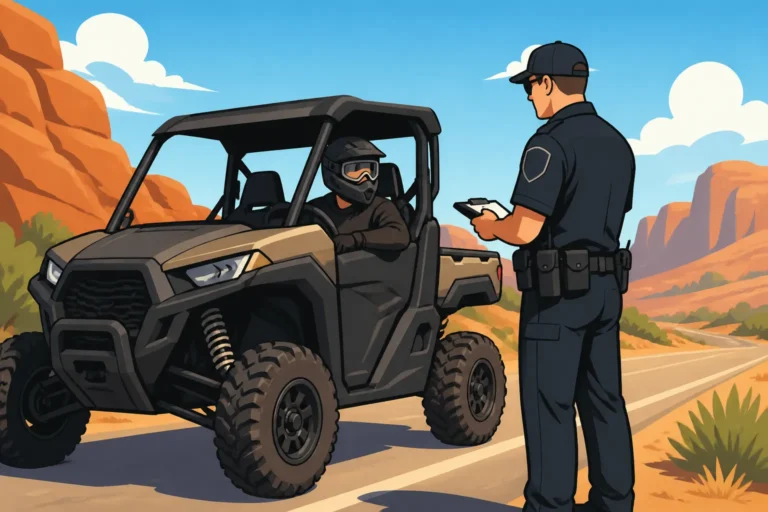
- Contact Law Enforcement: For any accident on a public road involving a street-legal OHV, you should contact local law enforcement (police or sheriff). They will create an official accident report, which is essential for your insurance claim. Even for serious trail incidents, it's often wise to involve authorities, especially if there are injuries or significant property damage. Remember, [What a Utah Officer Looks for on a Street-Legal ATV] includes proper registration and insurance.
- Exchange Information: Get the names, contact information, and insurance details from any other drivers involved. Also, gather contact information from any witnesses.
- Document the Scene: Take photos and videos of everything – the scene, vehicle damage from multiple angles (both your OHV and any other vehicles), road conditions, skid marks, and any relevant signage. This visual evidence can be incredibly helpful for your claim.
- Do Not Admit Fault: Stick to the facts. Do not apologize or admit fault, even if you think you might be to blame. Let the authorities and insurance companies determine liability.
This initial phase is critical. The more information you can gather accurately, the smoother the claims process will be.
Filing an Insurance Claim
Once the immediate aftermath is handled, your next step is to contact your insurance provider as soon as possible. Delaying can sometimes complicate the process.
- Notify Your Insurer: Call your insurance agent or the company's claims department. Be prepared to provide all the details you gathered at the scene – dates, times, locations, parties involved, and a description of the incident.
- Provide Documentation: Submit all your evidence: photos, videos, the police report number, and witness statements. The more complete your initial submission, the faster your claim can be processed.
- Cooperate with the Adjuster: An insurance adjuster will be assigned to your case. They will investigate the incident, review the evidence, and determine liability and damages. Be honest and provide any information they request.
- Get Estimates: For damage to your machine, you might need to get repair estimates from qualified shops. If you have specialty parts from SuperATV or other custom components, ensure the repair shop accounts for these in their estimate, and that your policy covers them.
Keep detailed records of all communications with your insurance company, including names, dates, times, and summaries of conversations. This paper trail can be invaluable if any disputes arise. Knowing [Accidents Between a Car and a UTV] require specific steps, and your street-legal status makes them particularly important to follow correctly.
What Happens If Your Street-Legal Status Changes?
Life happens, and sometimes your street-legal status might change. Maybe you decide to remove some of the street-legal components, or perhaps you move out of Utah to a state with different regulations.
- Removing Street-Legal Components: If you decide to revert your UTV or ATV back to an off-road-only machine, you must inform your insurance company. Your premium will likely decrease, as the risks associated with road use are removed. Failure to inform them could mean you're paying for coverage you no longer need, or worse, if an incident occurs off-road, your policy might be questioned if it was still configured for street-legal use.
- Moving Out of State: If you move from Utah, you'll need to update your insurance policy to reflect your new state of residence. Each state has its own minimum insurance requirements and specific rules for street-legal OHVs, if they allow them at all. Your current Utah policy may not be valid or provide adequate coverage in another state.
Open communication with your insurance provider is always the best policy. They can guide you through these changes and ensure your coverage remains appropriate for your situation. Even if you're just looking for [Insuring a Utah UTV That Never Leaves the Trail], it's a different conversation than for a street-legal machine, and your insurer needs to know.
Common Misconceptions and Mistakes to Avoid
The world of street-legal OHV insurance is ripe for misunderstandings. Because it straddles the line between traditional vehicle insurance and off-road policies, many riders fall into common traps that can lead to inadequate coverage, denied claims, or even legal trouble. Being aware of these pitfalls can save you a lot of grief down the road.
Assuming Your Car Insurance Will Cover It
This is perhaps the biggest and most dangerous misconception. Many people assume that since their ATV or UTV is now street legal and riding on public roads, their existing car insurance policy will simply extend to cover it. This is almost never the case. Car insurance policies are specifically designed for cars, trucks, and SUVs, which have different risk profiles, safety features, and operating characteristics than ATVs and UTVs.
Most auto policies contain explicit exclusions for off-highway vehicles, even if they are street legal. Trying to rely on your car insurance for your street-legal UTV is a recipe for disaster. If you get into an accident, your claim will very likely be denied, leaving you personally responsible for all damages, medical bills, and legal fees. It's imperative to have a separate, dedicated policy for your street-legal machine. This is distinctly different from [Registering a UTV in Utah Without a Title] or other paperwork; insurance is a separate requirement.
Under-Declaring Modifications and Accessories
Many riders spend significant money customizing their ATVs and UTVs, adding everything from aftermarket wheels and tires to light bars, upgraded suspension components, winches, and even full SuperATV cabins. While these modifications enhance your riding experience, they also significantly increase the value of your machine.
A common mistake is failing to declare these modifications to your insurance company. If your policy only covers the stock value of your machine, and you suffer a total loss or significant damage, the insurance payout might only cover the cost of the base model, leaving you out of pocket for all your expensive upgrades. You need to ensure your policy has adequate "custom parts and equipment" coverage, and that the value of your modifications is accurately reflected. Keep receipts for all your major upgrades to substantiate their value in case of a claim.
Skimping on Liability Limits
While Utah has minimum liability requirements for street-legal vehicles, these minimums are often just that – minimums. They might not be sufficient to cover the true costs of a serious accident, especially one involving severe injuries or damage to expensive property.
Opting for the lowest possible liability limits to save a few dollars on your premium can be a costly mistake. If you cause an accident and the damages exceed your policy limits, you become personally liable for the difference. This could mean your wages being garnished, your savings being depleted, or even your assets being seized. For a relatively small increase in premium, you can often secure significantly higher liability limits, providing a much greater degree of financial protection and peace of mind when you're riding your street-legal machine on public roads. It's a key part of your responsibility when you [Making a UTV Street Legal in Utah].
Not Understanding Policy Exclusions
Every insurance policy has exclusions – specific circumstances or types of damage that are not covered. For street-legal OHVs, these exclusions can be particularly tricky. For example:
- Racing or Competitive Use: Most standard policies will exclude coverage if you're involved in an accident while racing or participating in competitive events.
- Commercial Use: If you're using your street-legal machine for commercial purposes (e.g., hauling for hire, guided tours), you'll likely need a specialized commercial policy, not a personal one.
- Operating Without a Valid License: If you're driving your street-legal OHV on public roads without a valid driver's license (which is a requirement in Utah for street-legal OHVs), your insurance claim could be denied.
- Unauthorized Drivers: If someone not listed on your policy (or not a permissible driver under your policy's terms) is driving your machine and gets into an accident, coverage might be denied.
- Illegal Activity: Needless to say, if the accident occurs while you're engaged in illegal activity, your insurance will not cover it.
It's vital to read your policy documents thoroughly and ask your agent to clarify any exclusions you don't understand. Don't sign on the dotted line until you're confident you know what is and isn't covered. This also relates to [Driver License Rules on Utah Roads] and other legal requirements.
Wrapping Up Your Street-Legal Insurance Journey
Insuring a street-legal ATV or UTV in Utah is undeniably more complex than simply getting basic off-road coverage or insuring your daily driver. It demands a thoughtful approach, a keen eye for detail, and clear communication with your insurance provider. You're navigating a unique space where the rules of the trail meet the regulations of the road, and your insurance needs to be robust enough to cover both.
By understanding the distinct requirements, exploring the various types of coverage, being aware of the factors that influence your premiums, and actively seeking out the right insurance partner, you can ensure your adventures are protected. Don't fall into the common traps of assuming your car insurance will cover you or under-declaring your valuable modifications. Taking the time now to secure the right policy for your street-legal machine means you can hit the pavement or the dirt with confidence, knowing that you're well-prepared for whatever comes your way. It's an investment in your peace of mind and the longevity of your riding passion.
Disclaimer
This article is for general informational purposes only and does not constitute professional advice. Laws, prices and regulations vary by location and change over time. Consult a qualified professional for guidance on your specific situation.