Speedometers and Night Riding in Utah
Oh, the open road after a long day of trail riding, or maybe you're just trying to get from your cabin to the general store after sunset. There's nothing quite like the freedom of taking your ATV or UTV on Utah's approved public roads. But when the sun dips below the gorgeous red rock mesas or the majestic Wasatch peaks, things change. You're not just dealing with dusty trails anymore; you're navigating traffic laws and making sure your machine is up to snuff for night driving. It can be a real headache trying to figure out all the specific gear you need and how to keep it legal, especially when it comes to vital components like speedometers and lighting. This guide is going to walk you through exactly what Utah requires for your street-legal off-highway vehicle (OHV) so you can ride safely and legally, day or night.
The Critical Role of a Speedometer for Street-Legal OHVs in Utah
When you decide to make your ATV or UTV street legal in Utah, you’re essentially asking it to behave like a regular motor vehicle on designated roads. And just like any car or truck, a street-legal OHV needs to adhere to speed limits. Imagine trying to drive your car without a speedometer – it would be impossible to know if you're going 25 mph through a small town or 55 mph on a county road! This isn't just a nicety; it's a fundamental safety and legal requirement that too many riders overlook until it's time for an inspection or, worse, a friendly chat with a law enforcement officer.
Why Utah Law Requires a Speedometer for Road Use
The reason Utah law mandates a functional speedometer for any street-legal OHV isn't to make your life harder; it's purely for safety and compliance. When you're on a public road, you are part of a larger traffic ecosystem. Speed limits are posted everywhere for a reason: they dictate the maximum safe speed for that particular stretch of road, considering factors like turns, intersections, population density, and potential hazards. Without a speedometer, you're driving blind. You could easily be going too fast for a residential street, posing a risk to pedestrians and other drivers, or creeping along too slowly on a main thoroughfare, becoming a hazard yourself.
Think about it from a legal perspective, too. If a Utah Highway Patrol trooper pulls you over for speeding, how can you possibly argue your case if you don't even have a device to measure your speed? More importantly, how can you know you're not speeding in the first place? The law doesn't make exceptions for "I didn't know how fast I was going." For your machine to pass a [Utah's Street-Legal ATV Inspection, Step by Step], a working speedometer is a non-negotiable item. It provides an objective measure that ensures you're a responsible road user and gives you peace of mind that you're staying within the legal bounds.
Integrating a Speedometer into Your OHV
Many newer UTVs come from the factory with a digital dash that includes a speedometer, but if you're riding an older ATV or a more basic UTV model, this might not be the case. Or perhaps you've built a custom machine, and a speedometer wasn't top of mind. Don't worry, you're not out of luck! There are several excellent aftermarket options available to get your OHV up to code.
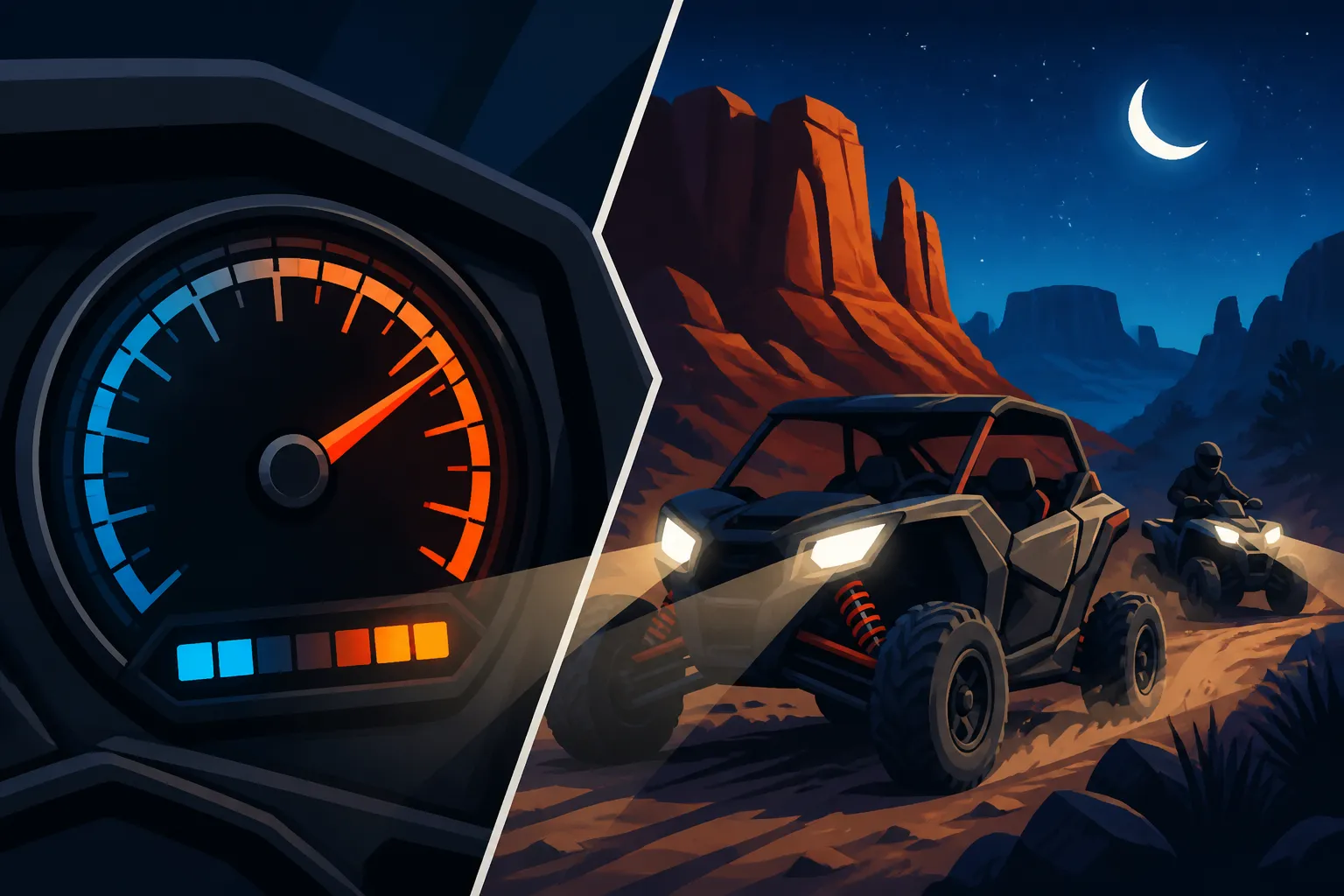
For some machines, you might find a kit that integrates directly with existing sensors, perhaps from the transmission or a wheel. These can provide a very accurate reading. However, for many OHVs, a simpler and often very reliable option is a GPS-based speedometer. These units use satellite signals to calculate your speed, which means installation is usually much easier – no complex wiring to the transmission, no magnets to mount on a wheel. You simply power it up, mount the display where you can easily see it, and you're good to go. Brands like SuperATV offer various dash kits and accessories that can include integrated speedometers, or you can find standalone units that are designed for rugged off-road environments but work perfectly well on the pavement. When choosing, consider factors like display size, backlight for night visibility, and overall durability to withstand the vibrations and elements that OHVs routinely encounter. The key is that it must be functional and clearly visible to the driver.
Navigating Utah Roads After Dark: Essential Lighting Requirements
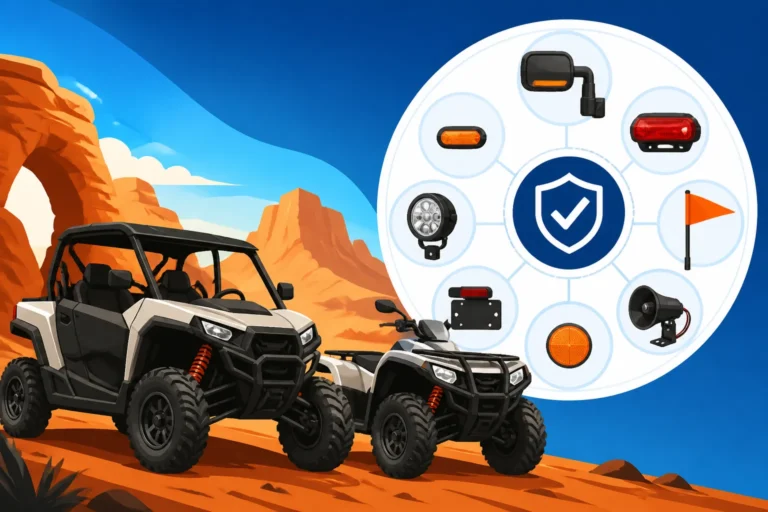
Riding your OHV on public roads after dark is a completely different ballgame than daytime cruising. The dangers are magnified, visibility drops dramatically, and the need for proper lighting becomes absolutely paramount. Utah's street-legal regulations recognize this, imposing specific and strict requirements for your OHV's lighting system to ensure you can see where you're going and, more importantly, that other drivers can see you. It's not just about slapping on a couple of LED bars; it's about meeting specific standards for illumination, color, and functionality.
Headlights and Tail Lamps Utah Requires
Let's start with the basics: headlights and tail lamps. These are your most fundamental tools for night visibility. For headlights, Utah requires your street-legal OHV to have at least one, but most riders opt for two (just like a car) for better illumination. These headlights must emit a white light and be capable of both a high and low beam. Think about driving on a dark country road versus driving through a lit town – you need the flexibility of both settings. The headlights must also be of sufficient intensity to illuminate the road ahead to a certain distance, typically 100 feet for low beam and 200-300 feet for high beam, though the exact measured distance can vary. Critically, your headlights must be properly aimed so they illuminate the road without blinding oncoming traffic. Many riders fail a [What Fails a Utah Street-Legal Inspection] due to poorly aimed or excessively bright aftermarket lights.
For tail lamps, the requirement is simpler but no less important: you need at least one red tail lamp mounted on the rear of your OHV. This lamp must be visible from a distance of at least 500 feet to the rear. This isn't just for looking cool; it's a vital safety feature that lets drivers behind you know you're there. Many aftermarket tail light assemblies integrate neatly into the rear of a UTV or ATV, providing both tail lamp and brake light functions. Ensuring these lights are clean, unobstructed, and fully functional before every night ride is a habit that could literally save your life.
Turn Signals and Brake Lights for Night Driving Safety
Beyond just seeing and being seen, you need to communicate your intentions to other drivers, especially after dark. This is where turn signals and brake lights come into play. Utah law is clear: any street-legal OHV must be equipped with functional turn signal lamps and brake lights.
Your turn signals need to be amber in color and clearly visible from both the front and the rear of your machine. This means you need four separate signal lamps – one for each corner of your OHV. They should blink at a consistent, regulated rate, giving other drivers ample warning of your upcoming turn or lane change. In the dim light of night, these blinking lights become even more critical, cutting through the darkness to grab attention in a way a hand signal never could. There are many integrated kits available that provide turn signal functionality, often incorporating the wiring, switches, and lights into one package. SuperATV, for example, offers various street-legal kits that include all the necessary turn signal components designed for easy installation on popular UTV models.
Brake lights are equally crucial. These must be red, mounted on the rear, and illuminate with greater intensity than your regular tail lamps when the brakes are applied. They need to be visible from at least 500 feet away. Imagine trailing a UTV on a dark road and not knowing when it's slowing down or stopping – it's a recipe for disaster. The brake lights give a clear, immediate warning, giving the driver behind you precious seconds to react. Ensuring your brake light switch is properly adjusted and working every time you press the pedal is a pre-ride check you should never skip, especially when planning to ride after dark. Together, functional turn signals and brake lights are your voice on the road, essential for safe night driving.
Beyond the Basics: Additional Night Riding Gear and Regulations
While headlights, tail lamps, turn signals, and a speedometer form the core of your street-legal, night-ready OHV, Utah's regulations extend a bit further. These additional requirements might seem minor on their own, but each plays a critical role in overall safety and legal compliance, especially when you're out there under the stars. Overlooking any of these can lead to a failed inspection or, worse, put you and others at risk.
License Plate Lights and Mounting for Night Visibility
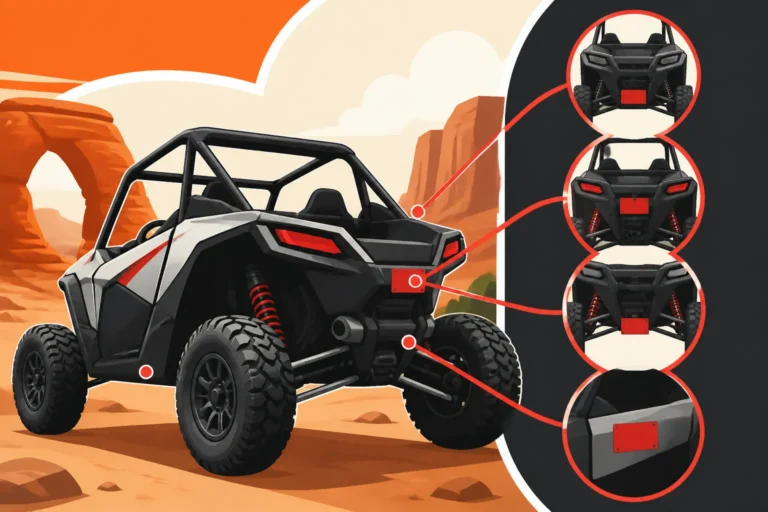
This is one of those small details that many riders forget until an inspector points it out or a law enforcement officer questions it: your rear license plate needs to be illuminated at night. Utah law requires a white light that makes your rear license plate clearly visible from a distance of at least 50 feet. It might sound trivial, but it's a critical aspect of vehicle identification for law enforcement and emergency services, especially after dark.
The light source can be a small LED, a dedicated bulb, or sometimes integrated into the taillight or license plate bracket itself. The main thing is that it must cast enough light to clearly read the numbers and letters on your plate. Proper mounting is also key; the light needs to illuminate the plate, not just the area around it, and the plate itself must be mounted securely and free from obstructions. Many aftermarket license plate brackets come with an integrated LED light specifically for this purpose, making it a relatively simple fix for most riders. Always ensure your license plate is clean and free of mud or dust, as even a perfectly legal light won't help if the plate itself is unreadable.
Mirrors, Windshields, and Other Night Riding Essentials
While not directly "lighting," other components significantly impact your safety and ability to navigate at night. Utah requires your street-legal OHV to have at least two mirrors, one on the left and one on the right, providing a clear view of the road to the rear for at least 200 feet. At night, with reduced ambient light, these mirrors become even more vital for situational awareness. Checking your blind spots before a lane change or turn is already important during the day, but it's paramount after dark when other vehicles might be less visible. Ensure your mirrors are clean, properly adjusted, and securely mounted to minimize vibration, which can blur your view.
Then there's the question of a [Windshield or Eye Protection in Utah]. While Utah law allows for either a windshield OR eye protection (like goggles or glasses), a windshield can be a huge benefit for night riding. It protects you from bugs, dust, and road debris that can obstruct your vision and become painful impacts at speed. Imagine hitting a large bug at 40 mph at night without a windshield – your night vision would be instantly compromised. If you opt for eye protection instead of a windshield, ensure your goggles or glasses are clear and clean, not tinted, which would severely hinder your ability to see in low light. For those embracing the open-air experience, a quality set of clear riding goggles is non-negotiable for night operations.
Finally, think about your personal gear. Reflective elements on your jacket, helmet, or backpack can significantly increase your visibility to other drivers, even if they're not legally mandated. Every little bit of extra visibility counts when you're sharing the road after sunset.
Common Pitfalls and Troubleshooting for Night-Ready OHVs
Getting your ATV or UTV ready for street-legal night riding in Utah isn't just about bolting on some parts; it's about ensuring everything works together reliably and meets the specific legal standards. Many riders run into frustrating issues, especially when it comes to inspections or dealing with unforeseen problems out on the road. Understanding common pitfalls and knowing how to troubleshoot them can save you a lot of time, money, and hassle.
What Fails a Utah Street-Legal Inspection for Night Use
The street-legal inspection in Utah is designed to ensure your OHV is safe and compliant with road regulations, and lighting and speedometer issues are frequent culprits for failure. Here are some of the most common reasons an OHV might fail related to night use:
- Non-functional Speedometer: This is a big one. If your speedometer isn't working, or if it's wildly inaccurate, your machine won't pass. Often, this is due to loose wiring, a faulty sensor, or a dead battery in a GPS unit.
- Insufficient Headlight Output or Aim: Headlights that are too dim, improperly aimed (blinding oncoming drivers or shining too low), or lack a high/low beam function will result in a failure. Some aftermarket LED bars are incredibly bright but lack a defined beam pattern suitable for road use and often don't have a legal low beam.
- Missing or Incorrect Tail/Brake Lights: Only having a single tail light, a tail light that isn't red, or brake lights that don't illuminate (or are the same brightness as the tail light) are common failures. Sometimes the brake light switch is misaligned or dirty, preventing activation.
- Non-Functional or Incorrect Turn Signals: Turn signals that don't flash, flash too slowly or quickly, are the wrong color (must be amber), or are only visible from one side will fail. Often, it's a wiring issue or a burnt-out bulb.
- No License Plate Light: An unilluminated license plate at night is a definite fail. Riders often forget this small but crucial detail.
- Damaged or Obscured Lighting: Cracked lenses, muddy lights, or lights covered by accessories (like spare tires or gear bags) will also lead to a failed inspection.
Imagine rolling up for your [Utah Street-Legal ATV Inspection, Step by Step] thinking you've got it all buttoned up, only for the inspector to point out that your high beams don't work, or your speedometer needle is stuck. It's frustrating, but these issues are usually fixable. A thorough pre-inspection check of all lighting functions and your speedometer is always a good idea.
Maintaining Your Lighting System for Consistent Performance
The off-road environment is notoriously harsh on electrical components. Dust, mud, water, and constant vibrations can wreak havoc on your OHV's lighting system and speedometer. Regular maintenance isn't just about fixing things when they break; it's about preventing them from breaking in the first place, ensuring your night rides are always safe and legal.
Here are some key maintenance tips:
- Check all bulbs and LEDs regularly: Before every significant ride, especially if you plan to be out after dark, do a quick walk-around. Turn on your headlights (high and low), tail lights, brake lights (have a friend step on the pedal, or prop a stick against it), turn signals, and your license plate light. Replace any non-functional bulbs or address any LED issues immediately.
- Inspect wiring and connections: Exposed wiring can corrode or fray. Regularly check all wire harnesses, especially those running to lights and your speedometer, for signs of damage. Use dielectric grease on connections to prevent moisture intrusion. Loose connections are a common cause of intermittent lighting issues.
- Clean lenses: Mud and dust can significantly reduce the effectiveness of your lights. Keep headlight, tail light, and turn signal lenses clean. A dirty lens can dim your lights by 50% or more, making you much less visible.
- Secure mounts: Vibrations can loosen light fixtures and speedometer displays. Ensure all components are securely mounted. A rattling headlight can fail an inspection and will certainly be annoying on a night ride.
- Fuses: Know where your fuse box is and carry spare fuses. A blown fuse is a quick fix that can restore a whole section of your lighting system.
- Water intrusion: After washing your OHV or riding through water, check for moisture inside light housings. Moisture can damage bulbs and electronics over time. Ensure seals are intact.
Being proactive with these simple maintenance steps means you're much less likely to find yourself with a non-functional headlight miles from anywhere after sunset, or facing an unexpected inspection failure. Investing in quality, robust components from brands like SuperATV that are designed for the rigors of off-road use can also lead to fewer maintenance headaches down the line.
| Component | Utah Requirement (Street-Legal) | Importance for Night Riding |
|---|---|---|
| Speedometer | Functional, visible to driver | Essential for adhering to legal speed limits; driver safety. |
| Headlights | White light, high/low beam, sufficient intensity | Illuminates path, allows rider to see hazards, prevents blinding others. |
| Tail Lamps | Red, visible 500 ft to rear | Ensures visibility from behind, prevents rear-end collisions. |
| Brake Lights | Red, brighter than tail, activated by brakes | Warns following drivers of deceleration/stopping. |
| Turn Signals | Amber, front & rear, visible from both sides | Communicates turns/lane changes, crucial for accident prevention. |
| License Plate Light | White, illuminates plate, visible 50 ft | Ensures legal identification for law enforcement. |
| Mirrors (2) | Left & Right, clear view 200 ft to rear | Crucial for situational awareness, checking blind spots. |
| Windshield/Eye Protection | One or the other required | Protects vision from debris, vital for clear night visibility. |
Strategic Night Riding: Safety Tips and Legal Considerations
So, you’ve got your OHV all rigged up with a perfectly functioning speedometer and a dazzling array of legally compliant lights. That’s a fantastic first step! But being street-legal doesn’t automatically make you invincible or fully prepared for night riding. The darkness itself presents unique challenges and demands a different approach to driving. It requires heightened awareness, careful route planning, and a deep respect for both the capabilities of your machine and the limitations of human vision after sunset.
Navigating Speed Limits and Enforcement at Night
Let’s be real: reduced visibility at night fundamentally changes how you should approach speed. Even with the best headlights, your effective stopping distance increases significantly. It takes longer to process information, identify hazards, and react. This is why, even if the posted speed limit is 45 mph, driving that fast on a winding, unlit county road at night on your UTV might be incredibly dangerous. Your speedometer will tell you how fast you are going, but it won't tell you how fast you should be going under those specific conditions. Always drive at a speed that allows you to stop safely within the range of your headlights. This is often referred to as "not outdriving your headlights."
Law enforcement in Utah is just as vigilant about speed enforcement at night as during the day, perhaps even more so when it comes to OHVs on public roads. They are looking for reckless driving, and excessive speed for conditions is a primary indicator. A functional speedometer helps you adhere to the [Utah Traffic Rules for Street-Legal Side-by-Sides] and posted limits, but remember that officers can still cite you for driving "too fast for conditions," even if you’re technically under the limit. Be especially mindful in towns like Moab, where [The 15 mph Rule on Moab City Streets] specifically applies to OHVs, or when you are navigating [Riding Through Town to the Trailhead in Utah]. Slow down, be courteous, and prioritize safety over getting there quickly.
Planning Your Night Ride Routes and Avoiding Hazards
Choosing your routes wisely is paramount for night riding. If possible, stick to routes you are very familiar with from daytime excursions. Knowing the curves, dips, intersections, and potential hazards like cattle guards or wildlife crossings beforehand gives you a massive advantage. Unfamiliar roads hold too many surprises in the dark.
Here are some critical considerations for planning your night rides:
- Wildlife: Utah is teeming with wildlife, from deer and elk to smaller critters, and they become much more active at dawn, dusk, and throughout the night. A deer darting across the road is a common and serious hazard. Keep your speed down, stay alert, and scan the sides of the road. Your powerful headlights can sometimes reflect off animals' eyes, giving you a valuable early warning.
- Other Traffic: While you might think you have the road to yourself, you don't. Farmers, ranchers, and other locals might be using these roads for various reasons, sometimes in older, less visible vehicles. Expect the unexpected. Give ample space, use your turn signals well in advance, and dip your high beams for oncoming traffic.
- Mixed Terrain Challenges: Many street-legal OHV routes in Utah transition between paved roads, gravel roads, and even dirt sections. These changes in surface are harder to anticipate and react to at night. A sudden patch of loose gravel on a paved road can be jarring and lead to a loss of control if you're not expecting it. Maintain a slower, more cautious speed on these transitional segments.
- Fatigue: Night riding can be mentally taxing. Your eyes are working harder, and your brain is processing more information with less visual input. If you start to feel fatigued, pull over in a safe, well-lit area, stretch, and take a break. Don't push it.
Ultimately, night riding on a street-legal OHV in Utah can be an incredibly rewarding experience, offering a unique perspective of the landscape. But it requires respect, preparation, and a commitment to safety. By ensuring your machine meets all legal requirements and adopting a cautious, strategic mindset, you can enjoy those starry Utah nights from the seat of your UTV or ATV with confidence.
Disclaimer
This article is for general informational purposes only and does not constitute professional advice. Laws, prices and regulations vary by location and change over time. Consult a qualified professional for guidance on your specific situation.