The Utah Law Behind Street-Legal ATVs
Trying to make sense of Utah's street-legal OHV laws can feel like navigating a maze blindfolded, especially when you just want to know if you can legally drive your side-by-side from your campsite to the trailhead. It's not as simple as slapping a license plate on and calling it good; there are specific regulations and equipment requirements that can trip up even experienced riders. This guide is here to untangle the complexities, explaining the exact Utah laws governing street-legal ATVs and UTVs so you can ride with confidence and stay on the right side of the law.
Understanding Utah's Unique Approach to Street-Legal OHVs
Utah stands out as one of the most OHV-friendly states in the nation, and a big part of that reputation comes from its progressive stance on allowing off-highway vehicles to be made street legal. This isn't a new concept, but the specifics of how it works are crucial for any rider looking to extend their adventures beyond the dirt trails and onto paved roads. It's about blending the thrill of off-road exploration with the convenience of on-road travel, creating a truly integrated riding experience.
How Utah Defines an OHV for Road Use
Before we dive into the nitty-gritty of making your machine street legal, it's important to understand what Utah actually considers an "Off-Highway Vehicle" (OHV) in the context of road use. The state broadly defines an OHV as any motor vehicle used for recreational purposes on public lands, trails, or easements that is not registered or designed for highway use. This includes ATVs, UTVs (side-by-sides), dirt bikes, and even snowmobiles (though snowmobiles obviously have different rules for "street legal" status!). When you seek to make one of these street legal, you're essentially applying for a special designation that allows it to operate in specific capacities on public roads. It's a fundamental shift in how the state views your machine, moving it from a purely recreational vehicle to a hybrid that can navigate both worlds.
The critical distinction here is that while your machine might be capable of incredible feats off-road, Utah law requires a series of modifications and an inspection to confirm it can safely coexist with regular traffic. This isn't just about putting a license plate on; it's about ensuring your vehicle meets minimum safety standards for things like braking, lighting, and steering. The state isn't trying to make your UTV a car, but rather ensuring it won't be a hazard when sharing the asphalt. This dual nature means your OHV will still retain its off-road identity for trail riding, but gain an entirely new set of permissions for road travel.
The Legislative History of Street-Legal Conversion
Utah's journey to embracing street-legal OHVs is a fascinating one, rooted in a desire to boost tourism and provide greater access to the state's vast network of trails. For years, riders faced the frustrating challenge of trailering their machines from town to trailhead, often just a short distance away. This inefficiency was a major pain point, limiting spontaneous rides and adding logistical headaches to every outing. The initial push for street-legal status came from local communities and riding enthusiasts who saw the potential for integrating OHV recreation more seamlessly into the fabric of rural Utah. They envisioned a future where riders could fuel up, grab a bite, and access trails directly from their lodging, dramatically enhancing the visitor experience.
The specific legislation that solidified street-legal OHV conversion has evolved over time, responding to both the growing popularity of side-by-sides and the need for clear safety guidelines. Early iterations might have been less stringent, but as the number of street-legal machines grew, so did the need for comprehensive rules. Lawmakers recognized the economic benefits of making Utah an even more attractive destination for OHV tourism, and the ability to ride on roads was a key part of that vision. This legislative path wasn't always smooth, with debates around safety, road impacts, and the balance between access and regulation. Ultimately, the current framework reflects a careful compromise designed to maximize riding opportunities while ensuring public safety. Understanding this history helps contextualize why certain rules are in place today and underscores Utah's commitment to supporting the OHV community. You can find out more about the overall process in [How to Register an ATV or UTV in Utah].
Essential Equipment Required by Utah Law
Converting your OHV to street legal isn't just about obtaining a permit; it's about equipping your machine with specific components mandated by Utah law to ensure it's safe for road use. This is where many riders realize the true cost and effort involved, as these aren't always standard features on off-road machines. Think of it like taking a dirt bike and adding all the necessary lights, mirrors, and signals required to operate on city streets – it's a significant transformation.
Lighting and Visibility Regulations
Utah law is very clear about the lighting your street-legal OHV must have to be considered safe and visible on public roads. It goes far beyond just having headlights for the trail. You'll need properly functioning headlights, tail lamps, brake lights, and turn signals, all visible from a specified distance. The headlights must be capable of illuminating the road ahead for a certain distance, similar to what's expected of a passenger car, and typically must have both high and low beam settings. Tail lights are crucial for rear visibility, especially at night or in adverse weather, ensuring that drivers behind you can clearly see your presence.
Turn signals are a non-negotiable item, allowing you to clearly indicate your intentions to other drivers. These need to be visible from both the front and rear of the vehicle. Many off-road machines come with basic lighting, but these often aren't up to street-legal code, requiring aftermarket kits. For instance, SuperATV offers comprehensive street-legal kits that bundle many of these essential lighting components, making the conversion process much simpler than sourcing each part individually. Beyond just the lights, you'll also need a license plate light that illuminates your rear license plate, making it visible at night, and often a horn that's audible from at least 200 feet away. These aren't just suggestions; they are hard requirements that will be thoroughly checked during your inspection. Without them, your machine simply won't pass muster for road use. You can also explore [Headlights and Tail Lamps Utah Requires] for more specifics.
Braking, Steering, and Safety Features
The safety of your street-legal OHV extends well beyond just lighting. Utah law also mandates that your braking system be in excellent working order, capable of stopping your vehicle effectively and safely. This includes both your service brakes (foot brake) and often a parking brake, which must be able to hold the vehicle stationary on an incline. The steering system must also be tight and responsive, free from excessive play, ensuring you have precise control on paved surfaces where quick maneuvers might be necessary. Any looseness or component wear in the steering linkage will be a red flag during inspection.
Beyond these core mechanical systems, other safety features are equally important. Mirrors, for example, are crucial for situational awareness, and Utah typically requires mirrors on both sides of the vehicle, providing a clear view of the rear. A windshield or other approved eye protection is also necessary to shield the driver from debris and wind. While some riders opt for full windshields, others might use half windshields in conjunction with goggles, as detailed in [Windshield or Eye Protection in Utah]. Additionally, functioning seatbelts for all occupants are mandatory, as are properly mounted license plates that meet visibility standards. If your machine needs an upgrade to meet these safety requirements, companies like SuperATV provide a range of aftermarket accessories, from mirrors to turn signal kits, that are designed to meet or exceed regulatory standards, giving you peace of mind and simplifying your street-legal conversion.
Noise, Emissions, and Other Compliance Details
While not as immediately visible as lights or mirrors, noise and emissions regulations are also part of Utah's street-legal OHV law. OHVs are often louder than typical road vehicles, and excessive noise can be a nuisance and a legal issue. Utah has specific decibel limits for vehicles operating on public roads, and your OHV must comply. This usually means your exhaust system must be equipped with a muffler and spark arrestor, and it must not have been illegally modified to be louder. During inspection, the sound level of your machine may be checked, and failing to meet the limits can prevent your street-legal status. It's not just about what sounds cool; it's about what's legally acceptable for shared public spaces.
Emissions, while perhaps less frequently highlighted for OHVs than cars, are also part of the broader compliance framework. Your OHV must be in good operating condition, not spewing excessive smoke or pollutants. While Utah doesn't have the same rigorous emissions testing for OHVs as it does for some cars, keeping your engine properly tuned and maintained helps ensure it meets general environmental standards. Furthermore, your tires must be street-legal, meaning they are designed for road use and aren't excessively aggressive in a way that would damage pavement or compromise handling. Lift kits and tire sizes can also be scrutinized, as they can affect vehicle stability and the proper function of other safety components like headlights. It's a holistic approach to ensure your OHV is a responsible road user, not just a trail monster. [Horns, Mufflers and Utah Noise Limits] delves deeper into what you need to know about sound.
The Inspection and Certification Process
Once you've diligently equipped your OHV with all the necessary legal components, the next crucial step is getting it inspected and certified. This isn't just a formality; it's a thorough check by a qualified professional to ensure your machine truly meets all of Utah's requirements for street-legal operation. Many riders find this part of the process daunting, fearing they might miss a small detail, but with proper preparation, it can be a smooth experience.
Finding a Certified Inspection Station
You can't just take your OHV to any repair shop for a street-legal inspection. Utah requires that these inspections be performed by a certified inspection station. These are typically licensed automotive repair shops or dealerships that have technicians specially certified by the state to conduct safety inspections, including those for street-legal OHVs. The key is to look for a shop that specifically advertises "safety inspections" or "street-legal OHV inspections." A quick online search for "Utah street-legal ATV inspection" or contacting your local Utah DMV office can usually point you in the right direction. It's wise to call ahead to confirm they perform OHV inspections and to schedule an appointment, as not all stations are equipped or knowledgeable about OHVs.
When you call, be sure to clarify the exact type of machine you're bringing (ATV vs. UTV) and if they have any specific requirements. Some shops might be more familiar with UTVs than ATVs, for instance. Choosing a station that regularly performs these inspections is beneficial, as their technicians will be well-versed in the specific regulations and know exactly what to look for. This can save you time and potential headaches, as they can often give you advice on common issues or modifications before you even bring your machine in. Think of it as seeking out a specialist rather than a general practitioner for this specific need. Understanding [Finding a Certified Utah Inspection Station] can help you narrow down your search.
What the Inspection Covers
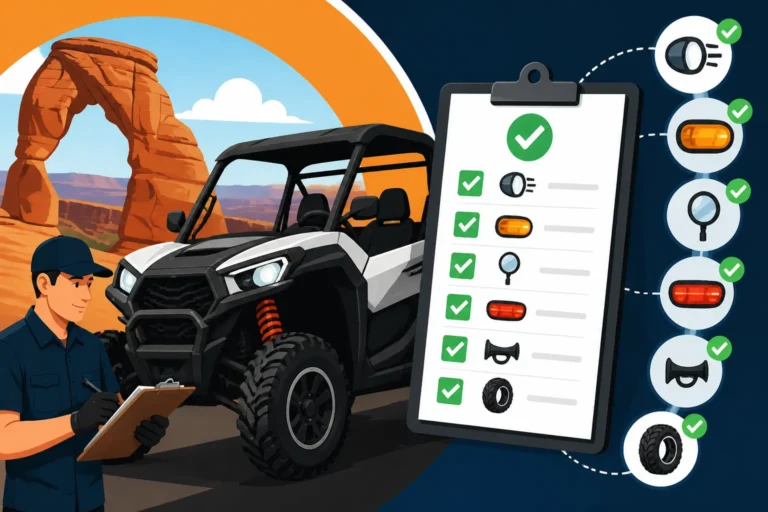
The street-legal inspection in Utah is a comprehensive safety check designed to verify that your OHV meets all the requirements discussed previously. The inspector will go through a detailed checklist, examining every mandated component and system. This includes, but isn't limited to:
- Lights: Checking headlights (high/low beam), tail lights, brake lights, turn signals, and license plate light for proper function, brightness, and visibility.
- Brakes: Testing both service brakes and parking brake to ensure they stop the vehicle effectively and hold it securely.
- Steering & Suspension: Inspecting for excessive play, damage, or wear in steering components, and ensuring the suspension is safe and stable.
- Tires: Verifying that tires are street-legal, have adequate tread depth, and are free from damage.
- Mirrors: Confirming that required mirrors are present, properly mounted, and provide adequate rear visibility.
- Horn: Testing for proper operation and audibility.
- Windshield/Eye Protection: Checking for a compliant windshield or ensuring the driver has appropriate eye protection (e.g., goggles).
- Seatbelts: Ensuring all required seatbelts are present and functional.
- Muffler/Spark Arrestor: Inspecting for proper exhaust system, noise compliance, and spark arrestor.
- License Plate Mount: Checking for a proper and visible location for the license plate.
If your OHV passes the inspection, you'll receive a safety inspection certificate. If it fails, the inspector will provide a list of deficiencies that need to be corrected before a re-inspection. It's crucial to address these issues promptly, as you'll typically have a limited timeframe to get them fixed and re-inspected without incurring additional fees. Many riders choose to get their parts from reputable aftermarket suppliers like SuperATV to ensure they're using high-quality components that will pass inspection the first time. The more prepared you are, the smoother this process will be.
Maintaining Street-Legal Status
Getting your OHV certified as street-legal isn't a one-time event; it requires ongoing commitment to maintain that status. In Utah, street-legal OHVs are typically subject to periodic safety inspections, similar to regular automobiles. This means that every so often (the exact frequency can vary, so it's best to check current DMV guidelines or with your inspection station), you'll need to bring your machine back for another inspection to ensure it still meets all the safety and equipment standards. Neglecting these re-inspections can lead to your street-legal status lapsing, making it illegal to ride your OHV on public roads. It's crucial to stay on top of your [Inspection Schedule for an Eight-Year-Old UTV] or any other machine.
Beyond the formal inspections, maintaining street-legal status also means keeping your OHV in good working order at all times. If a headlight burns out, a turn signal stops working, or your muffler becomes damaged, you are legally obligated to repair it before driving on public roads. Riding with faulty or non-compliant equipment, even if you previously passed an inspection, can result in tickets and fines. This also extends to any modifications you might make after passing the initial inspection; always ensure they don't compromise your vehicle's compliance. It's a continuous responsibility, ensuring your OHV remains a safe and legal vehicle for both trail and road adventures. Regular maintenance and pre-ride checks are your best friends in keeping your street-legal status intact.
Where You Can (and Can't) Ride on Utah Roads
One of the biggest perks of having a street-legal OHV in Utah is the freedom it grants to connect trails, access services, and explore towns. However, this freedom comes with specific rules about where you can actually ride. It's not a blanket pass to go anywhere a car can; there are nuances based on road type and local ordinances. Understanding these boundaries is critical to avoiding fines and ensuring a smooth trip.
State Highways, County Roads, and City Streets
Utah law generally permits street-legal OHVs to operate on most state highways (excluding interstates and freeways), county roads, and city streets. The primary benefit of this rule is the ability to travel between trail systems, reach fuel stations, restaurants, or lodging, and connect different riding areas without the need to trailer your machine. For example, in many southern Utah towns like Moab or Kanab, you can ride your street-legal UTV directly from your motel onto city streets and out to the trailhead. This flexibility is a game-changer for OHV tourism and local riders. [Moab's Speed Limit for OHVs on City Streets] outlines some specific municipal rules to be aware of.
However, there are important caveats. Interstates and freeways are strictly off-limits to street-legal OHVs, which makes sense given the high speeds and traffic volumes. While most county roads are open, some may have specific restrictions, especially in more populated or environmentally sensitive areas. City streets also have their own set of rules; while main thoroughfares are often open, residential streets or specific zones might have limitations. Always keep an eye out for posted signage and local ordinances. Riding a street-legal OHV is a privilege, and adhering to these road classifications is essential for responsible enjoyment. It’s also important to be aware of the [Riding Through Town to the Trailhead in Utah] guidelines.
Speed Limits and Traffic Rules for OHVs
When you're operating a street-legal OHV on public roads in Utah, you are bound by the same traffic laws as any other motor vehicle. This means respecting speed limits, obeying traffic signals and signs, using turn signals, and yielding the right of way. While your machine might be powerful, it's generally not designed for sustained high-speed highway travel, and excessive speed can compromise safety. Utah often imposes specific speed limits for OHVs on public roads, which can be lower than the posted speed limit for cars, especially on city streets. For instance, Moab has a 15 mph speed limit for OHVs on city streets, even if the general vehicle speed limit is higher.
It's vital to recognize that your OHV handles differently than a car. Its higher center of gravity, shorter wheelbase, and often less sophisticated suspension can make it more prone to rollovers or instability, especially at speed or during sharp turns. Always drive defensively, assume other drivers may not see you, and leave plenty of space. Signaling your turns well in advance, maintaining appropriate following distances, and being extra cautious in intersections are all crucial. Remember, the goal is to safely share the road, not to treat it like an extension of the trail. You'll need to know [Utah Traffic Rules for Street-Legal Side-by-Sides] if you plan to hit the pavement.
Specific Local Ordinances and Restrictions (e.g., Moab)
While state law provides the overarching framework, many individual cities and counties in Utah have the authority to enact their own local ordinances regarding street-legal OHVs. These local rules can vary significantly from one community to another, and what's legal in one town might be prohibited just a few miles down the road. This patchwork of regulations can be a source of frustration for riders, but it underscores the importance of doing your homework before you ride into a new area.
A prime example is Moab, a major OHV hub. While incredibly friendly to street-legal machines, Moab has specific rules, such as its 15 mph speed limit on city streets and a noise ordinance that is actively enforced. Other towns might restrict OHVs from certain residential areas, school zones, or main thoroughfares during peak hours. Some smaller communities might have a more relaxed approach, while others, particularly those with heavy tourist traffic or sensitive local populations, might impose stricter guidelines. Always look for signage, check municipal websites, or inquire locally before you ride. Ignoring local ordinances can lead to unexpected fines and sour your riding experience. Being informed about [City and County OHV Rules Across Utah] will serve you well.
Driver and Passenger Requirements for Street-Legal OHVs
Just like driving a car, operating a street-legal OHV on Utah's public roads comes with specific requirements for both the driver and any passengers. These rules are in place to ensure everyone's safety and to align with general traffic laws. It's not enough to just have a street-legal machine; you also need to ensure you and your occupants are legally compliant.
Licensing, Age, and Helmet Mandates
To legally drive a street-legal OHV on Utah's public roads, the operator must possess a valid driver's license. This means a standard automobile driver's license, not just an OHV education certificate. The age requirement for driving a street-legal OHV on roads typically mirrors the age requirement for obtaining a driver's license in Utah. This means a driver must generally be at least 16 years old (with appropriate provisional licensing rules for younger drivers). This distinguishes street-legal OHVs from off-road OHV operation, where younger riders can operate under supervision with an OHV education certificate. For a deeper dive into licensing, check out [Driver License Rules on Utah Roads].
Helmet mandates are another critical safety component. While Utah has specific helmet laws for off-road OHV use, the rules for street-legal machines on public roads can differ. Generally, if you are under 18 years of age, you are required to wear a helmet when operating or riding as a passenger on a street-legal OHV on public roads. For riders 18 and older, while not always legally mandated on all public roads, wearing a helmet is always strongly recommended for safety, especially given the open nature of many OHVs. Some local ordinances or specific road types might also extend helmet requirements, so it's always best to be prepared and protected. Understanding [Are Helmets Required at 18 and Older in Utah?] will help clarify the nuances.
Insurance and Registration Obligations
Just like any other vehicle operating on public roads, your street-legal OHV must be properly registered and insured. When you convert your OHV to street-legal status, it will receive a standard vehicle license plate from the Utah Division of Motor Vehicles (DMV) and will be subject to vehicle registration fees and possibly annual inspections. This process is distinct from the regular OHV registration decal that allows off-road use; you will effectively have two forms of registration – one for off-road and one for on-road, though often managed through a combined system. You can often handle both at once, as discussed in [Getting a Plate and Sticker in One Visit].
Proof of liability insurance is also a non-negotiable requirement. Utah law mandates that all motor vehicles operating on public roads carry minimum liability insurance coverage. This protects you and others in the event of an accident. Your standard off-road OHV insurance policy might not automatically cover road use, so it's crucial to contact your insurance provider to ensure your policy extends to street-legal operation. They may require an endorsement or a separate policy. Without proper registration and insurance, operating your street-legal OHV on public roads is illegal and can lead to significant penalties, including fines, impoundment, and even suspension of driving privileges. It’s a serious requirement that ensures financial responsibility on the road, as outlined in [Insurance for a Street-Legal Machine in Utah].
Disclaimer
This article is for general informational purposes only and does not constitute professional advice. Laws, prices and regulations vary by location and change over time. Consult a qualified professional for guidance on your specific situation.