What Utah’s 50 mph Limit Means for Riders
Riding your street-legal ATV or UTV on Utah's incredible road system can be a game-changer for accessing trails and exploring our beautiful state. But one of the biggest head-scratchers for riders, often leading to frustration and confusion, is Utah's specific 50 mph speed limit for off-highway vehicles on public roads. This guide will thoroughly break down what that limit truly means for you, where it applies, and how to stay legal and safe while enjoying the freedom of the open road.
Understanding Utah's Basic Street-Legal OHV Law
Before we dive into the nuances of the 50 mph limit, it's really helpful to get a solid grasp on why we even have street-legal OHVs in Utah to begin with. It wasn't always this way, and many of us remember the days when hitting the pavement with our quads or side-by-sides was just a pipe dream. The shift to allowing OHVs on many public roads was a huge win for riders, opening up a world of convenience for trail access and connecting our favorite riding areas.
The Core Concept: OHVs as Motor Vehicles
When your ATV or UTV undergoes the conversion to become street-legal in Utah, it essentially takes on a dual identity. On the trail, it's still your rugged off-highway machine designed for dirt, rocks, and dunes. But once you’ve completed the [Utah Street-Legal ATV Inspection, Step by Step] and received your license plate and street-legal registration, it’s also recognized as a motor vehicle for the purposes of highway travel. This means it's now subject to many of the same rules and regulations that apply to cars and trucks, albeit with some very specific exceptions, like the speed limit we're discussing.
This dual status is fantastic because it means you're no longer confined to trailering your machine everywhere. Imagine rolling out of your motel in Kanab and driving directly to the Coral Pink Sand Dunes, or heading from Marysvale right onto the Paiute Trail. That convenience is exactly what the street-legal designation provides. However, with that convenience comes the responsibility of understanding and adhering to road laws, which can differ significantly from trail etiquette. It's a balance we all have to learn to strike.
Why the Limit Exists: Safety and Integration
So, why 50 mph? It’s a question that echoes across many a trailhead campfire. The most straightforward answer comes down to safety and the integration of OHVs into the existing traffic flow. While modern UTVs are incredibly capable, they are fundamentally designed for off-road use. Their handling characteristics, braking distances, and overall stability at higher speeds can differ significantly from traditional passenger vehicles. Add to that the fact that many OHVs, even after street-legal modifications, might not have the same enclosed cabin protection or crash-test ratings as a car.
Legislators and road safety advocates, when crafting these laws, had to find a compromise. They wanted to allow riders more access but also mitigate risks. The 50 mph limit is seen as a sweet spot: fast enough for reasonable travel on many secondary roads, but slow enough to reduce the severity of potential accidents and allow for better control, especially when sharing the road with heavier, faster-moving traffic. It's about ensuring that everyone, OHV riders and other motorists alike, can share the road safely. It’s a pragmatic approach to a complex issue, even if it sometimes feels a bit restrictive when you’re on a long, straight stretch of open road.
Where the Limit Applies: State Roads vs. Local
This is where it gets a little nuanced. Utah’s 50 mph speed limit for street-legal OHVs applies generally to state highways and county roads unless a specific ordinance or signage indicates otherwise. Many cities and counties in Utah have passed their own ordinances to allow or restrict OHV use on local roads within their boundaries. For instance, you might find that [Moab's Speed Limit for OHVs on City Streets] is often lower than 50 mph, sometimes as low as 15 mph in congested areas. Meanwhile, towns like Kanab embrace OHV access, allowing you to ride your machine through town with relative ease.
It's crucial to understand that the statewide 50 mph rule acts as an upper limit on roads where OHV use is permitted. If the posted speed limit for cars is 65 mph, your OHV is still restricted to 50 mph. If the posted limit is 35 mph, then your OHV must adhere to the 35 mph limit. You always follow the lower of the two: either the posted speed limit for that section of road or your OHV's maximum legal speed of 50 mph. This isn't just about avoiding a ticket; it's about being predictable to other drivers and operating within your machine's design parameters for road use. Always keep an eye on local signage and be aware of city and county regulations, as they can sometimes modify the statewide rules.
The 50 MPH Rule in Detail: What It Means for Your Ride
Okay, let's really dig into what that 50 mph means for you when you're out there riding. It's not just a number on a sign; it profoundly impacts how you plan your routes and interact with other traffic. Ignoring it isn't an option, and understanding its implications will make your street-legal experience much smoother and safer.
Beyond the Speedometer: Matching Traffic Flow
When you're cruising down a two-lane highway, even one with a 50 mph speed limit, it's not just about hitting that exact number on your speedometer. It's about seamlessly integrating with the flow of traffic. Imagine you’re on a rural highway where cars are consistently traveling at 50 mph. If your street-legal UTV can maintain that speed comfortably and safely, you're doing great. However, sometimes even on a 50 mph road, other vehicles might be pushing slightly faster, or you might encounter areas where the road conditions make 50 mph feel less safe in an OHV.
The challenge comes when your 50 mph limit puts you significantly slower than other vehicles, even if they are technically speeding. This is why paying attention to your surroundings and being prepared to yield or pull over to let faster traffic pass is so important. Utah law generally requires slower vehicles to stay to the right, and if you’re creating a significant impediment to traffic, you could actually be cited for impeding traffic flow, even if you’re under your 50 mph limit. It’s a balancing act: drive safely within your OHV’s capabilities and the legal limit, but also be a courteous and predictable road user. Investing in good mirrors from a company like SuperATV can significantly improve your awareness of what’s happening behind you, allowing you to react safely to approaching vehicles.
Higher Posted Limits Versus Your OHV's Maximum
This is perhaps the most critical distinction to understand. You will inevitably encounter state highways and county roads with posted speed limits of 55 mph, 60 mph, or even 65 mph (though [Interstates, Freeways and Utah OHV Law] explicitly prohibit OHVs, so those high-speed roads aren't generally an issue). Regardless of what the sign says for cars and trucks, your street-legal OHV cannot exceed 50 mph. Period.
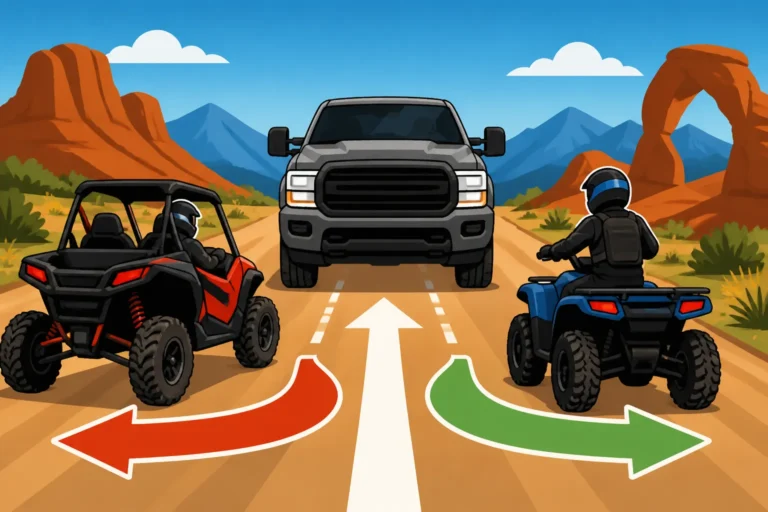
This means that if you're on a road with a 60 mph limit, you must still stick to 50 mph. This can feel frustrating, especially on long, open stretches where your machine feels capable of more. But the law is clear. It means that on these faster roads, you will almost certainly be slower than the vast majority of traffic. This goes back to the safety and integration aspect. You become the slower-moving vehicle, and you need to drive defensively. Be extra vigilant with your mirrors, use turn signals well in advance, and be prepared for vehicles to pass you. It's not always comfortable being the slowest on the road, but adhering to this rule is paramount for your safety and legality.
Implications for Commuting and Long-Distance Travel
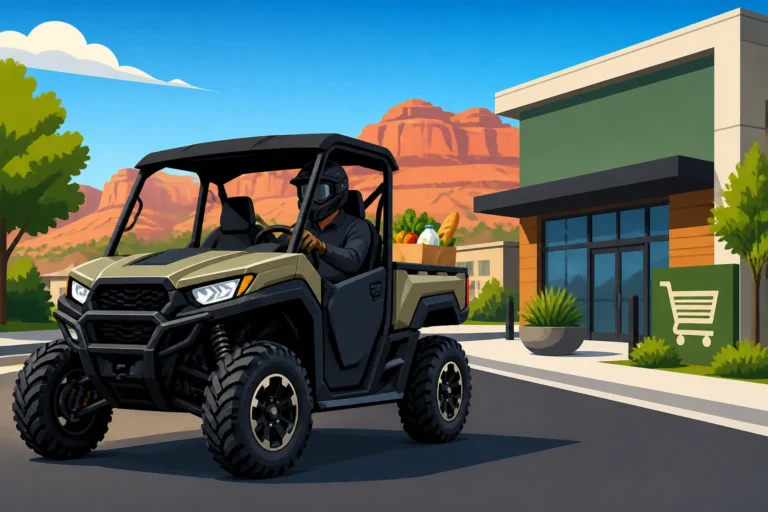
The 50 mph limit definitely shapes how practical a street-legal OHV is for certain types of trips. For short hops between a campground and a trailhead, or a quick run into town for groceries, it's often perfectly fine. Many of us love the convenience of [Riding to Fuel in a Small Utah Town] without having to load up a trailer.
However, if you're thinking about using your street-legal side-by-side for a longer commute to work or for extended road trips across the state, that 50 mph limit becomes a significant factor. A 100-mile journey that might take an hour and a half in a car will take at least two hours in your OHV, and likely longer if you factor in slower sections, traffic, or the need to pull over. This isn't necessarily a dealbreaker for everyone, but it’s something you need to plan for. The slower speed means longer travel times, which in turn means more exposure to traffic, potentially more fuel stops, and a need for greater personal endurance if you're covering significant distances. For instance, [Riding From Marysvale Onto the Paiute Trail] might involve some road sections, but it's typically shorter distances, making the 50 mph limit less of an issue than if you were trying to commute from, say, St. George to Salt Lake City on your UTV.
| Road Type | Posted Speed Limit (Cars/Trucks) | Max Speed for Street-Legal OHV | Driver Responsibility |
|---|---|---|---|
| Interstate/Freeway | 70-80 mph | NOT ALLOWED | Do not enter. |
| State Highway | 55-65 mph | 50 mph | Adhere to 50 mph, stay right, be passed safely. |
| State Highway | 50 mph | 50 mph | Adhere to posted limit, maintain flow. |
| State Highway | 45 mph | 45 mph | Adhere to posted limit. |
| County Road (Rural) | 45-55 mph | 50 mph (or posted) | Adhere to lower of 50 mph or posted. |
| City Street | 15-35 mph | Posted Limit | Follow local ordinances, often lower than 50 mph. |
| Crossing a Highway | Varies | Follow local rules | Cross quickly and safely at legal points, don't ride on. |
Navigating Roads with Varying Speed Limits
Utah's road system is incredibly diverse, from wide-open desert highways to winding mountain passes and bustling city streets. Each stretch of pavement comes with its own rules, and for street-legal OHV riders, understanding how the 50 mph cap interacts with these varying speed limits is key to a legal and enjoyable ride.
When the Road is 55 MPH or Higher
This is arguably the most common scenario where the 50 mph OHV limit truly kicks in and makes a noticeable difference. You'll find countless miles of state highways and county roads across Utah with posted speed limits of 55 mph, 60 mph, or even 65 mph for typical passenger vehicles. When you're on these roads, remember: your OHV's maximum legal speed is 50 mph. You are required to maintain that speed, even if traffic around you is moving faster.
This often means you'll be riding in the rightmost lane, if available, and that cars and trucks will be passing you. It's crucial to be aware of your surroundings, use your mirrors constantly, and avoid any sudden movements that could surprise other drivers. Think of yourself as a slow-moving vehicle, similar to an agricultural tractor or a construction vehicle, which also have specific speed restrictions on higher-speed roads. It’s not about being timid, but about being predictable and safe. Your goal is to get from point A to point B without becoming a hazard, and sometimes that means accepting that you’ll be passed by most other vehicles.
Exceptions and Designated OHV Routes
While the 50 mph rule is generally applied across Utah, there are specific circumstances and designated routes where the rules might be different. Some areas or trail systems might have specifically designated OHV routes that are open to street-legal machines and might have their own speed recommendations or restrictions. These are typically distinct from standard state highways.
For example, certain county roads that are part of vast OHV trail networks, like those found around the Paiute Trail or in parts of the San Rafael Swell, might have relaxed local rules or very low traffic volumes, making the 50 mph limit feel less impactful. It's rare to find a higher OHV speed limit than 50 mph on a paved public road, but it's always worth checking local ordinances for the specific areas you plan to ride. Unfortunately, [Interstates, Freeways and Utah OHV Law] still stand firm; street-legal OHVs are not allowed on interstate highways, regardless of their speed capability. This means you’ll need alternative routes or a trailer if your journey involves crossing major freeways. Always consult local maps and current regulations, as rules can occasionally change or be interpreted differently by local law enforcement.
City Streets and Lower Speed Zones
When you roll into a town or city, the 50 mph statewide OHV limit typically takes a backseat to the posted speed limit for that specific municipal area. Most city streets have posted speeds of 25 mph, 35 mph, or even 15 mph in school zones or residential areas. In these instances, your street-legal OHV must adhere to the posted speed limit for all vehicles, not the 50 mph state maximum. Remember, you always follow the lower of the two applicable limits.
Many of Utah's OHV-friendly towns, like Moab, Kanab, Hurricane, and Marysvale, have worked hard to integrate OHVs into their street networks. These towns understand the economic benefit riders bring. However, they also often have specific local ordinances concerning speed, noise, and sometimes even time-of-day restrictions for OHVs on city streets. [Moab's Speed Limit for OHVs on City Streets] is a prime example, often setting limits lower than the typical car speed in certain areas to manage congestion and safety. It's crucial to slow down, be respectful of residents, and follow all local signage. Riding responsibly in these towns helps ensure continued access for all of us. If you’re unsure about local rules, a quick stop at a visitor center or a check of the city’s website can save you a lot of hassle.
Equipment and Performance Considerations
Making your OHV street-legal isn't just about bolting on a few accessories; it's about ensuring your machine is safe, visible, and capable of operating alongside traditional road traffic. The 50 mph limit, in particular, brings certain equipment and performance considerations to the forefront, as you'll be asking your machine to do something it wasn't originally designed for on a sustained basis.
Ensuring Your Machine Can Legally Keep Up
Not all ATVs and UTVs are created equal when it comes to road performance. While most modern UTVs and larger ATVs can easily hit and maintain 50 mph, some smaller displacement machines, older models, or heavily modified utility quads might struggle. Before you head out on a public road with a 50 mph limit, you need to be honest with yourself about your machine's capabilities. Can it comfortably and reliably hold 50 mph without feeling strained or unstable?
It's not just about reaching the speed; it's about maintaining it safely and being able to respond to road conditions, brake effectively, and accelerate smoothly. If your OHV is constantly redlining to hit 50 mph, or if its handling feels twitchy at that speed, it might not be suitable for extended road use, even if it's technically street legal. This isn't just about avoiding a ticket; it's about your safety and the safety of others on the road. Remember, even if the law allows it, common sense and a realistic assessment of your machine's performance should always be your guide.
Upgrades for Roadworthiness and Safety
Beyond the minimum [Utah Street-Legal ATV Equipment Requirements], there are several upgrades that many riders consider essential for comfortable and safe road travel, especially when dealing with the 50 mph limit. Visibility is key: consider adding brighter LED headlights and tail lights for day and night use, and ensure your [Turn Signals on a Street-Legal Utah UTV] are clearly visible from all angles. A proper horn is required, but a louder aftermarket one can be invaluable on the highway.
Additionally, better [Mirrors Utah Requires on Both Sides] can significantly improve your rearward visibility, a critical factor when faster traffic is approaching from behind. If your UTV or ATV has a windshield, ensuring it's clean and free of cracks is vital, as is having functional wipers if it's an enclosed cab. For those who frequently encounter higher-speed roads, some riders also look at suspension upgrades or tire choices that offer better on-road stability, even if it means a slight compromise in off-road grip. Companies like SuperATV offer a wide range of accessories, from full glass windshields to robust mirrors and even full turn signal kits, that can enhance your machine's road manners and overall safety. Thinking beyond just "what's required" to "what makes me safer" is a smart approach.
The Impact of Tires and Gearing on Road Speed
Your tires and gearing play a massive role in how your OHV performs on paved roads. Knobby, aggressive off-road tires, while fantastic for traction on dirt and rocks, can be noisy, wear quickly, and offer less grip on pavement, especially at 50 mph. They can also contribute to a less stable feel and increased vibration. Some riders opt for more all-terrain (AT) style tires that offer a better compromise between off-road capability and on-road manners. Be mindful of [Tire Rules for Street-Legal Machines] to ensure they meet minimum road standards.
Gearing also impacts your top speed and engine RPMs at 50 mph. If your machine is geared very low for extreme crawling, it might be screaming its engine at 50 mph, leading to excessive wear, heat, and poor fuel economy. Conversely, if you've re-geared for higher top speeds, you might sacrifice some low-end torque for trail riding. Most stock utility UTVs are reasonably well-suited for 50 mph, but heavily modified machines might need careful consideration of their final drive ratios. This isn't to say you can't have both great trail performance and reasonable road manners, but it often requires thoughtful setup and, sometimes, compromise. It's a balance every street-legal rider has to find for their specific machine and riding style.
Enforcement and Potential Consequences
No one wants to encounter law enforcement on the road, especially not when you’re out enjoying a ride. Understanding how Utah’s 50 mph limit is enforced and what the potential penalties are is crucial, not just for staying out of trouble, but for being a responsible member of the riding community. Ignoring these rules can lead to more than just a fine; it can impact your ability to ride and even your financial well-being.
What a Utah Officer Looks For
When a Utah Highway Patrol trooper or a local sheriff's deputy spots a street-legal OHV on the road, they’re generally looking for a few key things. First and foremost, they're checking for your valid [Utah OHV Decals and Where They Go], your license plate, and any other required street-legal markings or equipment, like turn signals and mirrors. After that, speed is almost always at the top of their list, especially if you're on a higher-speed highway. They know the 50 mph limit for OHVs.
Officers are trained to spot vehicles that seem out of place or are traveling at an inappropriate speed for the vehicle type. If you're zooming past cars on a 60 mph highway, you're practically inviting a traffic stop. They might also be looking for general safe driving practices: are you maintaining your lane, signaling turns, and keeping a safe following distance? An officer might also quickly check for [Proof of Insurance for a Street-Legal Conversion] and a valid driver's license. The goal isn't to pick on OHV riders, but to ensure everyone on the road is operating safely and legally. Being polite and having all your [What Paperwork Utah Riders Must Carry] readily accessible can go a long way if you do get pulled over.
Penalties for Exceeding the Limit
Exceeding the 50 mph limit in your street-legal OHV is treated like any other speeding violation. The penalties will vary depending on how far over the limit you were traveling. A minor infraction might result in a moderate fine and points on your driver's license. More egregious speeding, especially if combined with reckless driving, could lead to more severe fines, higher points, and potentially even a suspended license. The state takes speeding seriously, and the fact that you're in an OHV doesn't lessen the severity of the offense.
Keep in mind that while some parts of Utah are remote, law enforcement uses radar and lidar just like they would for any other vehicle. Don't assume you won't get caught just because you're "out in the sticks." A speeding ticket for your OHV can quickly turn a fun day of riding into an expensive headache. Beyond the immediate financial cost, accumulated points can lead to higher insurance premiums and, in the long run, could impact your ability to drive. It's simply not worth the risk to push past that 50 mph barrier.
Insurance Implications and Liability
Getting caught speeding, especially in an OHV, can have significant implications for your insurance. A traffic citation can cause your insurance rates to increase, sometimes substantially. If you have multiple violations, you could even find it difficult to get insurance at all. Most importantly, if you are involved in an accident while exceeding the 50 mph limit (or any other speed limit), your insurance company might deny or reduce coverage, claiming you were operating illegally.
This could leave you personally liable for damages to your OHV, other vehicles, and any medical expenses. The financial fallout from an accident where you are found at fault and were speeding can be absolutely devastating. While [Insurance for a Street-Legal Machine in Utah] is a must-have, it's only truly effective if you're abiding by the law. Always remember that your street-legal status comes with the responsibility of following road rules, and that includes the 50 mph speed limit. Protect yourself, your investment, and your future by sticking to the legal limits.
Real-World Riding Scenarios and Best Practices
Understanding the 50 mph limit in theory is one thing, but applying it in the real world, out on Utah's diverse roads, requires a bit of practical knowledge and a commitment to best practices. Let's look at some common scenarios you'll likely encounter as a street-legal OHV rider.
Crossing Highways to Reach Trailheads
Often, the most convenient way to get from one section of trail to another, or from your lodging to a trailhead, involves crossing a state highway. Sometimes, it might even mean riding a short stretch on a highway. This is where the 50 mph limit is absolutely critical. Even if the posted speed limit for cars is 65 mph, your OHV is still capped at 50 mph.
When you're approaching a busy highway intersection or planning to ride a short section of a fast road, exercise extreme caution. Look for safe crossing points. If you must ride on the highway, stick to the rightmost lane or shoulder if it's safely paved and allowed. Use your turn signals well in advance and make sure your [Headlights and Tail Lamps Utah Requires] are on, even during the day, to maximize your visibility. Be prepared for cars to approach rapidly from behind and pass you. This isn't the time to push your machine's limits; it's the time for defensive driving and clear communication with other road users. Always aim to minimize your time on high-speed roads where you'll be significantly slower than other traffic.
Riding Through Trail Towns like Moab or Kanab
Utah's trail towns are a unique environment where OHVs are often an integral part of the local scene. Towns like Moab, Kanab, Hurricane, and Marysvale have embraced street-legal OHV use, allowing riders to travel from their hotels directly to the trails, access restaurants, and fuel up. However, these towns also have their own specific rules.
As mentioned earlier, [Moab's Speed Limit for OHVs on City Streets] and other local ordinances often set speeds much lower than 50 mph, sometimes as low as 15 or 25 mph. It's crucial to slow down, be mindful of pedestrians, and respect residential areas. Noise can also be an issue, so if you have an aftermarket exhaust, be particularly considerate. Always pay attention to posted speed limits on city streets and local signs that might indicate specific OHV restrictions or routes. The goal is to be a good neighbor, ensuring that OHV access remains welcome in these communities. Remember, our continued access depends on how we all behave.
Preparing for a Multi-Day, Multi-Road Trip
If you’re planning an epic multi-day adventure that involves significant road travel on your street-legal OHV, the 50 mph limit needs to be a core part of your planning. You’ll need to factor in longer travel times between trail systems. For example, a trip from St. George to Richfield might involve hours on highways where you'll be limited to 50 mph, even if the general flow of traffic is faster.
Map out your route carefully, identifying sections where you'll be on higher-speed roads. Consider the fuel stops, as your OHV's range might be different at sustained 50 mph speeds than it is on trails. Carrying extra fuel in a safe, approved container might be a good idea for longer stretches. Also, think about rider comfort: wind, sun, and vibrations at 50 mph for extended periods can be fatiguing. Eye protection is required, and a quality [Windshield or Eye Protection in Utah] can make a huge difference in comfort. Pack accordingly, stay hydrated, and plan for breaks. Companies like SuperATV offer excellent storage solutions and comfort accessories that can make these longer road sections more enjoyable. Proper preparation ensures your multi-day adventure is fun and safe, rather than a grind.
Common Rider Questions and Misconceptions
The 50 mph limit often sparks a lot of questions and can lead to some common misunderstandings among riders. Let's clear up a few of these, because getting it wrong can lead to frustration or, worse, a citation.
"Can I Just Drive Slower?"
A common thought is, "Well, if the limit is 50 mph, and I'm on a 65 mph road, can't I just go slower than 50 mph and be fine?" While it's always legal to drive under the speed limit (within reason), driving too slowly can sometimes create its own set of problems. Utah law, like many states, has provisions against impeding the flow of traffic. If you're going significantly slower than other vehicles on a two-lane road without a passing lane, you can create a dangerous situation by causing a backup of traffic behind you.
In such cases, it's best practice to stay as far to the right as safely possible, and if a line of vehicles forms behind you, find a safe pull-off point to allow them to pass. While you must adhere to the 50 mph maximum, you also have a responsibility to not become a hazard by being excessively slow in inappropriate situations. It's about finding that sweet spot of being legal and safe, and sometimes that means riding as close to the 50 mph limit as your machine and conditions allow, while still being prepared to yield to faster traffic.
The Difference Between Trail and Road Rules
This might seem obvious, but it's a distinction that often gets blurred in a rider's mind, especially when seamlessly transitioning from trail to road. On the trail, our focus is often on navigating obstacles, maintaining traction, and following specific trail etiquette. Speed limits, if they exist, are usually related to safety on rough terrain or near campgrounds. [What a Utah Trooper Checks at a Trailhead] often focuses on registration, safety flags, and proper riding gear.
On the road, however, you're a motorist. The rules shift entirely to traffic laws: posted speed limits, right-of-way, lane discipline, signaling, and interacting with other vehicles (cars, trucks, motorcycles). Your street-legal OHV, while still an OHV, is now expected to behave like a conventional vehicle. This requires a mental shift in your driving style. You must be more predictable, use signals clearly, and respect the structure of road traffic. Don't carry trail habits, like sudden braking or erratic movements, onto the pavement. The street-legal designation means you're operating in two distinct worlds, and you need to switch gears mentally (and often literally) when you cross between them.
Future Changes and Advocacy for OHV Road Access
The rules governing street-legal OHVs in Utah are not static. They are the result of ongoing legislative discussions, public safety concerns, and vigorous advocacy from rider groups. Many riders find the 50 mph limit restrictive, especially on long, open stretches of highway where their modern UTVs feel perfectly capable of keeping up with faster traffic. There's often discussion about whether certain classes of OHVs should be allowed to go faster, or if the rule could be modified for specific types of roads.
Rider organizations and advocacy groups are constantly working with lawmakers to improve OHV access and update regulations. If you feel strongly about the 50 mph limit or other aspects of street-legal OHV use, getting involved with these groups is the best way to make your voice heard. Attending public meetings, contacting your representatives, and sharing your experiences can all contribute to future policy changes. It's a testament to the power of the riding community that we have the access we do today, and continued engagement is key to shaping tomorrow's rules.
Disclaimer
This article is for general informational purposes only and does not constitute professional advice. Laws, prices and regulations vary by location and change over time. Consult a qualified professional for guidance on your specific situation.