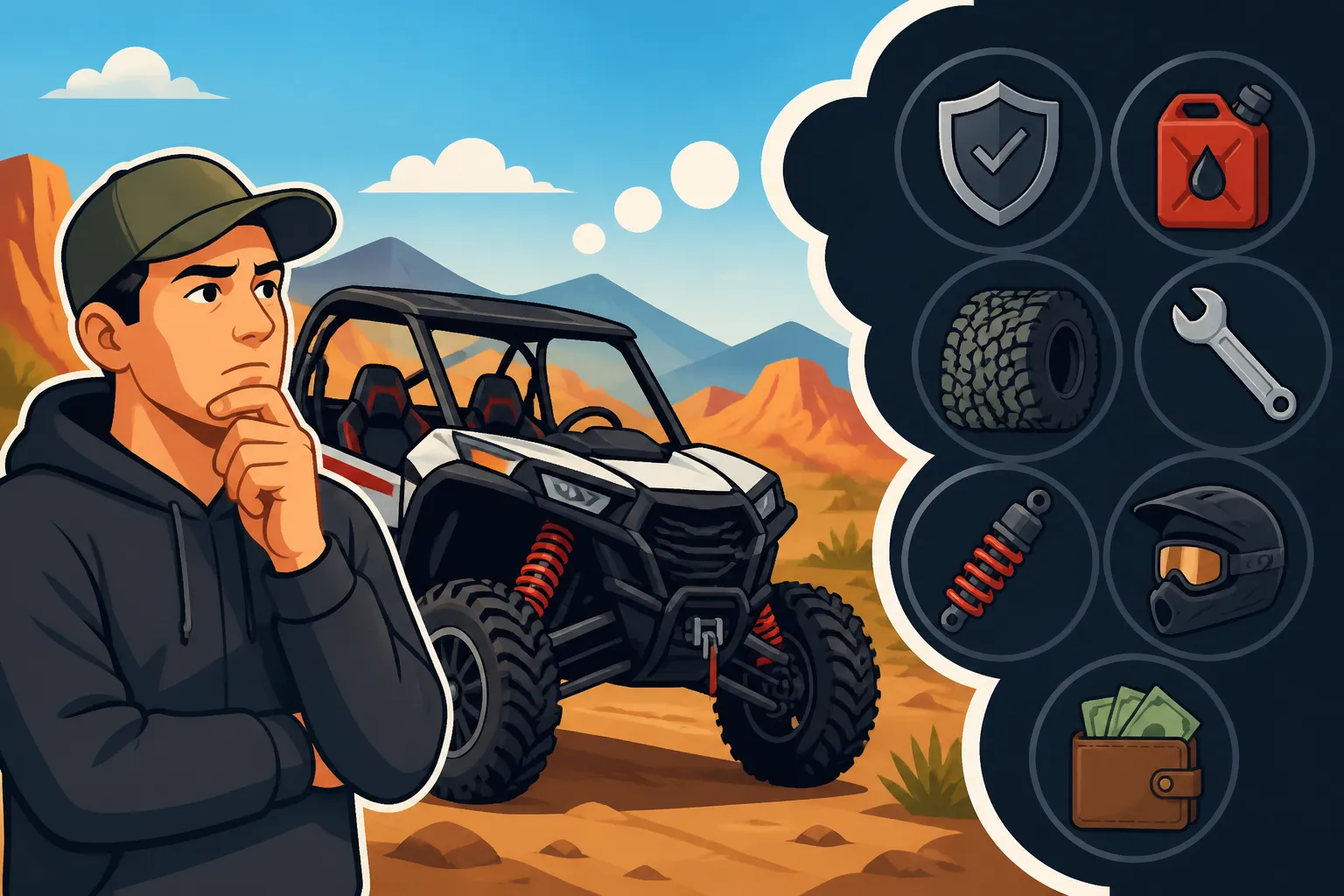
Hidden Costs After You Buy a Side-by-Side
You just bought your dream side-by-side or ATV, and the excitement is absolutely through the roof. You're picturing epic rides through Moab's red rock, carving dunes at Sand Hollow, or cruising the high mountain trails of the Paiute. But then, as the initial glow starts to fade, reality often hits like a rogue branch on a tight trail: there are so many other costs beyond the purchase price. This guide is here to shed light on those sneaky, often overlooked expenses that can quickly add up after you bring your new (or new-to-you) off-highway vehicle home, helping you budget wisely for all your Utah adventures.
The Immediate After-Purchase Costs You Might Forget
Bringing home a new ATV or UTV is a thrilling moment, but many riders focus so much on the purchase price that they forget the essential legal and safety requirements that kick in immediately. These aren't optional extras; they're the gateway to legal, safe riding in Utah.
Registration, Titling, and Fees (Oh My!)
Let's be real, paperwork is rarely fun, and the associated fees can feel like a punch to the gut after you've just shelled out for your machine. In Utah, every OHV needs to be registered to legally ride on public lands, even if you bought it used from a private seller. This isn't just a simple sticker; it involves several components. First, there's the initial registration fee itself. Beyond that, you'll encounter what's called a "uniform fee" or "age-based uniform fee," which is essentially a property tax on your OHV that's collected at the time of registration. This fee varies based on the age of your machine, with newer vehicles generally incurring a higher amount. Don't forget that many counties in Utah also tack on their own small fees, which further contribute to the total. It’s definitely worth taking a moment to understand [Utah OHV Registration Fees, Start to Finish] so you know exactly what to expect.
If you bought your side-by-side or ATV from a private party, you're also responsible for paying sales tax on that transaction. Many folks assume sales tax only applies to dealer purchases, but in Utah, private party sales of OHVs are subject to sales tax, which you'll pay when you register the machine. The state determines the value of your machine, often using industry guides or the bill of sale, to calculate this tax. This can be a significant chunk of change that many riders don't factor into their budget. Plus, there's always a title transfer fee. Even if your machine already has a clear title, transferring ownership into your name isn't free. This small administrative cost can be easy to overlook when you're caught up in the excitement, but it's crucial for legally documenting your ownership. To ensure you have all your ducks in a row, especially when buying used, a well-drafted bill of sale is critical. Resources like LawDepot can be incredibly helpful for generating legally sound documents that outline the terms of sale and protect both buyer and seller, making the registration process smoother down the road.
Essential Safety Gear and Accessories
Okay, you’ve got the machine, but are you ready to ride? The answer is probably not, at least not safely or legally without some essential gear. First and foremost, helmets. Utah has specific helmet laws, particularly for younger riders, but even for adults, a quality, DOT-approved helmet is non-negotiable for your safety. Along with a helmet, you’ll want good goggles to protect your eyes from dust, debris, and sun, proper riding gloves for grip and protection, and sturdy over-the-ankle boots to safeguard your feet and ankles. While these aren't always legally mandated for adults, they are absolutely crucial for minimizing injury in the event of a mishap. Ignoring these can not only put you at risk but also lead to a much larger "hidden cost" in medical bills if you have an accident.
Beyond personal safety gear, certain accessories become essential depending on where and how you plan to ride. If you're heading to Utah's iconic sand dunes like Sand Hollow or Little Sahara, a brightly colored whip flag is a must-have for visibility and is legally required in many dune areas. Furthermore, any responsible rider will equip their machine with basic trail essentials: a robust first aid kit (because scrapes and bumps are inevitable), a recovery strap (for when you or a buddy gets stuck), and often a fire extinguisher, especially if you're venturing into remote, dry areas. These aren’t just add-ons; they're investments in your safety and preparedness, and they definitely come with a price tag. Before you even think about hitting the trail, make sure you've budgeted for these critical items.
Ongoing Operational Expenses That Add Up
Once your OHV is legally registered and you're geared up for safety, the costs don't stop there. Just like a car, your side-by-side or ATV needs fuel, maintenance, and protection. These ongoing operational expenses are often underestimated and can quickly deplete your adventure fund if you're not prepared.
Fuel, Maintenance, and Repairs
Let's talk about gas. Your side-by-side or ATV might be smaller than your truck, but it can be surprisingly thirsty, especially when you're tackling challenging terrain or hitting the throttle hard. Planning an epic weekend ride on the Paiute Trail system? You'll be filling up more often than you think, and those fuel costs add up quickly. It's not just the quantity, either; some high-performance machines prefer premium fuel, which further increases the per-gallon cost.
Then there's routine maintenance. Unlike your car, which might go 5,000 to 10,000 miles between oil changes, off-road machines operate in harsh, dusty, and often wet environments. This means more frequent oil changes, air filter cleanings or replacements, spark plug checks, and belt inspections. Skipping these can lead to bigger problems down the line. A new belt for a UTV, for example, can be a significant expense, and blowing one out on the trail can leave you stranded. Beyond routine tasks, off-roading is inherently tough on machinery. Unexpected repairs are almost a certainty. A rock could puncture a tire, a hidden stump could damage a suspension component, or a tough climb could put excessive strain on your drivetrain. Replacing worn-out tires, especially specialized off-road tires, is a substantial cost that riders often forget to factor in until it's too late. Creating a budget that includes an allowance for these regular check-ups and an emergency fund for the inevitable surprises is a smart move for any OHV owner.
Insurance and Permits for Utah Trails
Many riders assume that because their OHV isn't street legal, they don't need insurance. While it's true that Utah doesn't mandate liability insurance for purely off-highway use unless you're financing the machine, that doesn't mean it's not a wise investment. Imagine a scenario where you accidentally cause damage to someone else's machine or property on the trail, or worse, someone gets injured. Without insurance, you could be facing hefty out-of-pocket costs. If you decide to make your UTV street legal for cruising through towns like Moab or Kanab, then insurance becomes a legal requirement, just like for any other road vehicle. You can find more detailed information on [When Utah Requires Insurance on an OHV] to understand the nuances.
Beyond insurance, access to many of Utah's incredible riding areas comes with a price tag in the form of permits and fees. For visitors from out of state, Utah requires a non-resident OHV permit to ride on public lands. This is a crucial cost that many out-of-staters overlook, leading to potential fines if they're caught riding without one. You can learn more about [Utah's Non-Resident OHV Permit Explained] if you're visiting. Even for residents, popular state parks like Sand Hollow, Coral Pink Sand Dunes, and Little Sahara charge day-use or entrance fees. These aren't always huge expenses individually, but if you're a frequent rider, they can add up over the course of a season. Some specific trails or designated riding areas might also have their own unique permit requirements. It's always best to check with the land management agency (BLM, Forest Service, State Parks) for the area you plan to visit before you load up and head out.
Here's a quick look at common permits and fees you might encounter:
| Cost Type | Who Needs It | Purpose | Frequency |
|---|---|---|---|
| Non-Resident OHV Permit | Out-of-state OHV owners | Legal access to Utah public lands | Annual |
| State Park Day-Use Fee | Anyone entering certain State Parks | Access to parks like Sand Hollow, Coral Pink, Little Sahara | Per visit or annual pass |
| Event/Special Use Permit | Organized groups, races, commercial tours | Required for specific activities or events | Per event |
| OHV Registration | All Utah-registered OHVs | Legal identification and funding for trail systems | Annual or every two years |
Long-Term Considerations and Upgrade Investments
The hidden costs don't stop with getting your machine legal and keeping it running. There are also long-term considerations like storage, transportation, and the ever-present allure of upgrades that can significantly impact your overall investment.
Storage and Transportation
Unless you live directly adjacent to a trail system (lucky you!), you'll need a way to transport your side-by-side or ATV to your chosen riding spot. For most, this means a trailer. If you don't already own one, this is a significant upfront cost. A good quality, durable trailer that can safely haul your machine (or machines) will require a substantial investment. And just like your OHV, your trailer needs its own registration, maintenance (tires, bearings, lights), and insurance. It's an easily forgotten line item in the budget, but essential for getting your machine to the fun. Don't overlook details like [Trailer Registration Utah ATV Owners Forget] in your planning.
Once you get home, where will your OHV live? Not everyone has a spacious garage or a secure spot on their property. Storing your machine securely, protected from the elements and theft, can also incur costs. This might mean investing in a sturdy cover, beefing up your garage security, or, for some, renting a dedicated storage unit. These monthly or annual fees can quietly chip away at your budget, adding to the true cost of ownership. Beyond security, proper storage also involves things like fuel stabilizers, battery tenders, and cleaning supplies to keep your machine in top condition, especially during the off-season.
Upgrades, Customization, and Street-Legal Conversions
This is where many riders fall into the rabbit hole of "just one more thing." The aftermarket for ATVs and UTVs is vast, offering everything from practical additions to purely aesthetic modifications. Want brighter lights for night riding? A winch for self-recovery? A killer sound system for tunes on the trail? How about a lift kit, new suspension, or bigger tires for enhanced performance and appearance? Each of these upgrades comes with a price tag, and the combined cost can easily rival or even exceed the original purchase price of the machine. While these customizations can certainly enhance your riding experience, it's easy to get carried away without a clear budget.
One of the most significant "upgrade" costs, and an increasingly popular one in Utah, is converting your OHV to be street legal. This involves installing a host of specific equipment like turn signals, mirrors, a horn, a license plate light, and often a windshield or proper eye protection. After installation, you'll need to pass a safety inspection and then register your machine for street use, which often involves additional fees beyond your standard OHV registration. This process can be quite an investment, not just in parts but in time and effort, but it opens up incredible opportunities to connect trails via public roads in places like Moab, Marysvale, and Kanab. You can delve deeper into [Cost to Make a UTV Street Legal in Utah] to get a full picture. If you're buying an already customized or street-legal machine privately, make sure all the modifications are properly documented and that the seller can provide clear titles or bills of sale for any major components. Again, using a reputable document service like LawDepot for a detailed bill of sale can provide peace of mind in such transactions.
Avoiding Surprises: Budgeting and Preparation
The key to enjoying your side-by-side or ATV without financial stress is proactive planning and a realistic understanding of all the costs involved. Don't let the excitement of a purchase blind you to the ongoing realities of OHV ownership.
Creating a Realistic OHV Budget
Think of the initial purchase price of your side-by-side or ATV as just the entry ticket to a fantastic hobby. The real budget needs to encompass everything that comes after. Start by listing all the mandatory costs: registration fees, title transfer fees, and sales tax. Don't forget the age-based uniform fee, which can be a significant addition depending on your machine's vintage. You can get a good handle on this by researching [The Age-Based Uniform Fee on Utah OHVs].
Next, factor in essential safety gear, which is non-negotiable. Then move on to operational costs: estimate your annual fuel consumption, routine maintenance supplies (oil, filters, cleaner), and a dedicated fund for unexpected repairs. Having an emergency repair fund is crucial; off-roading puts stress on machines, and things will break. Don't forget insurance, especially if you're leaning towards a street-legal conversion or if you want peace of mind for trail incidents. Finally, consider your long-term needs: a trailer, storage solutions, and an allowance for any desired upgrades. By laying out all these expenses from the start, you create a holistic picture of the true cost of ownership. This comprehensive approach is essential for [Budgeting First-Year Costs for a New UTV] and beyond.
Diligence in Private Sales
Buying a used ATV or UTV from a private seller can save you money on the purchase price, but it comes with its own set of hidden risks and potential costs if you're not careful. The biggest mistake buyers make is neglecting proper paperwork. Always insist on a clear, accurate bill of sale and a signed-over title. A template from a service like LawDepot can ensure all necessary information is included, protecting both parties. Without a properly executed bill of sale, you might face issues proving ownership or calculating sales tax. If the seller claims the machine doesn't have a title, proceed with extreme caution. While it might be possible to [Registering a UTV in Utah Without a Title] under specific circumstances, it's often a much more complicated and time-consuming process that can incur additional costs and headaches.
Beyond paperwork, be realistic about the condition of a used machine. What might seem like a great deal could quickly become a money pit if it requires extensive repairs. It's always a good idea to perform a thorough pre-purchase inspection or, even better, have a trusted mechanic look over the machine. They can identify potential issues that a casual buyer might miss, from worn-out tires and brakes to engine or suspension problems. Factoring in the cost of potential maintenance or immediate repairs for a used machine into your budget is a smart move. A seemingly small price difference upfront could save you thousands down the road. Remember, a little diligence now can save you a lot of hidden costs and frustration later. You can find more tips on navigating this process in [Buying a Used ATV in Utah: The Paperwork].
Bringing home a side-by-side or ATV opens up a world of incredible outdoor adventure here in Utah. But to truly enjoy those experiences without unwelcome financial surprises, it's essential to understand and budget for all the costs involved, not just the initial sticker price. By preparing for registration, safety gear, ongoing maintenance, and potential upgrades, you can hit the trails with peace of mind, knowing your budget is as ready for adventure as your machine. Don't let hidden costs overshadow the joy of the ride!
Disclaimer
This article is for general informational purposes only and does not constitute professional advice. Laws, prices and regulations vary by location and change over time. Consult a qualified professional for guidance on your specific situation.