Does Home Insurance Cover a Utah ATV?
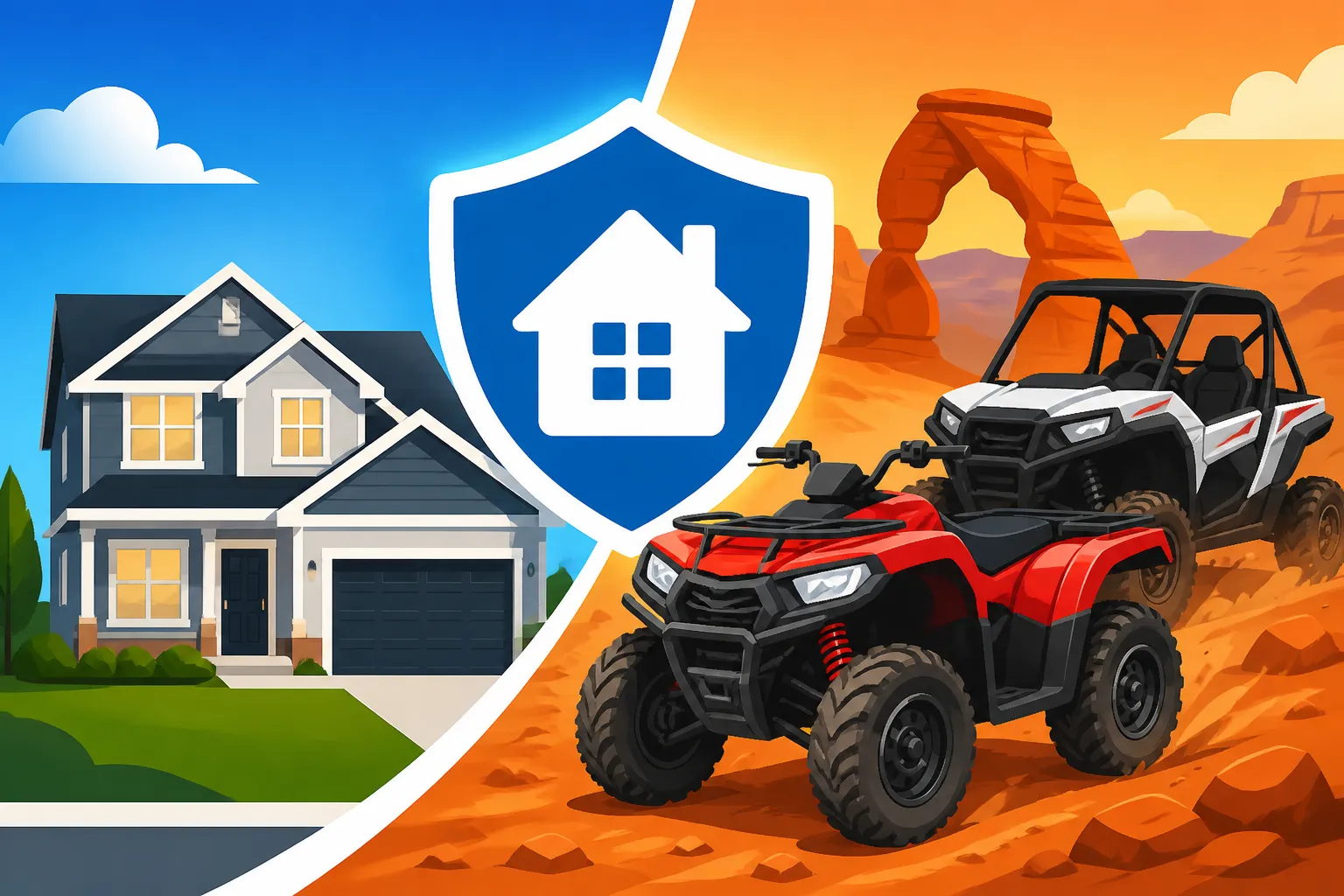
It's a question that keeps many Utah ATV and UTV owners up at night: "Is my beloved off-road machine actually covered by my home insurance policy?" The honest truth is, for most typical policies and most common riding scenarios, the answer is a resounding "probably not" or "not nearly enough." This can be a real gut punch for owners who assume their homeowner's policy offers a blanket of protection for everything on their property. This guide will help you understand the significant gaps that often exist, what limited coverage you might find, and why dedicated OHV insurance is almost always the smarter, safer route.
Understanding the Limits of Homeowner's Insurance for Your ATV
It’s easy to assume that if something is on your property, your homeowner’s insurance will cover it. After all, it covers your lawnmower, your bicycles, and even your fancy new grill, right? But ATVs and UTVs are a different breed in the eyes of insurance companies. They’re considered recreational vehicles, and their operation carries a unique set of risks that standard homeowner's policies are simply not designed to cover.
Think about it: your ATV is a motorized vehicle capable of high speeds and used in environments where accidents are a distinct possibility. It's not a stationary object. Because of this inherent risk, most homeowner's policies have very specific exclusions for motorized vehicles, especially when they're being operated. This isn't some obscure loophole; it's a fundamental aspect of how these policies are structured. They're built to protect your home and the personal property within and around it from perils like fire, theft, and natural disasters, not the risks associated with operating an off-road vehicle.
When you're out on the trails, whether it's the [Paiute ATV Trail] or tearing up the dunes at Sand Hollow, your homeowner's policy typically provides zero liability coverage if you injure someone or damage their property. This is a critical point, as liability claims can be devastatingly expensive. Imagine a scenario where you accidentally collide with another rider, causing them significant injury and damage to their machine. Without dedicated OHV insurance, every single penny of medical bills, property repair, and potential legal fees would come directly out of your pocket. That's a financial exposure no one wants.
Scenarios Where Limited Coverage Might Apply (But Don't Count On It)
While homeowner's insurance rarely covers the operation of your ATV, there are a few very narrow circumstances where you might find some limited personal property coverage. These are usually tied to theft or damage while the machine is stored on your property, and even then, there are often strict limitations and conditions.
Theft While Stored at Home
Let’s say you keep your shiny new UTV securely locked in your garage in St. George, only to wake up one morning and find it gone. In this specific scenario, some homeowner's policies might offer coverage for the theft of your ATV as personal property. However, this coverage is almost always subject to your policy's personal property limits, which can be much lower than the actual value of your machine. For instance, if your policy has a $1,500 limit for "recreational vehicles" or "motorized vehicles not typically used on public roads," and your UTV is worth $15,000, you're looking at a huge out-of-pocket loss.
Furthermore, there might be specific stipulations. Did you secure it properly? Was the garage locked? Did you have proof of purchase and a clear title? Having all your ducks in a row with documentation, perhaps even a clear bill of sale from a resource like LawDepot, can be crucial in proving ownership and value to your insurer, though LawDepot doesn't provide the insurance itself. It's also worth noting that if the ATV was stolen while parked outside or away from your primary residence, even this limited coverage often vanishes.
Damage While Stored (Non-Operational)
Another rare instance might be if your ATV is damaged while it's simply sitting on your property and not being operated. For example, if a tree falls on your garage during a severe windstorm and crushes your side-by-side inside, your homeowner's policy might extend coverage for the damage, again, under the personal property section. But, similar to theft, this is usually capped at your personal property limits and your deductible will apply.
It's absolutely vital to read your policy's fine print, specifically the sections on "Exclusions" and "Personal Property." Don't just skim it; look for specific language regarding "motorized vehicles," "recreational vehicles," or "off-highway vehicles." If you have any doubt, call your insurance agent directly and ask for clarification in writing. Never assume, because assumptions in insurance can lead to massive financial headaches down the line.
Here's a quick comparison of what typical policies generally cover:
| Coverage Type | Homeowner's Insurance (Typically) | Dedicated OHV Insurance (Typically) |
|---|---|---|
| Liability | No coverage for injury/damage caused while operating the OHV. | Covers injury/damage to others or their property. |
| Collision | No coverage for damage to your OHV from an accident. | Covers damage to your OHV from an accident. |
| Comprehensive | Possibly limited coverage for theft or non-collision damage while stored at home, subject to limits. | Covers theft, vandalism, fire, natural disasters (non-collision damage). |
| Medical Payments | No coverage for your or your passenger's injuries while operating the OHV. | Covers medical expenses for you/passengers after an accident. |
| Uninsured/Underinsured Motorist | Not applicable for OHV operation. | Covers damages if hit by an uninsured/underinsured rider. |
| Property Damage (to your OHV) | Limited to specific perils (e.g., fire, theft) while stored, often with low limits. | Covers repair/replacement for a wide range of perils, including accidents. |
This table clearly illustrates why relying solely on homeowner's insurance for your ATV or UTV is a risky gamble.
The Indispensable Need for Dedicated OHV Insurance
Given the severe limitations and common exclusions in homeowner's policies, obtaining a dedicated off-highway vehicle (OHV) insurance policy is not just recommended, it's pretty much essential for any responsible ATV or UTV owner in Utah. These policies are specifically designed to address the unique risks associated with riding off-road, providing comprehensive protection where your home insurance falls short.
What Dedicated OHV Insurance Covers
A standalone OHV policy typically offers several layers of protection, mirroring many aspects of a car insurance policy but tailored for off-road use:
- Liability Coverage: This is arguably the most crucial component. It protects you financially if you cause an accident that injures another person or damages their property. This can cover their medical bills, lost wages, and repair costs for their machine. Without this, a single accident could wipe out your savings.
- Collision Coverage: This pays for damages to your own ATV or UTV if it's involved in a collision, regardless of who is at fault. Whether you roll your side-by-side on a tricky section of [Hell's Revenge] or collide with another machine, collision coverage helps with repair or replacement costs.
- Comprehensive Coverage: This protects your machine from non-collision-related damage or loss. Think theft, vandalism, fire, floods, falling objects (like a tree branch), or even animal strikes. This is where your machine would be covered if it were stolen from a trailhead or damaged while parked at your cabin, scenarios typically excluded by home insurance.
- Uninsured/Underinsured Motorist (UM/UIM) Coverage: Just like with cars, not everyone on the trail is responsible. If an uninsured or underinsured rider hits you and causes damage or injury, UM/UIM coverage can help pay for your medical expenses and repairs to your machine.
- Medical Payments Coverage: This can help cover medical expenses for you and any passengers injured in an accident, regardless of who was at fault. It provides an immediate layer of protection for bodily injuries.
- Accessory and Custom Parts Coverage: Many OHV owners invest heavily in aftermarket parts and accessories. A good dedicated policy can provide coverage for these upgrades, often up to a certain limit, which standard homeowner's policies would never even consider.
When Is It Required?
While Utah does not generally mandate insurance for all off-highway vehicle registration for private land use, there are crucial exceptions. If you make your UTV [Street-Legal in Utah], you will absolutely need a full vehicle insurance policy to meet state requirements for operating on public roads. Even if you only ride off-road, if you're financing your machine, the lender will almost certainly require comprehensive and collision coverage to protect their investment.
Even when not legally required, having proper insurance is simply good practice. The financial consequences of an uninsured accident—especially one involving serious injury to another person—can be devastating and long-lasting. It’s a small investment for immense peace of mind.
Getting the Right Policy
When you’re looking for a dedicated OHV insurance policy, don't just grab the first quote you see. Shop around. Compare coverage levels, deductibles, and premiums from multiple providers. Be honest about how and where you ride your machine, as this can impact your rates and coverage. If you use your machine for commercial purposes, like guiding tours or agricultural work beyond what's considered typical recreational use, be sure to disclose that, as it may require a different type of policy or endorsements.
Remember to consider where your OHV is stored and transported. If you frequently trailer it to various riding spots like the [Moab, Utah] area, ensure your comprehensive coverage extends to these locations. Some policies might also offer roadside assistance or recovery services, which can be invaluable when you're far from home on a remote trail.
While LawDepot is an excellent resource for legal documents like a [Bill of Sale Requirements for a Utah ATV Sale] or even agreements if you're lending your ATV to someone, they are not an insurance provider. These legal documents are crucial for establishing ownership and protecting yourself in transactions, but they don't replace the need for an actual insurance policy. Think of it this way: LawDepot helps you with the paperwork side of ATV ownership, ensuring you have the right forms for buying, selling, or lending. Your insurance policy covers the risk side of ownership. Both are vital for responsible ownership.
Ultimately, while the thought of adding another insurance premium might not be exciting, the protection and peace of mind a dedicated OHV policy offers far outweigh the potential financial calamity of an accident or theft when relying solely on an insufficient homeowner's policy.
Disclaimer
This article is for general informational purposes only and does not constitute professional advice. Laws, prices and regulations vary by location and change over time. Consult a qualified professional for guidance on your specific situation.