The Fine for an Expired OHV Registration in Utah
That sinking feeling in your stomach when you realize your OHV registration might be out of date? We've all been there. It’s easy to let things slip, especially with busy lives, but riding with an expired off-highway vehicle (OHV) registration in Utah can quickly turn a fun day on the trails into a costly headache. This guide is here to walk you through the specifics of what that expired tag could cost you, from fines to impoundment, and how to make sure you never face that situation.
The Weight of an Expired Tag: Why Utah Takes It Seriously
Utah isn't just a playground for OHVs; it's also a state that takes its land management and rider accountability seriously. The registration system isn't just about collecting fees; it's a vital part of maintaining the trails we all love and ensuring a safe riding environment for everyone. When your registration lapses, you're not just breaking a minor rule; you're potentially undermining the system that keeps our riding areas open and accessible.
The Core Purpose of OHV Registration in Utah
Think of OHV registration as your contribution to the incredible trail system and safety efforts here in Utah. The fees collected from registration go directly back into the OHV program. This money funds critical trail maintenance, signage, law enforcement patrols, and even educational programs designed to keep riders safe and responsible. Without these funds, our trails would quickly deteriorate, becoming less enjoyable and potentially more dangerous. It’s a collective effort, and when your machine isn't registered, it means you're not participating in that crucial support system.
Beyond funding, registration provides a level of accountability. If an accident occurs or a machine is stolen, current registration makes it easier for authorities to identify owners and machines. It’s a fundamental part of responsible OHV ownership that protects not just you, but also other riders and the natural environment. Understanding [Where Utah's OHV Registration Money Goes] can really help put into perspective why this simple sticker is so important.
Knowing Your Expiration Date: The Lifespan of Your Decal
Utah OHV registrations are typically valid for one year, but many riders opt for a two-year registration to simplify their lives. Regardless, that little sticker on your machine has an expiration date, and it's your responsibility as the owner to know when it's coming. The date is usually clearly printed on the decal itself, often with the month and year of expiration. It's not uncommon for riders to forget, especially if they only ride seasonally or own multiple machines.
A good habit is to make a mental note, or better yet, a digital reminder, the moment you affix your new decal. Set a calendar alert for a month or two before the expiration. This gives you ample time to go through the renewal process without feeling rushed or, worse, forgetting entirely. Thinking about [How Long a Utah OHV Registration Lasts] helps underscore the need for consistent awareness.
When the Trail Patrol Pulls You Over: Understanding the Penalties
So, what actually happens if you're out enjoying Utah's breathtaking landscapes and a park ranger or sheriff's deputy pulls you over, only to discover your OHV registration is expired? Let's just say it's not going to be a quick "have a nice day" kind of interaction. Riding unregistered, or with an expired registration, is a clear violation of Utah law, and the consequences can range from a significant financial hit to the immediate loss of your riding privileges.
What a Utah Officer Looks For: Spotting an Expired Decal
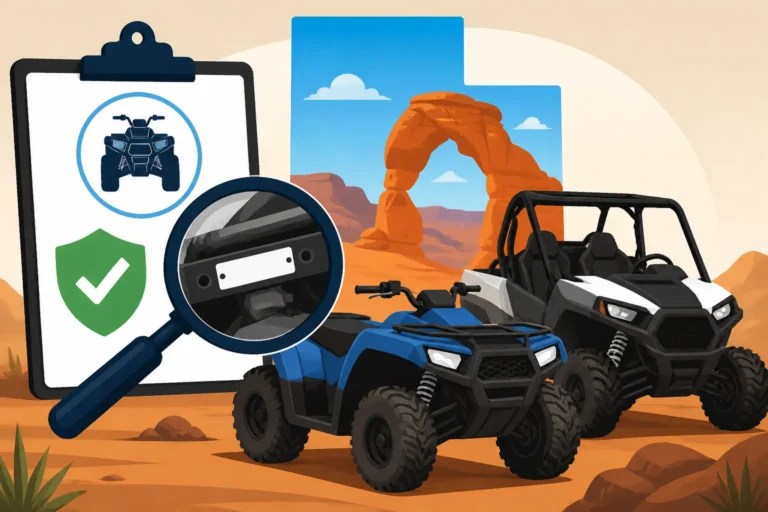
When a Utah officer, whether it's a State Parks ranger, Forest Service ranger, or local law enforcement, encounters an OHV on a public trail or designated riding area, one of the first things they'll likely check is your registration decal. These decals are designed to be prominently displayed, usually on the left side of the machine, making them easy to spot. They're looking for that valid date. If the date has passed, it's a red flag.
The officer will typically initiate a stop, explain why they've pulled you over, and then ask for your driver's license, proof of registration (if you believe it's current), and sometimes proof of ownership. They're not just looking for the decal; they're verifying the information against their system. If your registration is clearly expired, they'll proceed with issuing a citation. This is a common part of [What a Utah Trooper Checks at a Trailhead], and it's a check you want to pass easily.
The Financial Hit: Fines, Fees, and Court Costs
Let's not sugarcoat it: riding with an expired OHV registration in Utah carries a penalty that will definitely impact your wallet. While specific fine amounts can vary and are subject to change, you can generally expect a substantial citation. This isn't just a slap on the wrist; it's a fine designed to deter illegal riding and recoup the costs associated with enforcement and trail maintenance that you missed by not registering.
The initial fine is often just the beginning. Depending on the jurisdiction and how quickly you address the citation, you might also face administrative fees, court costs, and potentially even late fees if you don't respond to the ticket within the allotted time. These costs can quickly compound, turning what might have been a relatively inexpensive day on the trails into a trip that costs hundreds of dollars. It's a stark reminder that staying current with your registration is far more economical than facing the penalties. If you ever find yourself needing to draft a formal statement or an affidavit related to your OHV's status, resources like LawDepot can provide useful templates to ensure your documents are properly formatted and legally sound, helping you present your case clearly. This can be especially helpful if you need to explain circumstances to a court or other official body. Thinking about [Utah OHV Registration Fees, Start to Finish] highlights that renewal is always cheaper than a fine.
Beyond the Fine: Impoundment and Other Consequences
The financial penalty is significant, but it's not the only headache you might face. One of the most severe consequences of riding with an expired registration is the potential for your OHV to be impounded. Yes, you read that right. An officer has the authority to tow your machine off the trail, leaving you stranded and facing even more costs. This is not a rare occurrence; it's a very real risk, especially if you're found to be a repeat offender or if there are other contributing factors like reckless riding.
If your OHV is impounded, you'll be responsible for towing fees, daily storage fees at the impound lot, and any other administrative charges associated with its release. These costs can quickly add up, often exceeding the original fine. Furthermore, you won't be able to get your machine back until you can prove ownership and, in many cases, provide proof of current registration. The logistical nightmare of arranging transport, paying fees, and dealing with paperwork after an impoundment is a situation no rider ever wants to experience. This is precisely why understanding the [Impound Risk for Unregistered Machines in Utah] is so critical for all riders.
Getting Back on Track: Renewing and Avoiding Future Lapses
So, you've realized your registration has expired, or perhaps you've just received a citation. Don't panic, but don't delay either. The good news is that getting back on track is usually straightforward, provided you take the necessary steps promptly. The key is to be proactive and informed, transforming a potentially stressful situation into a manageable task.
Don't Wait: The Importance of Timely Renewal
The best defense against fines and impoundment is, of course, a current registration. Utah makes it relatively easy to renew your OHV registration. You can typically do so online, by mail, or in person at a Utah Division of Motor Vehicles (DMV) office. The process usually involves providing your previous registration information, proof of ownership (like your title), and paying the required fees. Many people find the online renewal portal to be the most convenient option, as it can be done from the comfort of your home at any time.
Remember, even if you receive a renewal notice in the mail, it's ultimately your responsibility to ensure your registration is current. Don't rely solely on the notice, as mail can sometimes get lost or delayed. Prioritize renewing your registration before its expiration date to avoid any issues whatsoever. For a detailed guide on the process, check out [Renewing Your Utah OHV Registration] and consider the convenience of [Renewing a Utah OHV Registration Online].
Dealing with a Late Renewal: What Are Your Options?
If your OHV registration has already expired, you might be wondering if there are additional "late fees" on top of the regular renewal cost. Generally, Utah doesn't impose a separate late fee just for renewing an expired registration. The fees you pay will be the standard registration fees. The real penalty for being late comes in the form of the fines and other consequences discussed above, should you be caught riding during the lapsed period.
The most important step is to renew your registration as soon as you realize it's expired. Even if you've been cited, renewing immediately demonstrates good faith and ensures you won't incur further citations. You'll still need to address the initial citation, but having current registration will prevent future problems and will be required to get your machine out of impound, if it came to that. Understanding [Late Renewal on a Utah OHV Registration] can help you navigate this particular situation.
Essential Documentation for Your OHV
Whether your registration is current or you're in the process of renewing, always make sure you have the proper documentation with you when you ride. This typically includes your current registration certificate (or a temporary one if you just renewed), your driver's license, and ideally, a copy of your OHV's title or proof of ownership. While not always required to be carried on your person, having access to these documents, perhaps in a waterproof bag on your machine, can save you a lot of grief if you're stopped by an officer.
Keeping all your OHV-related documents organized is key. If you ever need a standardized form for a bill of sale when buying or selling, or perhaps a declaration to support an insurance claim, a service like LawDepot can be incredibly valuable for generating reliable paperwork quickly and ensuring you have a clear, legally sound record. This can be critical for protecting your interests. Always refer to [What Paperwork Utah Riders Must Carry] to be fully prepared for any trailside check.
Preventing the Problem: A Rider's Checklist
Let's face it, nobody wants the stress of an expired registration. The good news is that with a few simple habits and tools, you can easily stay on top of your OHV paperwork and keep enjoying Utah's incredible trails without interruption. Proactive planning is your best friend here.
Setting Up Reminders for Your OHV Registration
In our busy lives, it's easy for things to slip through the cracks. But there's no excuse for an expired registration when technology is on your side. Here are a few ways to set up reminders that actually work:
- Digital Calendar Alerts: Use your phone or computer calendar to set recurring reminders. Set one for two months out, one for a month out, and another for two weeks before the expiration date. Title them clearly, like "OHV Registration Due for [Your Machine Name]."
- Physical Notes: For those who prefer analog, put a sticky note on your garage door, on your OHV's dashboard, or even on your refrigerator as the expiration date approaches.
- Email Reminders: Some states offer email renewal reminders; check if Utah does. Even if not, you can send yourself an email with a future delivery date.
- Dedicated File: Keep a physical folder for each OHV you own. When you get a new registration, immediately file the old one and put the renewal notice at the front so it’s the first thing you see next year.
The trick is to use a system that you'll actually see and act upon. It's much easier to renew when you're reminded well in advance.
Understanding the Two-Year Option
Did you know you can often register your OHV for two years in Utah? This simple option can cut your renewal frequency in half, giving you more time between paperwork duties and reducing the chances of an accidental lapse. It’s a fantastic option for riders who know they’ll be keeping their machine for an extended period and want one less thing to worry about annually.
When you go to renew, simply ask about the two-year option or select it if you're renewing online. While the upfront cost will be higher, it essentially prepays your registration for an extra year, providing peace of mind. It’s a smart move for many riders who want to spend less time on paperwork and more time on the trails. You can learn more about [The Two-Year Registration Option at Utah DMV] for specific details.
What to Do If Your Renewal Notice Doesn't Arrive
It's a common scenario: you're waiting for your renewal notice to show up in the mail, and it just never does. While the DMV often sends out reminders, it’s crucial to remember that the responsibility for renewing your OHV registration ultimately rests with you, the owner, not with the state sending a notice. Mail can get lost, addresses can be outdated, or technical glitches can occur.
If your expiration date is approaching and you haven't received a notice, don't wait. Proactively check your registration status online or contact the Utah DMV directly. You can usually initiate the renewal process even without the physical notice, as long as you have your OHV's VIN and current owner information. If you've moved recently, ensure your address is updated with the DMV to avoid future mail issues. If you're ever in a situation where you need to officially document an attempt to contact the DMV or create a formal record of your efforts, platforms like LawDepot offer templates for various legal letters and statements that can help you formalize your communications and create a paper trail. It's always better to be proactive than to assume everything is fine. More information on this can be found by looking into [When a Utah Renewal Notice Never Arrives].
Common Registration Mistakes and Solutions
To help you visualize common pitfalls and how to avoid them, here's a quick reference table.
| Common Mistake | Why It Happens | The Solution |
|---|---|---|
| Forgetting expiration date | Busy life, only ride seasonally | Set multiple digital calendar reminders |
| Relying solely on mail notices | Mail gets lost, address changes aren't updated | Proactively check online, update address with DMV |
| Not carrying documents | Assumption that decal is enough | Keep current registration in a waterproof pouch on machine |
| Ignoring a past due notice | Hoping it will go away, procrastination | Renew immediately, address any citations promptly |
| Unaware of two-year option | Didn't ask, didn't research | Request two-year option at renewal |
| Not updating contact info | Moved, changed email/phone | Update address/contact info with DMV and other relevant agencies |
Disclaimer
This article is for general informational purposes only and does not constitute professional advice. Laws, prices and regulations vary by location and change over time. Consult a qualified professional for guidance on your specific situation.