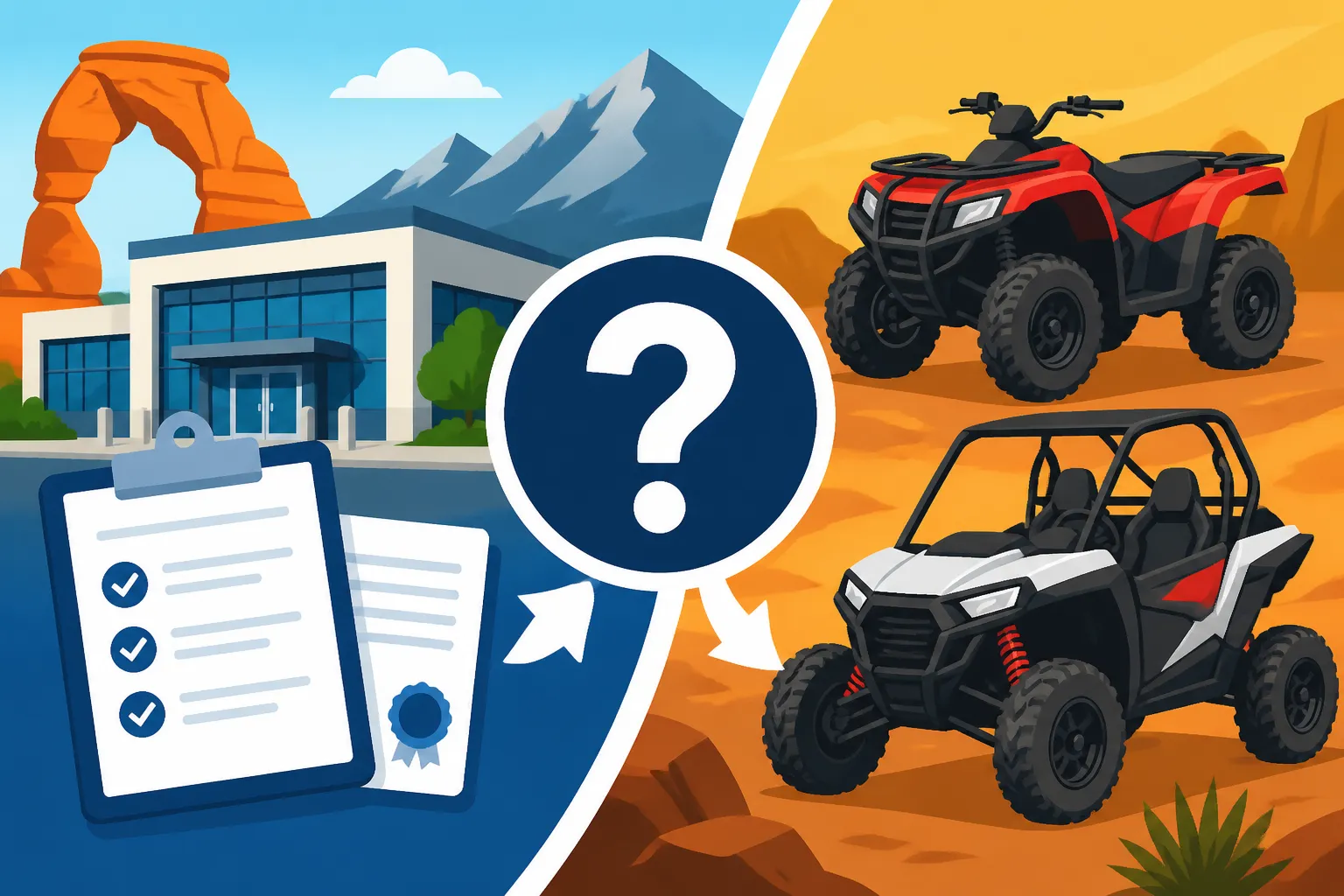
Which Utah DMV Offices Handle OHV Paperwork
It's incredibly frustrating, isn't it, when you've finally got all your paperwork together, you head down to what you think is the right office, only to find out they don't handle OHV registrations? You've wasted your precious time, your gas, and now you have to start all over again, tracking down the correct location. This guide is here to clear up that confusion once and for all, helping you understand exactly which Utah DMV offices are equipped to handle your off-highway vehicle paperwork so you can get back to riding.
Navigating Utah's Motor Vehicle System for OHVs
Utah's system for vehicle registration and titling can feel a bit like a maze, especially when you're dealing with off-highway vehicles (OHVs) like ATVs and UTVs. It's not always as straightforward as just "going to the DMV." There are different divisions and local offices, each with specific roles, and knowing which one handles your particular OHV task is key to a smooth process. You definitely don't want to find yourself in the wrong line after a long wait, only to be told you're in the wrong place.
Understanding the Different "DMV" Branches in Utah
When people say "DMV" in Utah, they often use it as a catch-all term, but there are actually a few distinct entities, and it's important to know the difference for OHV-related tasks. The two main players are the Driver License Division (DLD) and the Motor Vehicle Division (MVD). While both fall under the broader umbrella of the Department of Public Safety, their functions are quite separate. The DLD handles things like driver licenses, ID cards, and driving records – basically, anything related to you as a driver. The MVD, on the other hand, is all about vehicles. This is where your OHV registrations, titles, and plate renewals are processed. In some counties, certain services might also be handled by the County Assessor's or Treasurer's offices. It’s a bit of a legacy system, but knowing this distinction can save you a lot of grief.
For instance, if you're looking to get your [Utah OHV Decals and Where They Go] after purchasing a new side-by-side, heading to a DLD office will be a dead end. They simply don't have the systems or the staff trained for that specific type of transaction. You need to make sure you're seeking out an MVD location or a designated county office. Think of it like going to a specialty store for a specific item – you wouldn't go to a grocery store for car parts, right? The same logic applies here to vehicle paperwork.
Why Not All Offices Are Created Equal for OHV Paperwork
The reason not every "DMV" can handle your ATV or UTV paperwork boils down to specialization and equipment. MVD offices are set up with the specific computer systems, forms, and trained personnel required to process vehicle registrations, title transfers, and issue new license plates or OHV decals. These transactions often involve verifying vehicle identification numbers (VINs), checking lien information, and calculating specific fees like sales tax and uniform fees. [Utah ATV Sales Tax and Uniform Fees] can be complex, and not every branch is equipped to handle these calculations accurately.
A DLD office, conversely, is geared towards photographs, eye exams, and testing for driver licenses. Their infrastructure is completely different. They simply aren't set up to print registration cards or accept payments for OHV renewals. It’s a common misconception, but understanding this fundamental difference is crucial for any OHV owner in Utah. Imagine going to a DLD office after [Buying an ATV Out of State and Registering It in Utah] – you’d be carrying all that out-of-state title work, bill of sale, and possibly a VIN inspection form, only to be redirected. It's enough to make anyone sigh in exasperation, which is precisely what we're trying to help you avoid.
Identifying the Right Office for Your OHV Needs
So, how do you find the right office without a wild goose chase? It's easier than it sounds once you know what to look for. Most OHV registration and titling processes will be handled by specific Motor Vehicle Division (MVD) offices or, in some areas, by county government offices that partner with the state to provide these services.
Motor Vehicle Division (MVD) Offices
The Motor Vehicle Division (MVD) offices are your primary destination for almost all OHV-related paperwork. These are the state-run offices explicitly designed for vehicle services. When you need to do anything from [How to Register an ATV or UTV in Utah] for the very first time to [Renewing Your Utah OHV Registration], an MVD office is generally where you'll want to go. They have the staff and systems to process title transfers, issue new registrations, handle plate and decal issuances, and help with more complex situations like replacing a lost title or dealing with out-of-state vehicle transfers.
You can usually find a list of MVD locations on the Utah State Tax Commission's website (which oversees the MVD). It’s always a good idea to check their official site or call ahead to confirm their operating hours and specific services offered, as some smaller satellite offices might have limited capabilities. Don't just Google "DMV near me" and assume the first result is correct; specifically look for "Motor Vehicle Division" or "Vehicle Registration" offices. For example, if you're in Salt Lake County, you'll find several full-service MVD offices that can handle everything from a brand new side-by-side registration to [Transferring an ATV Title Between Family Members in Utah]. These offices are equipped for a high volume of transactions and a wide array of services.
County Assessor/Treasurer Offices
In many Utah counties, particularly outside the major metropolitan areas, some OHV services are handled directly by the County Assessor's or Treasurer's office. These offices often serve as a convenient local point of contact for residents to pay their property taxes and also to conduct vehicle registration renewals and certain other motor vehicle transactions. This setup helps decentralize services and makes it easier for rural residents to handle their paperwork without having to drive to a larger city.
While they are excellent for routine renewals, such as [Renewing a Utah OHV Registration Online] or in person, they might have limitations on more complex title transactions or initial registrations. For instance, if you're registering a UTV without a title for the first time, or if you have a complicated ownership transfer scenario, a full-service MVD office might be better equipped. It's absolutely crucial to call your specific county office before you visit to confirm they handle the exact type of OHV paperwork you need. Many will handle standard renewals and basic transfers, but more intricate processes might still require a trip to a state MVD office. Having a detailed bill of sale, perhaps generated using a service like LawDepot to ensure all necessary fields are covered, will always make any visit smoother, regardless of the office.
Preparing for Your OHV Office Visit
Once you've identified the correct office, the next step is to prepare thoroughly. Showing up unprepared is a surefire way to extend your visit or, worse, require a second trip. Gathering all your documents and understanding the process ahead of time can make all the difference, turning a potential headache into a quick, efficient stop.
Essential Documents for OHV Registration and Titling
Having your ducks in a row when it comes to paperwork is non-negotiable. The specific documents you'll need can vary slightly depending on whether you're registering a brand-new machine, transferring ownership of a used one, or just renewing. However, there's a core set of items that are almost always required:
- Proof of Ownership: For a new machine, this would be the Manufacturer's Statement of Origin (MSO) or Certificate of Origin (MCO). For a used machine, you'll need the properly assigned title from the previous owner. If you're dealing with [No Title From the Seller: What Utah Requires], the rules get a bit more complex, often requiring a bill of sale and possibly other affidavits.
- Bill of Sale: Even with a title, a bill of sale is highly recommended, especially for private party transactions. It clearly documents the purchase price, date, and seller/buyer information, which is crucial for calculating sales tax and resolving any future disputes. Services like LawDepot can provide customizable bill of sale templates that ensure you include all the necessary details required for Utah.
- Identification: Your valid driver's license or state-issued ID is always needed to verify your identity.
- Proof of Utah Residency: This could be your Utah driver's license, a utility bill, or other official mail showing your current address. This is especially important if you're [Moving to Utah With an ATV You Already Own].
- VIN Inspection (if applicable): If your OHV is from out of state, or if the title is missing, a VIN inspection might be required. [VIN Inspections for Utah ATV Paperwork] are usually performed by law enforcement or designated inspection stations, not at the MVD office itself, so complete this before your visit.
- Payment for Fees: Be ready to pay registration fees, uniform fees, and sales tax. Check the MVD website or call ahead for accepted payment methods (cash, check, card) as this can vary. [Utah OHV Registration Fees, Start to Finish] covers the various costs you might encounter.
Always double-check the specific requirements for your situation on the Utah Tax Commission's MVD website before heading out. It's better to over-prepare than to be sent home for a missing document.
Best Practices for a Smooth Office Visit
To ensure your visit is as smooth and quick as possible, consider these tips:
- Go During Off-Peak Hours: Mid-week, mid-morning or mid-afternoon are often less busy than first thing in the morning, lunchtimes, or near closing. Avoid Mondays and Fridays, which tend to be the busiest days.
- Have All Forms Filled Out: If there are forms you can download and complete beforehand, do it! This saves time at the counter and reduces the chance of errors. Make sure your [Utah Bill of Sale: What It Must Say] is complete and accurate.
- Make Copies: Keep copies of all documents for your records. This is especially important for titles and bills of sale.
- Be Patient and Polite: The staff at these offices handle a lot of different cases every day. A little patience and kindness go a long way in ensuring a positive experience. They are there to help, and sometimes, situations are just inherently complex.
- Ask Questions: If you're unsure about a specific requirement or step, don't hesitate to ask the clerk. It's better to clarify upfront than to make a mistake that could lead to future problems. For example, if you're trying to figure out [Which Machines Utah Registers as Off-Highway Vehicles], the MVD clerk can confirm if your specific vehicle qualifies.
By taking these steps, you'll not only save yourself time but also reduce the stress associated with governmental paperwork.
Online and Alternative OHV Services
While an in-person visit to an MVD or county office is necessary for some transactions, Utah has been working to make many OHV-related services available online or through other convenient channels. Utilizing these options can save you a trip entirely, especially for routine matters.
Online OHV Registration Renewal
One of the most convenient options for OHV owners is online registration renewal. If your OHV is already registered in Utah and you're simply looking to extend your registration, the state's online portal is usually the fastest and easiest way to do it. You'll typically need your registration card or renewal notice which contains your vehicle identification number (VIN) and plate number.
The process usually involves:
- Navigating to the Utah State Tax Commission's MVD online services portal.
- Entering your OHV's VIN or plate number and other identifying information.
- Verifying your current address and contact details.
- Paying the renewal fees and any applicable uniform fees using a credit or debit card. There might be a small online transaction fee for this service. [The Online Transaction Fee Utah Adds] is usually nominal but something to be aware of.
- Once completed, your new registration card and decal are typically mailed to you. Remember, [How Long a Utah OHV Registration Lasts] is generally one year, so keep an eye on those renewal notices.
This service is a lifesaver for many, eliminating the need to wait in line. However, it's generally only for renewals of existing registrations. If you're dealing with an initial registration, a title transfer, or a complex issue, an in-person visit is usually still required.
Dealer-Assisted OHV Registration
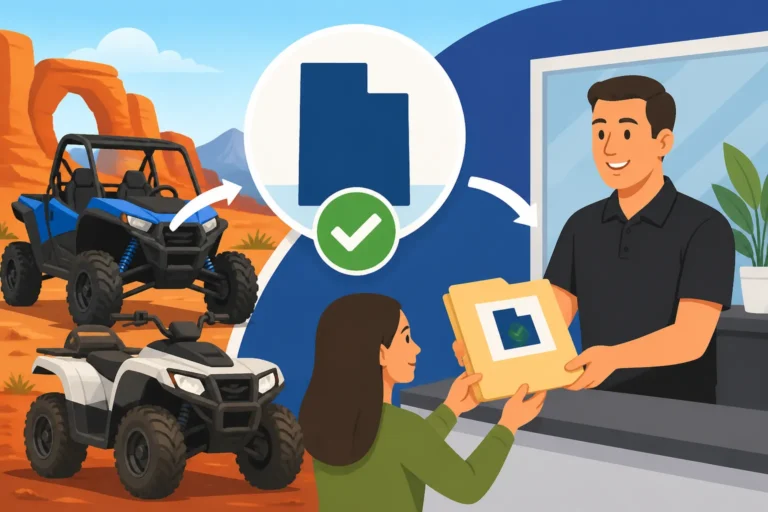
When you purchase a new ATV or UTV from a licensed dealer in Utah, they will typically handle a significant portion of the registration and titling paperwork for you. This is a huge convenience, as dealers are familiar with the process, the forms, and the fees. They'll collect all the necessary information, submit it to the MVD, and often even provide you with a temporary permit so you can legally ride your new machine while the official registration and title are being processed. [What a Utah Dealer Hands You at Delivery] usually includes a temporary plate or sticker and information on when to expect your permanent documents.
While dealers streamline the process, it's still smart to be an informed consumer. Make sure you understand what paperwork they are submitting on your behalf and what you'll receive from them. Always check your paperwork before leaving the dealership, ensuring all names, VINs, and purchase prices are correct. If you're buying a used machine from a dealer, they'll handle the title transfer as well. This system works well because dealers are connected directly to the MVD systems, making the transfer of ownership and initial registration much more efficient.
Common OHV Paperwork Pitfalls to Avoid
Even with the right office identified and all your documents in hand, there are still a few common traps that riders fall into. Being aware of these can save you from frustration and ensure your OHV paperwork process goes as smoothly as possible.
Missing or Incorrect Information on Documents
One of the most frequent reasons for delays or rejections at the MVD is incomplete or incorrect information on documents. This can range from a misspelled name on a bill of sale to an incorrect VIN on a title application, or missing signatures. [Mistakes That Void an ATV Title Transfer] are surprisingly common and can be a real hassle to fix. For example, if you bought a used UTV, and the previous owner didn't sign the title in the correct spot, or dated it incorrectly, you'll likely have to track them down to correct it. This is why tools like LawDepot, which help ensure documents like a bill of sale are filled out accurately and completely, can be incredibly helpful. Having every field properly completed and every required signature in place is paramount.
Another common issue arises when the odometer reading isn't properly recorded (if applicable to your machine and year) or if the sales price is left blank. These details are critical for tax assessment and for tracking the vehicle's history. Always take a moment to review every single document before you hand it over to the clerk, and ask questions if anything looks unclear or incomplete. A small error can snowball into a significant headache down the line, potentially affecting your ability to [Sell an ATV in Utah: Title and Bill of Sale] in the future.
Not Verifying Office Capabilities Prior to Visit
As we've discussed, not all "DMV" offices are created equal for OHV transactions. A major pitfall is simply assuming that any state office will handle your OHV paperwork. This is especially true for initial registrations, complex title transfers, or specialized situations like [Registering a Homebuilt or Kit UTV in Utah]. While your local county office might be perfectly fine for [Renewing Registration on a Machine You Cannot Start], a new registration for a machine with a salvage title might need a full-service MVD office.
Always, always, always call ahead or check the official Utah State Tax Commission MVD website for the specific office you plan to visit. Confirm their hours, required documents for your specific transaction, and, most importantly, if they handle OHV registrations and titling. Don't rely on old advice or general internet searches that don't specify the exact type of office. A five-minute phone call can save you hours of travel and waiting in the wrong line.
Table: Utah DMV Office Services for OHVs
To help you visualize which office handles what, here's a handy breakdown:
| Office Type | Primary Role | Handles OHV Registration (New) | Handles OHV Title Transfer | Handles OHV Renewal (Standard) | Other OHV Services Often Handled | Best For |
|---|---|---|---|---|---|---|
| Motor Vehicle Division (MVD) | Vehicle Titling & Registration | Yes | Yes | Yes | Duplicate titles, VIN inspections (referral) | All complex and initial OHV transactions |
| County Assessor/Treasurer | Property Tax & Local Vehicle Services | Sometimes (call ahead) | Sometimes (call ahead) | Yes | General inquiries, basic transfers | Routine renewals, simple title transfers |
| Driver License Division (DLD) | Driver Licenses & ID Cards | No | No | No | N/A | Obtaining your driver's license/ID card |
| Online MVD Portal | Self-Service Vehicle Transactions | No | No | Yes (for existing regs) | Renewals, address changes (OHV not always) | Quick renewals of existing registrations |
| Licensed OHV Dealer | Sales & Initial Registration Processing | Yes (for new sales) | Yes (for dealer sales) | No | Temporary permits | Buying new or used OHVs from a dealership |
Remember, "Sometimes" means you absolutely must call your specific local office to verify. It's truly the only way to avoid a wasted trip!
Disclaimer
This article is for general informational purposes only and does not constitute professional advice. Laws, prices and regulations vary by location and change over time. Consult a qualified professional for guidance on your specific situation.