Nine Mile Canyon by Side-by-Side
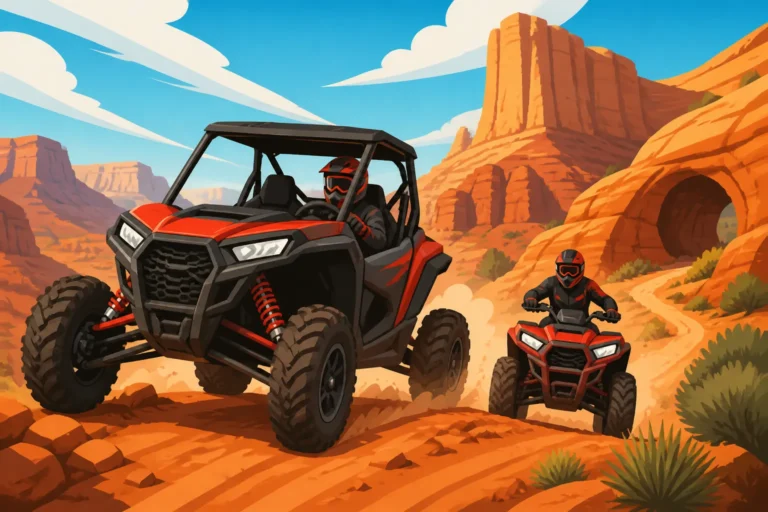
Nine Mile Canyon can look like an ideal side-by-side outing: big desert scenery, a winding road and remarkable rock art. The catch is that it is not simply an open OHV trail. This guide explains how to plan a responsible UTV visit, what to check before leaving town, and how to avoid confusing a scenic public road with routes open to off-highway machines.
What to know before riding Nine Mile Canyon
A scenic road is not automatically an OHV trail
Nine Mile Canyon is in eastern Utah, northeast of Wellington and Price, and is known for its archaeological sites and rock art. The canyon road offers a memorable way to experience the landscape, but riders should not assume that every segment is open to an unplated or off-highway-only side-by-side. A road may be open to ordinary traffic without being a legal route for every kind of OHV.
Before you go, identify the specific roads you plan to use and confirm that your machine is allowed on them. Check the route’s designation with the relevant land manager or local authority, along with current posted signs. If your planned trip uses public roads, make sure your vehicle and driver meet the requirements for road use. Utah’s rules for equipment, registration and driver licensing can differ depending on whether a machine is being operated off-highway or on a public road.
If your side-by-side is not road legal, don’t count on being able to ride it along the canyon road just because the surface is gravel. You may need to trailer it to a separate area with routes open to your machine. Guides to [Making a UTV Street Legal in Utah] and [Utah's Non-Resident OHV Permit Explained] can help you sort through questions about road use and visitor requirements before your trip.
Treat the canyon as a cultural site, not a riding playground
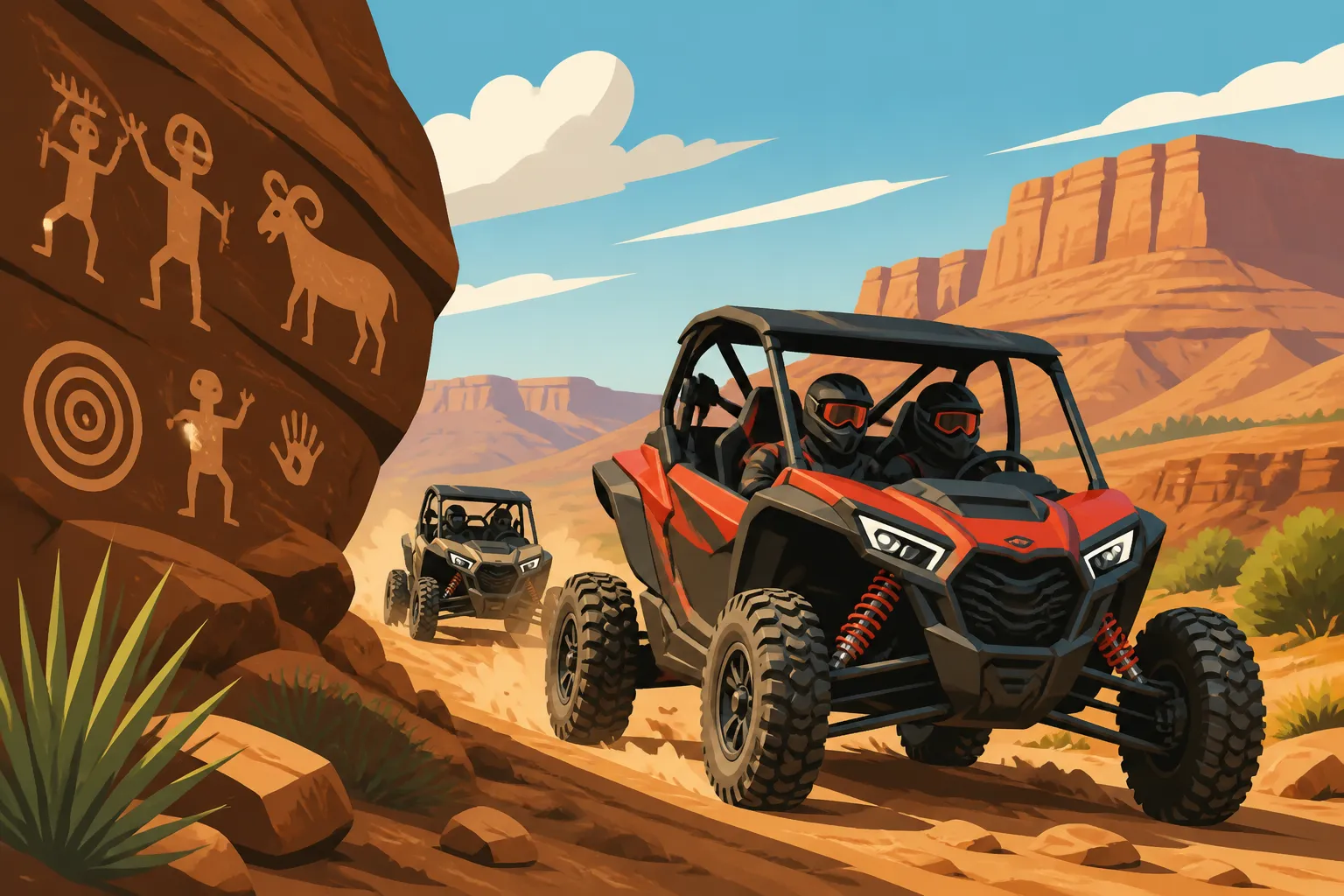
The canyon’s rock art and archaeological remains are a major reason to visit, and they deserve more care than a quick photo stop might suggest. Do not touch, scratch, chalk, climb on or otherwise mark rock art. Leave artifacts where they are, even if an object looks ordinary or loose. Moving something can damage its archaeological context and may violate the rules that protect cultural resources.
Stay on established, legal routes and use designated parking or pullouts when stopping. Avoid driving onto fragile ground to get closer to a panel, and never block the road while passengers take photos. If a site is roped off, signed as closed or difficult to reach without leaving the route, respect the boundary rather than trying to find a shortcut.
A good rule for a side-by-side visit is to plan for a slow, observant day rather than a fast trail ride. You’ll see more by taking time to read signs, stretch at suitable pullouts and keep the machine quiet and controlled. For the larger principle behind route boundaries, see [Private Land Crossings on Utah Routes].
Plan the route and verify access
Check route status before you tow
Access conditions and route designations can change, and a route visible on a phone map is not proof that it is open to motorized travel. Before you leave, consult the appropriate official land-management maps and look for current closures, restrictions and seasonal notices. If the road crosses land managed by more than one agency, check the guidance for each relevant segment instead of relying on a single map.
A useful planning habit is to compare more than one source. An app such as onX Offroad can help you visualize your route and understand where roads and mapped trails appear in relation to one another. Use it as a planning aid, then confirm the route against official maps and on-the-ground signs. A line on a screen does not override a closure sign or make a route legal for a vehicle that is not permitted there.
| Planning question | What to confirm before departure |
|---|---|
| Is the route open? | Check current agency notices, maps and posted signs |
| Is my side-by-side allowed? | Confirm whether the specific road permits your vehicle type and registration status |
| Do I need a permit? | Review Utah requirements for residents or visitors and any site-specific rules |
| Can I complete the route? | Check road conditions, weather, fuel range and turnaround options |
| Where can I stop? | Identify legal pullouts and places that will not obstruct traffic |
For map-reading help, review [Reading a Motor Vehicle Use Map]. It is also worth checking [Trail Closures Utah Riders Should Check First] shortly before your trip, especially if rain or other weather has affected the area.
Choose a realistic day plan
Nine Mile Canyon is not a place to plan around a tight timetable. The road can be rough or slow, and stopping to view sites takes time. Decide in advance how far you intend to travel, where you can safely turn around and how much daylight you want to keep in reserve. If the road becomes uncomfortable for your passengers or unsuitable for your machine, turning back is a sensible choice, not a failed outing.
Start with a conservative plan if you have not driven the route before. Let someone outside your group know where you are going and when you expect to return. Carry enough fuel for the full trip with a margin for detours or slow travel, and don’t assume that a nearby town means services will be available along the canyon itself.
Route apps can help you keep track of your planned drive, but remote areas may have unreliable reception. Before leaving coverage, download maps for offline use if your preferred mapping tool supports that feature. onX Offroad can be useful for reviewing route options in advance, but keep a second plan for navigation in case your phone battery runs low or the mapped route does not match posted conditions. More trip-planning ideas are in [What to Carry on a Utah Day Ride] and [Checking Utah Trail Conditions Before You Tow].
Prepare your side-by-side and your group
Expect slow, rough travel
A scenic gravel road can still be hard on a machine. Washboarding, loose gravel, dust, ruts and uneven patches can make a route tiring, especially for passengers who expected a smooth cruise. Drive at a speed that lets you respond to what is ahead, leave room for dust to settle and avoid following another vehicle so closely that visibility disappears.
Check the side-by-side before the trip. Look at tires, brakes, lights, steering, fluids and the condition of the spare or repair equipment you plan to carry. Secure loose items in the cab or cargo area; bouncing tools and coolers can become distracting, and unsecured gear can be lost on rough sections. If your machine has a windshield, doors or other accessories, make sure they are firmly attached and suited to the conditions.
For a first visit, avoid turning a sightseeing day into a test of the machine’s limits. This is not the place to try an unfamiliar setup, push through a questionable mechanical noise or assume that another vehicle will be close enough to help. Bring basic recovery and repair supplies appropriate to your machine, and know how to use them before you need them.
Pack for limited services and communication
A remote outing calls for more preparation than a short ride close to town. Bring drinking water, food, sun protection, warm or weather-appropriate layers and a first-aid kit. Dust protection matters too: goggles or other suitable eye protection can make a long, dusty drive much more comfortable. Keep your phone charged, but do not treat cell service as your only way to call for help or navigate.
Pack the documents and equipment required for your specific vehicle and trip. Requirements can depend on residency, vehicle status and where you plan to ride. The checklist in [What Utah Riders Must Carry on Public Land] is a helpful starting point, but confirm that it fits your own circumstances. If you are visiting from outside Utah, check permit rules before departure rather than assuming your home-state registration covers every requirement.
Make sure everyone in the machine understands the plan: where the group is going, where it will stop, what to do if vehicles get separated and when to turn around. Agree on a pace that suits the least experienced driver and the most sensitive passenger. Long stretches of dust and road vibration can wear people down more quickly than expected, especially on a hot day.
Ride with care and know when to change plans
Share the road and respect the surroundings
The canyon road may be used by other drivers, local residents and visitors who are not there for an OHV outing. Keep to the appropriate side, slow down around other traffic and use pullouts to let vehicles pass when it is safe. Do not crowd pedestrians or stop where a driver coming the other way cannot see your machine in time.
Keep noise and dust in mind. Accelerating hard on loose surfaces can throw dust toward other visitors and make the experience unpleasant for people viewing nearby sites. A slower, steady pace is usually better for visibility, passenger comfort and the landscape. Pack out everything you bring, including food scraps and small bits of trash that can easily blow away.
If you encounter a closure, a damaged road or a condition that feels beyond your group’s ability, do not improvise a new route across open ground. Turn around where it is safe, or follow instructions from signs and officials. The same approach applies if recent rain has made the road slippery or vulnerable to rutting: avoiding damage is more important than sticking to a fixed itinerary.
Use a simple go-or-no-go checklist
Before leaving town, ask:
- Have I confirmed that every planned segment is open and legal for my specific side-by-side?
- Does the vehicle meet the requirements for any public-road travel on the route?
- Have I checked weather, road conditions and relevant closures?
- Do I have enough fuel, water, food and daylight for a slower-than-expected trip?
- Does someone know my route and expected return time?
- Can I navigate without relying on cell service?
- Is everyone in the group comfortable with the pace and roughness of the drive?
If you cannot confidently answer the first two questions, pause and verify access before unloading. That small bit of preparation can prevent an expensive tow, a ticket or an avoidable conflict with land managers and other visitors.
A Nine Mile Canyon side-by-side outing can be a rewarding way to see eastern Utah, provided you treat it as a carefully planned scenic trip rather than assuming the entire canyon is an OHV trail. Confirm vehicle access, protect the archaeological sites, prepare for remote conditions and be willing to turn around when the route or weather calls for it.
Disclaimer
This article is for general informational purposes only and does not constitute professional advice. Laws, prices and regulations vary by location and change over time. Consult a qualified professional for guidance on your specific situation.