Riding the Paiute Trail With Young Kids
Taking young kids on the Paiute ATV Trail can be a memorable family trip, but long distances, changing elevation, weather, and limited services can make a big ride feel much harder for little passengers. This guide helps you choose a manageable section, prepare your machine and children, and build a plan with sensible breaks and an easy way to turn back.
Choose a family-sized ride, not a full-loop goal
Start with a short out-and-back
The Paiute Trail is a network of routes through central Utah, not a single short track. That flexibility is useful with kids: you can pick a section, ride to a clear turnaround point, and head back before anyone is worn out. Avoid treating the full loop as the default family outing. A route that looks manageable on a map can take much longer once you account for stops, slower riding, and the needs of young passengers.
If this is your family’s first time on the trail, keep the first outing especially modest. Choose a route near your starting point, agree on a turnaround time before you leave, and stick to it even if the kids are still cheerful. The ride back is part of the day, and tired children often become uncomfortable quickly once the machine is moving again.
Use a current route map to check distances, road crossings, elevation changes, and places where you could shorten the ride. A mapping app such as onX Offroad can help you review route options and save map information for offline use, but don’t rely on an app alone. Check current land and trail information before you go, and carry a backup way to understand where you are.
For more route-planning context, see [Riding the Paiute ATV Trail] and [Paiute Trail Sections Beginners Should Skip]. A section that is straightforward for an experienced adult may feel very different when you have small passengers, limited daylight, and a machine loaded with family gear.
Build the day around the children’s limits
The best route is not necessarily the one with the most scenic stops or the longest mileage. It is the one your youngest passenger can enjoy without spending the final stretch hungry, cold, overheated, or frightened. Think about the whole day: travel to the trailhead, unloading, riding, breaks, and the drive back to your lodging or campsite.
Before you commit, ask yourself how your children usually handle motion, noise, dust, and sitting still. A child who is content on a short local ride may find a longer stretch monotonous. Another may love the scenery but need frequent stops. Plan for the child you actually have, rather than the pace you hope the group will maintain.
A useful starting approach is to plan a short ride with more turnaround options than you think you need. If everyone is comfortable, you can explore a little farther on another day. That is a much better outcome than pushing onward because you have already announced a big destination.
Keep beginner concerns in the plan
Parents often worry about making the “right” route choice, especially when trail descriptions use broad terms such as easy or moderate. Those labels cannot tell you whether your child will tolerate the ride, whether your vehicle will be comfortable on a particular surface, or how the day’s weather will affect the group. Treat ratings as one input, not a guarantee.
Look closely at the route itself. Consider steep grades, narrow passages, exposed areas, rough surfaces, and places where turning around could be difficult. If you are uncertain about a section, choose a different route or ask locally about current conditions before setting out. For more on managing route uncertainty, read [What Trail Difficulty Ratings Leave Out].
Prepare children and the machine before leaving
Check passenger fit and safety equipment
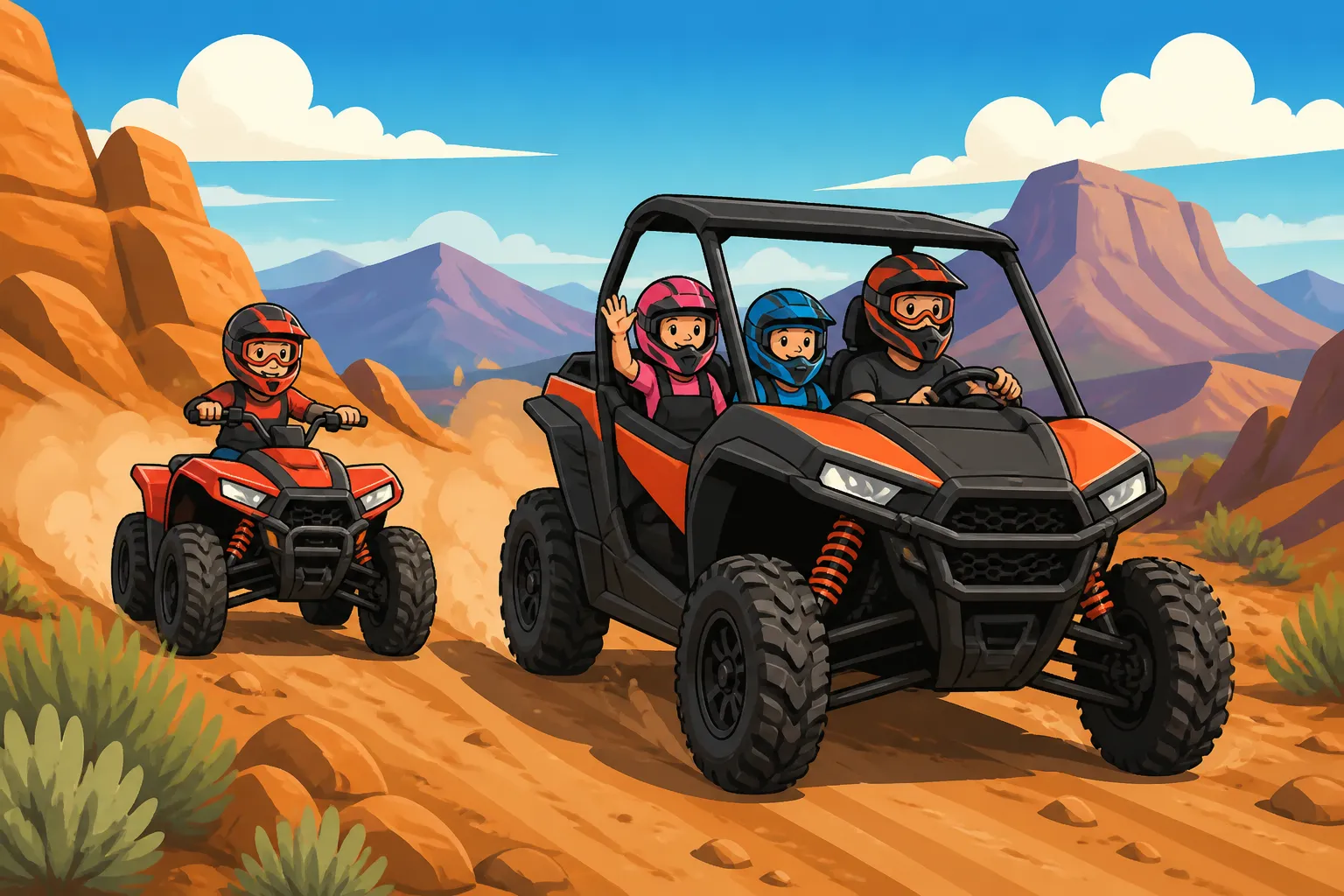
A child needs to fit securely in the passenger position, use the seat belt or restraint correctly, and be able to keep their body inside the vehicle. Follow the vehicle manufacturer’s passenger requirements and check the applicable Utah rules before riding. Don’t assume that a child is ready simply because they can sit in the seat. Their size, ability to follow instructions, and comfort with the ride all matter.
Before starting, explain a few simple expectations: keep arms and legs inside, stay seated, hold on as instructed, and tell an adult promptly if something feels wrong. Show them how to communicate over the engine noise, such as using an agreed hand signal or asking the driver to stop at the next safe place. A child who is nervous should not feel pressured to continue.
Each rider should have suitable protective gear, including a properly fitted helmet and eye protection. Dust can make a ride uncomfortable quickly, so goggles that fit well can be more useful than relying on ordinary sunglasses. Bring layers too. A sunny trailhead does not guarantee comfortable conditions farther along the route, especially as elevation and weather change.
For a practical packing reminder, see [What to Carry on a Utah Day Ride]. When the forecast is warm, [Water to Pack for a Summer Utah Ride] can help you think through hydration before you leave.
Do a family-friendly machine check
A basic pre-ride check matters even more when children are aboard. Inspect tires, brakes, lights, steering, seat belts, and fuel. Make sure the machine is in good working order and that any required registration or paperwork is ready. If you are towing more supplies than usual, check that the load is secured and does not interfere with passenger space or vehicle handling.
Pack so that frequently needed items are reachable without unloading the entire machine. Water, snacks, sun protection, a warm layer, and basic first-aid supplies should not disappear under bulky gear. Keep loose items secured; a bouncing bag or bottle can become a distraction on uneven terrain.
Before the ride, make sure every adult knows the plan and the machine’s limits. If you are traveling with another family, agree on the pace and regrouping points. A faster driver should not pull far ahead while the children’s machine struggles to keep up. If conditions change or the vehicle develops a problem, stop somewhere safe and reassess rather than treating the planned destination as mandatory.
Make provisions for breaks and comfort
Kids may need a bathroom break, snack, or chance to stretch sooner than adults expect. Work those needs into the schedule instead of waiting for a child to become upset. Choose stopping spots that are safe and out of the way of other trail users. Keep children close to an adult during stops, especially near roads, drop-offs, or moving vehicles.
Think about dust, sun, temperature, and noise as comfort issues, not minor inconveniences. A child who is uncomfortable may stop communicating clearly or may be less able to follow instructions. Offer water and check in regularly, even when they have not asked. If a child says they feel unwell, treat that as a reason to pause and assess rather than something to push through.
Plan around distance, elevation, weather, and services
Allow more time than the map suggests
A route’s mapped distance does not equal the time your family will spend riding. Speed can vary with trail conditions, traffic, stops, and how comfortable the passengers are. Children may need breaks at unpredictable times, and a group may move at the pace of its least experienced driver. Plan the day with daylight to spare.
Be cautious about chaining several sections together just because they connect. The time needed to reach a trailhead, unload, ride, stop, and return can take up much of the day. [How Long the Paiute Trail Takes to Ride] offers broader context for thinking about route duration, but your family’s pace and chosen section should guide the actual plan.
Use a firm turnaround time. For example, decide that your group will head back by a set point in the afternoon whether or not you have reached the hoped-for destination. That simple rule prevents a late start or extra stop from turning into a rushed ride back.
Take elevation and weather seriously
Central Utah routes can involve noticeable elevation changes. Higher elevation and changing conditions can affect comfort, especially for children who are not used to long outdoor days. Watch for signs that someone is becoming unusually tired, chilled, overheated, nauseated, or short of breath. Stop, offer water, and decide whether continuing makes sense.
Weather can shift, and a warm morning may not stay warm for the entire ride. Check conditions before setting out, bring layers, and be prepared to shorten the route. If wind, rain, lightning, or poor visibility makes the ride uncomfortable or unsafe, turn back or wait in a suitable place rather than trying to finish the plan.
Water deserves special attention in dry country. Bring enough for the people in your group, not just for the expected ride time, and keep it accessible. A small snack can also help children stay comfortable between breaks. Do not count on finding supplies along the route.
Know where you can get help
Some sections may have limited services and unreliable mobile coverage. Tell someone who is not riding with you where you plan to go and when you expect to return. Share your intended route and a backup plan, and let them know whom to contact if you do not check in.
Download or save your route information before leaving areas with dependable service. onX Offroad can be useful for reviewing and saving maps, but make sure you know how to use the app before you are out of coverage. Carry a charged phone, but do not treat it as your only navigation or emergency plan. Read [Cell Service Along the Paiute Trail] and [Trail Closures Utah Riders Should Check First] as part of your preparation.
If a child becomes ill or frightened, or the machine has a mechanical problem, your options may depend on where you are. A short route with sensible exit points gives you more flexibility than a long push into a remote section. Make the plan around the help and supplies you will actually have with you.
| Family concern | Practical planning choice |
|---|---|
| Young passengers have limited patience | Choose a short out-and-back with a clear turnaround point |
| Uncertain trail conditions | Check current route information and carry an offline map |
| Changing weather or elevation | Bring layers and be ready to shorten the ride |
| Limited services and cell coverage | Tell someone your plan and carry essential supplies |
| Different riding abilities in the group | Agree on a steady pace and regrouping points |
Use a simple decision plan on the trail
Check in with the kids as you go
Do not wait until a child is visibly upset to ask how they are doing. At each planned stop, check whether they are comfortable, warm or cool enough, thirsty, hungry, and still willing to ride. Give them a chance to answer honestly. If they are reluctant to speak while the engine is running, stop somewhere safe and ask directly.
A child’s discomfort can be subtle at first. They might become unusually quiet, fidgety, or impatient, or repeatedly ask how much farther it is. Those are useful signals to pause, not behaviors to dismiss as ordinary fussiness. A break may be enough; sometimes the right decision is to turn around.
Keep the mood low-pressure. Let the children know that turning back is a normal part of riding, not a failure. If they understand that the plan can change, they may be more willing to tell you when they are uncomfortable.
Decide ahead of time when to stop or turn back
Agree on a few reasons to shorten the ride before you leave. These might include a child feeling unwell, weather getting worse, a machine issue, a route becoming rougher than expected, or the group falling behind schedule. Having these limits in mind can make a difficult decision easier when you are already out on the trail.
If you do turn back, choose a safe place to regroup and make sure everyone is accounted for before moving. Avoid letting separate machines drift out of sight without a clear plan. If a vehicle cannot continue safely, focus on keeping the group together and getting help rather than attempting a risky repair or recovery.
Keep the first trip a learning day
A family’s first ride is as much a chance to learn as it is an outing. Notice how long your children are comfortable riding, how much water and food you used, which gear they liked, and where the route felt too demanding. Afterward, use those observations to plan the next trip.
You may find that a short ride with an early return creates better memories than a bigger outing that leaves everyone exhausted. The Paiute Trail’s network gives families room to build confidence gradually. Start with a manageable section, check conditions before every ride, and let the children’s comfort help set the pace.
Disclaimer
This article is for general informational purposes only and does not constitute professional advice. Laws, prices and regulations vary by location and change over time. Consult a qualified professional for guidance on your specific situation.