Lodging in Marysvale for Trail Riders
Marysvale is a practical base for riding the Paiute ATV Trail, but finding a place to sleep is only half the planning. A room that looks convenient online may not have trailer parking, secure machine storage, or a ride-out route nearby. This guide explains how to choose lodging around Marysvale, what to ask before booking, and how to plan your days around the trail.
Choose lodging around your riding setup
Compare lodging types before you book
Marysvale and the surrounding area offer several kinds of places to stay, and the best fit depends on how you travel. A motel or inn can work well if you want a bed, a bathroom, and a simple place to come back to after a full day outdoors. Cabins or vacation rentals may suit families and groups who want a kitchen, shared living space, or room to spread out damp gear. RV parks and campgrounds can be a good match if you bring your own accommodation or want a space designed for a camping setup.
For trail riders, the word “convenient” needs a little extra checking. A property might be close to town but have limited room for a truck and trailer. A cabin may look spacious in its listing yet have a narrow driveway, no place to unload, or rules against parking off-highway vehicles on site. Before booking, ask where your tow vehicle, trailer, and machines can go, rather than relying on a general description of the parking.
It also helps to decide how much comfort you want after riding. If you expect to return dusty and tired, a private bathroom, laundry access, an outdoor hose, or a place to dry riding gear may matter more than a scenic view. If your group plans to cook, check whether the kitchen is equipped for actual meals or only has basic appliances. Those details can make a multi-day stay feel much easier.
| Lodging type | Often suits | Confirm before booking |
|---|---|---|
| Motel or inn | Couples, small groups, and riders who want a straightforward stay | Trailer parking, machine storage rules, and outdoor cleanup options |
| Cabin or vacation rental | Families or groups who want shared space and meal preparation | Driveway access, parking capacity, occupancy rules, and equipment restrictions |
| RV park or campground | Riders traveling with an RV or camping gear | Site dimensions, trailer space, hookups, and whether machines may be parked at the site |
| Lodging outside Marysvale | Riders seeking more lodging choices or building a wider regional trip | Drive time to the intended trail access, fuel stops, and parking arrangements |
Treat trailer parking as a booking requirement
If you are towing a machine, ask for a practical description of the parking area. How many vehicles can fit? Is the space level enough for a trailer? Can you turn around without backing a long distance? Is there a gate, a tight entrance, or a steep driveway? These questions may feel fussy while you are planning at home, but they are much easier to ask before you arrive than after a long drive.
Give the property the full picture: number of people, number of machines, trailer length, and how many tow vehicles you expect. “We have a UTV” may not tell a host that you are bringing a truck, a long enclosed trailer, and another vehicle. If there is any uncertainty, ask for written confirmation about where everything can be parked and whether the machines can remain on the property overnight.
Do not assume that a listing’s parking symbol means trailer parking is available. A standard car space and a trailer-friendly staging area are very different things. If a property cannot accommodate your setup, ask whether there is a permitted overflow option nearby, and confirm its rules directly. Riders who need more help organizing a first visit can also use [Marysvale, Utah as a Paiute Trail Base] while planning their stay.
Plan your stay around the Paiute ATV Trail
Pick your riding days before choosing your location
Marysvale is a well-known starting point for exploring the Paiute ATV Trail, but the trail system is extensive. You may ride from town, trailer to a chosen access point, or combine routes that pass through nearby communities. The right lodging location depends on which sections you want to explore and how much time you want to spend driving between your bed and the trail.
Before booking, sketch out a realistic plan for each day. Consider the route, the group’s experience, fuel needs, daylight, and the possibility that a scenic ride will take longer than expected. A group with newer riders may prefer shorter days and a comfortable return to town. Experienced riders may want to cover more distance, but a long route can still feel demanding when weather, elevation, stops, or mechanical issues enter the picture. For route ideas and loop planning, see [Utah's Paiute Trail: Main Loop and Side Trails] and [How Long the Paiute Trail Takes to Ride].
Use a mapping tool such as onX Offroad to review possible routes and understand how your planned ride connects to your lodging area. It can help you compare route options and prepare maps before leaving town. Download or save the information you need in advance, and carry a backup plan: a paper map, a charged phone, and a power source are useful if service is unreliable or a device runs low.
Match the lodging to the ride, not just the town name
A listing may use “Marysvale” to describe its general location even if it is not right beside the access point you expect to use. Check the property’s precise location and estimate the drive to your planned staging area. If you are hoping to ride directly from the property, ask whether that is actually allowed and whether there is a legal, open route connecting the lodging to the trail. Do not assume a private driveway or nearby road is open to OHVs simply because other riders use the area.
If your trip includes several trail sections, it may be helpful to think of the lodging as a base rather than expecting every ride to begin at the front door. Some days may involve loading up and driving to a different access point. Confirm whether the property allows early departures, trailer loading, or vehicles to remain parked while you ride. If you are planning a larger loop, [Fuel Stops Along the Paiute Loop] can help you think through the practical side of the day.
Mapping apps, including onX Offroad, are most useful when you prepare before the ride instead of trying to solve every navigation question in a parking lot. Review the intended route, note junctions and likely turnaround points, and make sure everyone in the group understands the plan. Treat app information as a planning aid, not permission to ride anywhere: check route status, signage, land boundaries, and local rules before entering a road or trail.
Ask these questions before reserving
Confirm the property’s OHV and parking rules
Lodging rules differ, so ask directly whether off-highway vehicles may be parked on site. Find out whether machines can be left outside overnight, whether they must be covered or secured, and whether the property has any restrictions on unloading or washing them. If you need to charge equipment, ask about approved outlets and whether charging a battery or other gear is permitted. Avoid assuming that a regular room outlet is suitable for every charging need.
Also ask whether there is a secure storage area or simply an open parking space. A place to park is not automatically a place where a machine is protected from weather, theft, or accidental contact. Bring the locks and covers you need, and avoid blocking walkways, access lanes, or another guest’s parking. If your group has several machines, provide the total count before you reserve so the host can tell you whether the arrangement is workable.
It is worth confirming check-in and checkout logistics as well. Riders sometimes arrive late after towing or want to get on the trail early to avoid the hottest part of the day. Ask about arrival instructions, quiet hours, and whether loading or unloading at those times could disturb other guests. A little coordination helps keep the stay comfortable for both your group and the property’s other visitors.
Check what is included and what you need to bring
A listing’s description may not answer the small questions that matter after a dusty ride. Ask whether towels and bedding are provided, whether laundry is available, and whether there is an outdoor space to clean boots or dry riding gear. If you are camping or staying in an RV, confirm what the site includes and whether you need to bring water, power adapters, leveling blocks, or other equipment.
Food planning deserves attention too. Check whether your lodging has a refrigerator, cooking equipment, or a place to store a cooler. If you expect to cook after riding, it is useful to know what you need to bring before you leave home. For a remote or long day, pack water and snacks even if you expect to return to town for dinner. Do not base a ride plan on being able to find food or fuel at a particular moment without checking the route and operating arrangements.
Finally, review the booking terms before paying or confirming. Look at cancellation rules, the number of guests allowed, pet policies if relevant, and any restrictions on trailers or recreational vehicles. Details can vary between a motel, cabin, private rental, or campground, so get the answer from the property itself. When you are comparing options, [Camping Beside Utah's OHV Trails] may help you decide whether a developed lodging stay or a camping-focused trip better fits your group.
Make the stay work for your group
Plan for different experience levels and family needs
A group that includes children, new riders, and experienced drivers may need a different schedule than a group of adults who ride together regularly. Choose lodging that gives everyone a comfortable place to rest, and avoid building a trip around the longest possible route each day. A shorter ride with time for a meal, a break, or an early return can be a better experience than pushing tired riders through a demanding afternoon.
If young riders are coming, verify that the machines, supervision plan, and planned routes are appropriate for them. Build in time for rest and check that everyone has the required safety gear. Families may want a cabin or rental with shared space, while a couple or small group might prefer a simpler room and spend most of the day outside. For more family-specific trip planning, consider [Riding the Paiute Trail With Young Kids].
People in the same group may also have different ideas about comfort. One person may be happy camping, while another may need a private room and a hot shower after riding. Talk through those preferences before booking, including who will share rooms, who is bringing gear, and how the group will handle meals. A clear plan prevents the common frustration of discovering at arrival that the lodging setup does not match everyone’s expectations.
Leave room for changing conditions
Trail plans can change. A route may take longer than expected, weather may affect comfort, or a rider may need a rest day. Choose lodging with enough flexibility for your trip rather than scheduling every minute around a single route. If you are visiting during a busy period, make reservations early enough to compare options, and check cancellation terms before committing.
Before you tow, review trail and road conditions, access information, and any notices that could affect your plan. Keep maps available offline, particularly if you will be beyond dependable mobile coverage. onX Offroad can be one part of that preparation, alongside posted signs, local information, and a backup map. Recheck your route before setting out rather than relying on a saved plan that may no longer reflect conditions on the ground. For trip preparation, [Checking Utah Trail Conditions Before You Tow] is a useful companion topic.
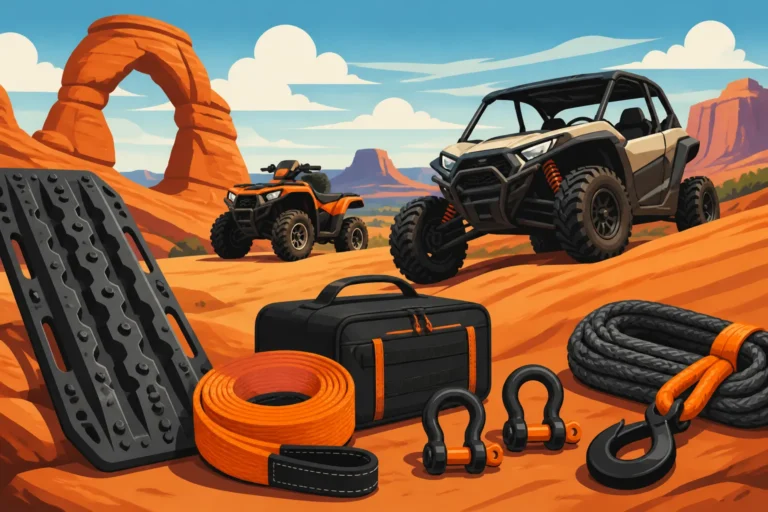
Pack for the ride you are planning, not only the lodging you booked. Bring water, basic tools, first-aid supplies, appropriate clothing, and a way to communicate if your group becomes separated. Keep your registration and other required documents accessible, and make sure riders understand the day’s route and turnaround plan. [What to Carry on a Utah Day Ride] can help you build a practical checklist, while [Riding the Paiute Trail From Beaver] offers another perspective if you are considering a broader ride based in the region.
Disclaimer
This article is for general informational purposes only and does not constitute professional advice. Laws, prices and regulations vary by location and change over time. Consult a qualified professional for guidance on your specific situation.