Renewing Registration on a Machine You Cannot Start
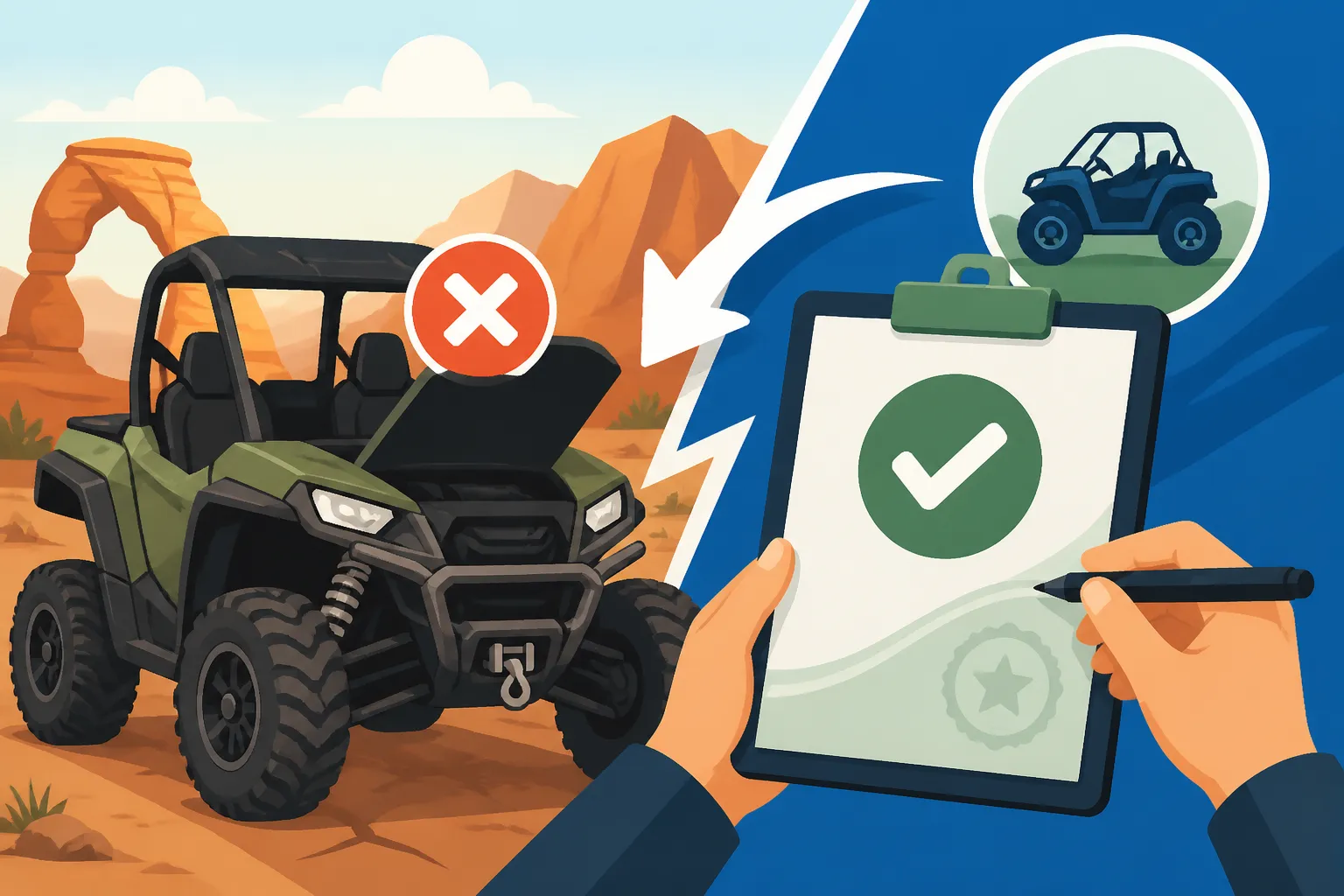
It’s a scenario many of us have faced: you head out to the garage, eager to hit the trails, only to find your trusty ATV or UTV won’t crank. Maybe the battery’s dead, or perhaps there’s a more serious mechanical issue. To add insult to injury, you then notice the registration is due. It leaves you wondering, "Do I really need to renew the registration on a machine that can't even start?" This guide is here to walk you through the specifics of renewing your Utah OHV registration, even when your machine is stubbornly refusing to cooperate, and help you understand your options.
The Common Quandary of a Stalled Registration
Let's be real, life happens. Off-highway vehicles, whether they're roaring through the red rock or sitting patiently in the shed, require maintenance. Sometimes, they develop issues that take time and money to resolve. It's incredibly frustrating when your passion project becomes a garage ornament right when its paperwork is due. Many riders find themselves in this exact situation, torn between spending money on a machine that isn't running and the desire to keep everything legal for when it eventually does.
You might be thinking, "Why bother with the hassle and cost of renewal if I can't even ride it?" This is a completely valid thought. Nobody wants to throw money at something they can't use. However, Utah's OHV registration system is designed around ownership and the privilege of future use on public lands, not necessarily its immediate operational status. Understanding this distinction is key to making an informed decision about your non-starting quad or side-by-side.
Why Your OHV Might Not Be Starting
There’s a whole host of reasons your machine might be out of commission. It could be something as simple as a dead battery from sitting too long, especially during the colder months when many riders put their machines into storage. Perhaps a carburetor needs cleaning, fuel lines are clogged, or maybe an electrical component has given up the ghost. More serious issues like engine trouble, a bad transmission, or even a damaged frame from a past mishap can render an OHV unrideable.
Regardless of the specific ailment, the end result is the same: your machine is temporarily (or perhaps even long-term) out of commission. This immediate inability to ride is what often sparks the question about registration renewal. It feels counterintuitive to renew something you can't actively use, yet neglecting it can lead to other complications down the road, especially if your plans for the machine change.
Utah's Registration Requirements for All OHVs
When it comes to registering an off-highway vehicle in Utah, the state's primary concern is ensuring that any machine operating on public lands, trails, or approved routes is properly documented and contributes to the OHV program through its fees. The process itself doesn't typically involve a physical inspection of the machine for operational status during renewal. This is a crucial point for owners of non-starting OHVs.
The Utah Division of Motor Vehicles (DMV) focuses on the ownership record and the payment of various fees, including the uniform fee and the OHV registration fee, which contribute to trail maintenance and management. As long as you are the registered owner and the machine has a valid title, you generally have the ability to renew its registration, regardless of whether it's currently running or not. This means your non-starting quad isn't disqualified from being renewed; the option is still open.
The Purpose of OHV Registration in Utah
Think of OHV registration in Utah less as a certificate of current working order and more as a permit for future access and a contribution to the trail system we all love. The funds collected through these fees go directly back into maintaining and improving the vast network of trails across the state, ensuring that when your machine is running, there are fantastic places for you to ride. So, even if your machine is temporarily out of commission, your renewal still plays a part in preserving Utah's incredible riding opportunities.
This framework means that the legal obligation to register an OHV is tied to its potential use on public lands, rather than its actual immediate use. For instance, if you have a non-running ATV sitting in your garage, it doesn't need to be registered right now if you have no intention of taking it off your private property. However, if that ATV is parked on a public easement, even if it's broken, it might still fall under rules requiring registration, though this is rare for truly non-operational vehicles. The moment you plan to transport it to a trailhead or ride it anywhere beyond your private land, valid registration becomes a necessity.
What Happens If You Don't Renew?
Deciding not to renew a non-starting machine's registration has direct consequences, primarily related to its legal use on public lands. If the registration lapses, you absolutely cannot legally operate that OHV on any public trail, road, or area in Utah designated for OHV use. This means even if you manage to fix it up next week, you'll need to sort out the registration before you can take it out. [The Fine for an Expired OHV Registration in Utah] can be substantial, making it a risk not worth taking.
Furthermore, if you let the registration expire and then decide to renew it months or years down the line, you might incur late fees. While not all fees accrue interest or penalties indefinitely, renewing a significantly lapsed registration can sometimes involve catching up on certain uniform fees that are assessed annually based on the machine's age and value. It's often easier and cheaper to just keep it current, even if it's temporarily sidelined.
Renewing Your Registration: Steps for a Non-Operational Machine
The good news is that the process for renewing the registration on a non-starting OHV is essentially the same as renewing one that's in perfect running order. The Utah DMV doesn't require a physical inspection for renewals, which removes a major hurdle for anyone dealing with a broken-down machine. You won't need to tow your quad to the DMV for someone to verify it starts!
Your focus will be on gathering the correct paperwork and submitting the necessary fees. This streamlined approach makes the decision to renew a non-runner a bit simpler, as you don't have the added logistical challenge of getting the machine to a physical inspection site. You can complete most of this from the comfort of your home, or with a quick visit to a DMV office.
Required Documents for Renewal
Even though your machine isn't running, you'll still need to provide standard documentation to the Utah DMV for registration renewal. The most critical item is your previous registration card or the renewal notice you received in the mail. This document contains all the pertinent information about your OHV, including its Vehicle Identification Number (VIN) and current registration details.
If you don't have your renewal notice, don't fret. You'll still be able to renew as long as you have the VIN. Your personal identification, such as a driver's license, will also be required to verify your ownership. It’s always a good practice to keep these documents organized, regardless of your machine's operational status. A simple folder in your garage or office dedicated to OHV paperwork can save a lot of headaches later on.
Understanding the Renewal Process
Utah offers a few convenient ways to renew your OHV registration. The most popular method for many riders is online. This allows you to complete the entire process from home, paying with a credit or debit card. It's quick, efficient, and perfect when your machine is immobile. You simply log into the Utah Motor Vehicle Portal, input your information, and pay the fees. After processing, your new decals and registration card will be mailed to you. You can learn more about this process in our guide, [Can You Register an ATV Online in Utah?].
Alternatively, you can renew in person at any Utah DMV office. While this requires a trip, it can be useful if you have questions or need to resolve any specific issues with your registration. Just be sure to bring all your documents and be prepared for potential wait times. You can also renew by mail, which involves sending your renewal notice and payment to the DMV. Whichever method you choose, the key is to ensure the fees are paid and the process is completed before your current registration expires. [How Long Utah OHV Registration Takes to Process] can vary, so don't wait until the last minute!
Fees Associated with Renewal
Renewing your OHV registration in Utah involves several fees. The primary components usually include a base registration fee and an age-based uniform fee. The uniform fee is assessed annually on all registered vehicles and is calculated based on the year, make, and model of your OHV. This fee doesn't magically disappear just because your machine isn't running; it's an annual assessment tied to ownership.
The exact cost of [Utah OHV Registration Fees, Start to Finish] can vary, but these fees are clearly itemized on your renewal notice. These funds are vital for maintaining public lands and trails for OHV use, so even with a non-starting machine, your contribution helps support the infrastructure you'll eventually enjoy again. Think of it as an investment in your future riding adventures.
Deciding Not to Renew: Risks and Considerations
While renewing a non-starting OHV's registration is straightforward, you might be seriously considering letting it lapse. Perhaps the repairs are extensive, or you're planning to sell the machine for parts. This is a personal decision, but it's important to understand the potential downsides before you let that expiration date pass by.
The biggest immediate risk is that you won't be able to legally ride the machine on public lands once it's fixed. This might seem obvious, but it can be a real bummer if repairs happen quicker than expected and you're suddenly ready to hit the trails, only to realize your paperwork isn't in order. There are also financial implications if you later decide to bring the registration current.
Consequences of an Expired Registration
As mentioned, an expired registration means your OHV is off-limits to public land use. If you're caught riding an unregistered OHV, you could face significant fines. This applies even if you're just moving it a short distance on a public road to get to a private riding area. Troopers and rangers do check for current decals, and they don't typically make exceptions for machines that "just got fixed."
Beyond the legal penalties, an expired registration can complicate things if you decide to sell the machine. While the title is the primary document for transferring ownership, a buyer might be wary of a machine with lapsed registration, as it suggests the previous owner might not have kept up with other aspects of maintenance or legal compliance. It’s generally smoother to sell a machine that has current, even if expired, registration paperwork.
Potential Issues When Selling a Non-Running, Expired OHV
If you've decided to let the registration lapse because you plan to sell the non-running machine, you'll want to ensure you still handle the sale properly. The title is absolutely paramount here. Make sure you have a clean, clear title in your name. If you don't, you'll need to address that before selling. Our guide on [Selling an ATV in Utah: Title and Bill of Sale] goes into more detail.
When selling a non-running OHV, especially one with expired registration, clearly communicate its status to potential buyers. A detailed bill of sale is crucial, outlining that the machine is being sold "as-is" and is not currently registered for public land use. Services like LawDepot can provide excellent, customizable bill of sale templates that help protect both buyer and seller. Be upfront about any known mechanical issues and the lack of current registration to avoid misunderstandings later on.
When to Keep It Current Versus Letting It Lapse
The decision of whether to renew your non-starting OHV's registration really boils down to your future plans for the machine. There's no single right answer, but by weighing the pros and cons, you can make the best choice for your situation.
Some riders will opt to renew simply for peace of mind or because they anticipate repairs will be completed relatively soon. Others, with machines destined for the junkyard or a long-term parts project, might let the registration expire without much thought.
Reasons to Renew a Non-Starting OHV
Even if your OHV is temporarily out of commission, there are strong arguments for keeping its registration current:
- Anticipated Repairs: If you fully intend to fix the machine within the next year, renewing now ensures it's ready to roll as soon as repairs are complete. You won't have the added chore of dealing with registration paperwork when all you want to do is ride.
- Avoiding Late Fees: While Utah's late fees for OHVs aren't as punitive as some other vehicle types, letting a registration lapse can still incur extra charges if you decide to renew it later. For instance, you might have to pay back uniform fees that would have been due. [Late Renewal on a Utah OHV Registration] can explain the specific costs.
- Easier Resale: As mentioned, a machine with current registration, even if it's not running, can appear more appealing and well-maintained to potential buyers. It signals responsible ownership.
- Peace of Mind: For many, simply knowing all their paperwork is in order provides comfort. You won't have to worry about an expired decal if the machine is suddenly fixed and you're packing it up for a trip.
- Supporting the OHV Program: Your registration fees directly contribute to the maintenance of Utah's public trails. Even if your machine isn't currently using them, your contribution helps ensure they're there when it is.
Consider someone like Sarah from Cedar City. Her UTV blew a belt last season and has been sitting ever since. She plans to replace it herself this spring, but her registration is due in February. Renewing it online now means that by April, when the new belt is installed, she can immediately trailer her UTV to Sand Hollow without any last-minute DMV trips or worries about an expired sticker.
Reasons to Let Registration Lapse
Conversely, there are situations where letting the registration lapse makes perfect sense:
- Long-Term Storage or Project: If your machine is a complete tear-down project that will take years to rebuild, or if it's permanently retired to your private property and will never see a public trail again, there's little point in renewing.
- Selling for Parts: If you're selling the non-running machine specifically for parts, its registration status is largely irrelevant. The buyer is interested in the components, not the ability to ride it.
- Salvage or Junkyard Bound: For machines that are beyond repair and heading for the scrap heap, there's absolutely no reason to renew the registration.
- No Intent for Public Land Use: If you're certain this particular OHV will only ever be used on private land, where registration isn't required, then letting it lapse is a logical choice.
Imagine Mark from Fillmore. His old three-wheeler hasn't run in a decade and is slowly rusting in his backyard. He occasionally uses it for parts for his newer quad. Its registration is long expired, and he has no intention of renewing it because it will never again be ridden on public land. This is a clear case where letting the registration lapse is the practical decision.
The Future: Getting Back on the Trail
If you do let your registration lapse on a non-starting machine, and then later decide to fix it and ride it, getting it legal again is usually straightforward. It generally involves going through the standard renewal process, just as if you had decided to keep it current. You'll submit your documentation, pay the required fees (and any accumulated late fees or past uniform fees), and receive your new decals.
What's important is to ensure you complete this process before you even think about putting it on a trailer to head to a trailhead, let alone riding it. Having valid registration is a prerequisite for operating on Utah's public OHV routes. Don't let the excitement of a newly repaired machine tempt you into riding illegally.
Renewing a Lapsed Registration
If your OHV registration has expired, you can still renew it. The process is similar to a regular renewal, but you'll need to be aware of any potential late fees that might apply. Utah generally charges a uniform fee based on the value of the OHV, and if this hasn't been paid for previous years, it may need to be reconciled. Always check the current DMV guidelines or contact them directly for the most accurate information on past-due registrations. It's often easier to just get [Renewing Your Utah OHV Registration] done on time.
Gather your OHV's VIN, your identification, and be prepared to pay the current registration fees, plus any additional amounts for the lapsed period. Once processed, you'll receive your updated registration card and new decals, allowing you to legally enjoy Utah's trails once your machine is back in action.
| Scenario for Non-Starting OHV | Decision to Renew | Key Considerations |
|---|---|---|
| Short-term repair planned | Renew | Avoids late fees, machine ready when fixed, supports trails. |
| Selling soon (non-running) | Renew (optional) | Looks better to buyers, title is still primary. |
| Long-term project/storage | Let lapse | Saves money if no public land use for years. |
| Selling for parts | Let lapse | Registration is irrelevant for parts sale. |
| Private land use only | Let lapse | No legal requirement for public land access. |
| Salvage/beyond repair | Let lapse | No reason to renew. |
Importance of a Bill of Sale for Parts or Salvage
Even if you're letting your registration lapse and selling your non-starting OHV for parts, or taking it to a salvage yard, a proper bill of sale is incredibly important. This document formally transfers ownership, protecting you from any future liability for the machine. It confirms that you've sold it "as-is" for a specific purpose (parts, salvage, etc.) and that you no longer own it.
A well-drafted bill of sale should include:
- The date of sale.
- Your name, address, and signature (seller).
- The buyer's name, address, and signature.
- A clear description of the OHV, including make, model, year, and VIN.
- The sale price.
- A statement that the machine is sold "as-is" and is not currently registered for public road or trail use.
Using a template from a reputable source like LawDepot can ensure you don't miss any critical details. This protects both parties and provides a clear record of the transaction. Even for a non-running machine, proper documentation protects you.
When your Utah OHV is on the fritz and registration looms, it’s a moment to pause and consider your plans. Renewing is often the simplest path, especially if repairs are in the pipeline, ensuring your machine is always trail-ready when it eventually roars back to life.
Disclaimer
This article is for general informational purposes only and does not constitute professional advice. Laws, prices and regulations vary by location and change over time. Consult a qualified professional for guidance on your specific situation.