Putting a Utah OHV in a Minor’s Name
It’s a common and heartwarming thought: you want to get your child or grandchild an off-highway vehicle (OHV) – an ATV or UTV – so they can experience the joy of Utah’s incredible trails. But then you hit the wall of paperwork and legalities, realizing that putting something like a title in a minor's name isn't as simple as just writing it down. This guide will walk you through the practical steps and legal considerations for ensuring that OHV is properly registered and ready for adventure, even when its primary rider isn't yet old enough to sign the paperwork themselves.
Understanding Legal Guardianship and Ownership for Minors
The dream of your child tearing up the dunes at Sand Hollow or exploring the lower elevations of the Paiute Trail on their very own quad is wonderful, but the reality of vehicle ownership in the eyes of the law is a bit more complex when it comes to minors. In most states, including Utah, individuals under the age of 18 are generally not considered legally competent to enter into contracts or directly own significant assets like vehicles. This isn't about their ability to ride, but their legal capacity to assume the responsibilities that come with ownership, such as signing titles, being named on insurance policies, or being held liable in an accident.
Why Minors Can't Directly Own Property
Imagine the legal tangled web if a 12-year-old could legally purchase and title a vehicle entirely on their own. Who would be responsible if the payment wasn't made, or if they were involved in an accident? Minors lack the full legal standing to enter into binding agreements. This legal framework is designed to protect minors from exploitation and to ensure that there's an adult ultimately responsible for the asset and any associated liabilities. So, while you might say "this is my son's ATV," the actual legal title needs to reflect adult oversight until they reach the age of majority.
This means you can't simply fill out the "owner" line on a title with your child's name and present it to the Utah Division of Motor Vehicles (DMV). The system isn't set up for it, and they'll likely turn you away. The law requires an adult to be the legal owner, or at least the custodian of the asset, even if the minor is the intended beneficiary and primary user. It’s all about accountability and making sure a legally responsible party exists for official records and potential legal situations.
The Role of an Adult Guardian or Custodian
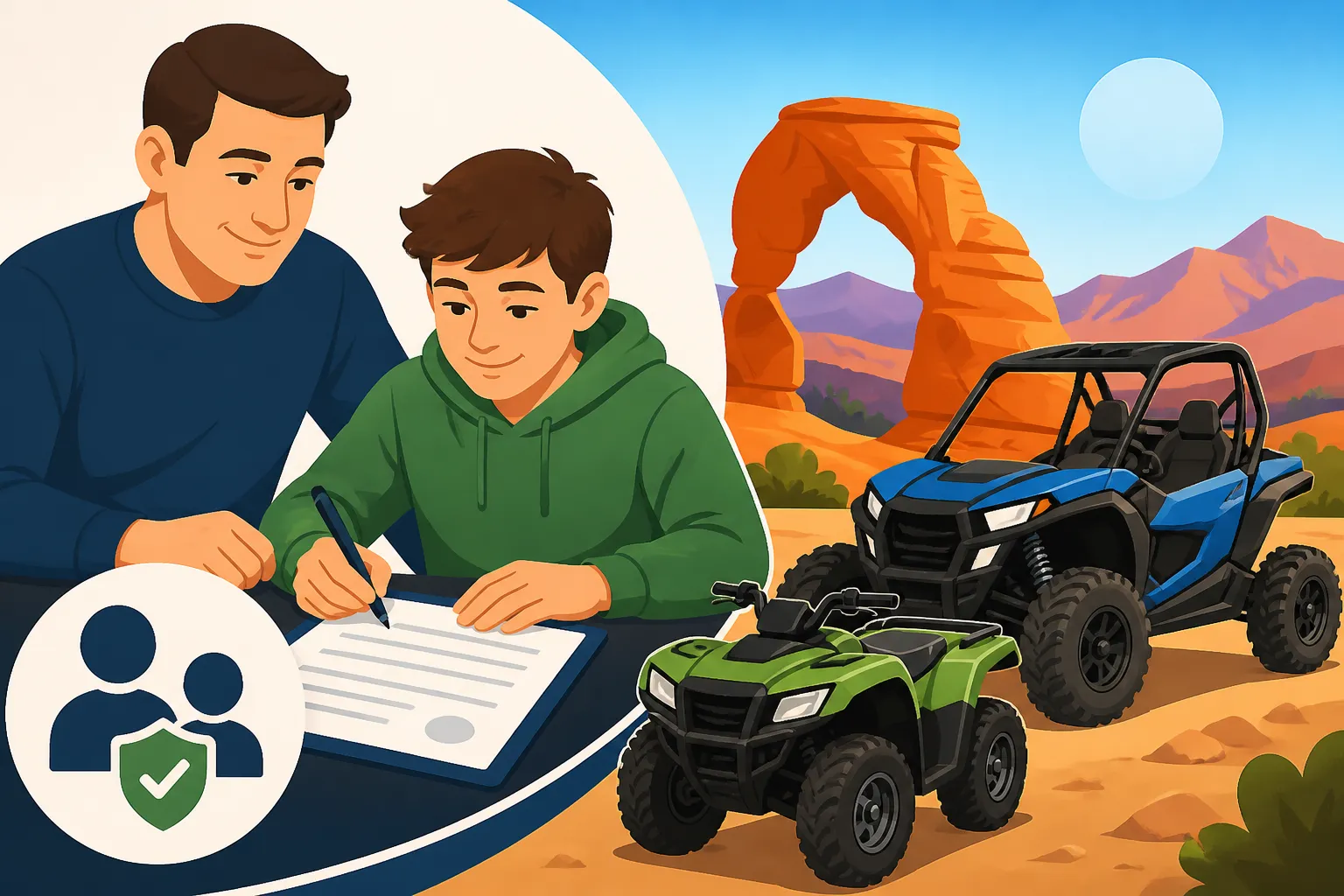
Since a minor can't directly hold the title, an adult must step in as the legal owner or custodian. This person essentially holds the title "for" the minor. This could be a parent, a grandparent, or another trusted adult. When you go to [How to Register an ATV or UTV in Utah], the forms will ask for the legal owner's information, and that will need to be an adult.
This arrangement means the adult listed on the title is legally recognized as the owner. They are the one who will sign all the registration paperwork, handle renewals, and typically be the primary insured party. From a practical standpoint, this adult also bears the ultimate responsibility for the machine's proper use, maintenance, and storage. If the minor rider causes damage or is involved in an incident, the legal owner (the adult) is often the first point of contact for any claims or legal actions. This is a significant responsibility, so choose wisely who will hold this title.
Difference Between Legal and Beneficial Ownership
It's helpful to distinguish between legal ownership and beneficial ownership. Legal ownership refers to whose name is officially on the title and registration documents, making them the party recognized by the state and insurers. Beneficial ownership, on the other hand, describes who truly benefits from and uses the property.
In the case of an OHV for a minor, you, as the adult, would typically be the legal owner. Your child, however, would be the beneficial owner – they are the one who gets to ride it, enjoy it, and for whom the machine was purchased. While the DMV only cares about the legal owner, understanding this distinction can be important for family discussions, estate planning, or in setting up certain types of trusts. You might establish a clear understanding within your family that "this UTV is for Sarah," even though the title technically says "John Doe." When thinking about official documentation like a bill of sale, it's the legal owner's name that needs to be present, and it's their signature that makes the transaction valid. Using a reliable template from a service like LawDepot can ensure that all necessary legal fields are correctly addressed.
Methods for Registering an OHV for a Minor in Utah
So, how do you actually get that OHV registered and legal when your young rider can’t sign on the dotted line? There are a few common approaches, each with its own set of implications. The goal is always to get the vehicle titled and registered in Utah in a way that provides clear legal ownership while recognizing the minor as the intended user.
Titling in an Adult's Name "For" the Minor (Custodian)
This is by far the most common and straightforward method. An adult, usually a parent or guardian, simply titles and registers the OHV in their own name. This adult is then officially recognized as the owner by the state of Utah. The registration documents and the physical title will bear their name.
For example, if you buy a new quad for your 14-year-old son, the dealer will process the paperwork with your name as the purchaser. The title will be issued to you, and when you go to the DMV, you will register it under your name. You'll pay the [Utah OHV Registration Fees, Start to Finish] and complete the process as if the machine were entirely for your personal use. You are the legal custodian, even though you know in your heart it's "Johnny's ATV." This simplifies things immensely for registration, insurance, and future sales, as all transactions will go through you, the legal adult owner. Remember that you’ll still need to follow all Utah laws regarding the [Utah ATV Title Requirements Explained] for the specific year and type of machine.
Using a Trust
For those who want a more formal arrangement, especially for higher-value OHVs or as part of a larger estate plan, placing the OHV into a trust can be an option. A trust is a legal arrangement where a trustee (an adult) holds assets for the benefit of a beneficiary (the minor). The trust itself would be the legal owner of the OHV, managed by the trustee.
Setting up a trust involves legal documents that outline the terms of the trust, who the trustee is, and when and how the assets (including the OHV) will eventually transfer to the minor once they reach a specified age or milestone. While this adds a layer of complexity and usually requires legal assistance to draft properly, it can offer benefits such as avoiding probate, providing continuity of management, and offering more control over how and when the asset passes to the minor. However, for a single ATV or UTV, it’s often overkill for most families. If you are considering this, look into legal document services that offer trust templates, such as those you might find on LawDepot, to understand the basic structure before consulting an attorney.
Gifting Considerations
Perhaps the OHV isn't a new purchase, but a gift. You might be [Gifting an ATV to a Family Member in Utah] or receiving one from another relative. In this scenario, the gifting process still needs to adhere to the rule of adult legal ownership. If a grandparent wants to gift an ATV to their 10-year-old grandchild, the title will still need to be transferred into the name of an adult (e.g., the grandchild's parent) who will then be the legal owner.
When a gift is involved, particularly from outside the immediate family, you'll still need a bill of sale to prove the transfer of ownership, even if no money changed hands. The bill of sale should state that the item is a gift, with a nominal or zero value, to avoid sales tax confusion, though some fees may still apply. This documentation is crucial for the Utah DMV. Always ensure the bill of sale correctly identifies the adult who will be the legal owner and has all the necessary details of the OHV. Understand that [Taxes on an ATV Gifted Between Relatives] can still have implications, so it’s wise to clarify the exact process with the DMV to avoid surprises.
Paperwork and Process at the Utah DMV
Navigating the Utah DMV can feel daunting at times, but knowing exactly what paperwork to bring and how to fill it out when putting an OHV in a minor's name (indirectly, of course) will save you a lot of headache. The key is to ensure all documents clearly identify the adult who will be the legal owner and that the information matches across all forms.
Documents Required
When you head to the DMV, you'll need a collection of documents to prove ownership, ensure the vehicle is legitimate, and complete the registration. Even though the OHV is for a minor, the paperwork will always be in the adult's name.
Firstly, you'll need the title. If it's a new machine, the dealer will typically provide the Manufacturer's Statement of Origin (MSO) or Manufacturer's Certificate of Origin (MCO). If you're buying a used OHV, you'll need the previous owner's signed-over title. Make sure the title meets [Utah's Title Rule for 1988 and Newer Machines] and is free of errors. Secondly, a bill of sale is essential. Even if it's a gift or from a private party, a bill of sale provides crucial details about the transaction and the OHV. Make sure it adheres to the [Bill of Sale Requirements for a Utah ATV Sale] and is signed by both the seller and the adult buyer (you). You'll also need a valid form of personal identification, such as your driver's license, as the adult registering the vehicle. If you're [Buying a Used ATV in Utah: The Paperwork], take extra care to verify all the seller's information and the OHV's VIN.
Completing the Registration Forms
Once you have your title and bill of sale in hand, you’ll fill out the necessary registration forms provided by the Utah DMV. These forms will ask for the owner's name, address, and other identifying information. Crucially, this will be your information as the adult legal owner, not the minor's.
You'll need to accurately fill in details about the OHV, including the Vehicle Identification Number (VIN), make, model, and year. Double-check all numbers and spellings against the title and bill of sale to avoid any discrepancies that could cause delays. You’ll also declare the purchase price (or gift value) for calculating sales tax and the [The Age-Based Uniform Fee on Utah OHVs]. When processing the registration, you are effectively stating that you are the legal owner, responsible for the vehicle. The DMV isn't concerned with who will primarily ride it; they need a legally responsible adult on record.
Specific Considerations for a Minor's Beneficiary
While the DMV process primarily focuses on the adult legal owner, it's a good practice to keep your own records clear about the OHV's intended beneficiary. This might not be a direct DMV requirement, but it’s smart planning. For instance, if you're holding the title for a child and something were to happen to you, having a clear statement in your personal records or a will about who the OHV is intended for can help ease future transitions.
You won't typically list the minor's name on the registration form itself, but internally, you can document that the OHV is meant for them. This becomes more relevant as the minor approaches adulthood. When they turn 18, you can then proceed with [Transferring an ATV Title Between Family Members in Utah] to put the OHV directly into their name, should you choose to do so. Until then, you remain the responsible party for everything from trail rules to insurance. Remember, for every adventure on the trails, you'll need to ensure you have [What Paperwork Utah Riders Must Carry] with you, including the current registration for the OHV that lists you as the legal owner.
Implications of Minor Ownership: Insurance, Liability, and Usage
Once that OHV is legally registered in your name for your minor, the adventure begins – but so does the ongoing responsibility. It’s not just about the initial paperwork; it's about understanding the long-term implications for insurance, liability, and making sure the young rider adheres to all usage regulations.
Who Is Responsible for Insurance and Accidents
As the legal owner of the OHV, you, the adult, are ultimately responsible for ensuring the machine is properly insured. While Utah doesn't always mandate insurance for off-highway use, it's incredibly wise to carry it. Most standard home insurance policies offer very limited, if any, coverage for off-road vehicles, especially when they leave your property. You'll likely need a dedicated OHV insurance policy.
This policy will be in your name as the legal owner, and it's essential to disclose that a minor will be operating the vehicle. Failing to do so could jeopardize coverage in the event of an accident. If the minor is involved in an accident, any claims or lawsuits will typically fall back on you, the insured and registered owner. This is why obtaining adequate liability coverage is paramount, as it can protect you from significant financial burdens if your child causes injury or property damage to others. It’s a huge part of being a responsible OHV owner, especially when a young rider is involved.
Age Restrictions for Riding and Supervision
Utah has specific age restrictions and supervision requirements for OHV operators, regardless of who legally owns the machine. These rules are in place for safety and are separate from the ownership rules. For example, a child under 8 years old cannot operate an OHV on public land. Children between 8 and 16 years old can operate an OHV on public land only if they have a valid OHV education certificate and are under the direct supervision of an adult. For youth model machines, there are also engine size limitations based on age.
As the adult legal owner and often the supervising adult, it is your responsibility to know and enforce these rules. Ignoring them not only puts the minor at risk but can also lead to fines and legal consequences for you. Even if the OHV is legally registered to you, it doesn't grant carte blanche for unsupervised riding. Make sure your young rider has completed the necessary [The Adult OHV Education Course in Utah] or youth certificate program before hitting the trails. These courses teach essential safety skills and rules of the trail, which are critical for responsible riding.
Transferring Ownership When the Minor Becomes an Adult
Eventually, your minor rider will turn 18 and become a legal adult. At this point, you might decide it's time to formally transfer the legal ownership of the OHV into their name. This process is generally straightforward, much like any other title transfer between family members.
You'll essentially treat it as a private sale or gift between you and your now-adult child. You'll need to sign over the title to them, and they will then take the signed title, along with a bill of sale (even if it's for $0 as a gift), to the DMV to register it in their name. This can be a significant milestone, marking their full independence as an OHV owner. They'll then be responsible for their own registration renewals and insurance. It's a great opportunity to review all the responsibilities that come with adult OHV ownership, including safe riding practices, [Driver License Rules on Utah Roads] if they intend to make it street-legal, and understanding the financial obligations.
Important Legal Documents and Resources
Navigating the nuances of OHV ownership, especially when a minor is involved, requires attention to detail regarding legal documents. Having the right forms and understanding their purpose can make the entire process smoother and ensure you're compliant with Utah law.
The Role of a Bill of Sale
A bill of sale is much more than just a receipt; it's a legally binding document that proves the transfer of ownership from one party to another. Even if you're acquiring an OHV as a gift for a minor, a bill of sale is crucial for the adult legal owner.
This document should clearly identify the seller and the adult buyer (your name), the OHV's make, model, year, and most importantly, its VIN. It should also state the purchase price or, if it's a gift, clearly indicate "gift" and a nominal value like $0 or $1. This helps with tax calculations and verifies that no money was exchanged for tax purposes if applicable. Without a properly executed bill of sale, the Utah DMV may be hesitant to process your registration, as they need a clear paper trail for how the OHV came into your possession. You can find generic bill of sale templates online, and services like LawDepot offer customizable forms that help ensure all necessary legal fields are covered for your specific situation.
Drafting a Trust or Custodial Agreement
For situations beyond simple adult ownership, like establishing a trust or a more formal custodial agreement, having well-drafted legal documents is essential. These documents dictate how the OHV (or other assets) is managed for the minor's benefit and when they will eventually take full control.
A trust document will name a trustee (you or another adult) and outline their duties and powers in managing the asset for the minor beneficiary. It specifies the conditions under which the asset can be used or sold and when it passes to the minor. A custodial agreement, while less formal than a full trust, can still provide clear guidelines for how the adult (custodian) will manage the OHV on behalf of the minor. While these agreements are not typically required by the DMV for registration, they are vital for personal legal planning and can prevent disputes down the road. They clarify intent and ensure a smooth transition of ownership when the minor comes of age.
Where to Get Legal Forms and Assistance
For standard transactions like a bill of sale, you can often find basic templates online or sometimes even from the Utah DMV's website. However, for more complex documents like trusts or detailed custodial agreements, it's often wise to seek professional legal advice or use reputable legal document services.
Online platforms like LawDepot can be incredibly helpful for accessing a variety of legal templates, including bills of sale, promissory notes, and even basic trust documents. These platforms often guide you through the process of customizing the forms to fit your specific needs, making sure you include all the critical information. While these services are not a substitute for an attorney, they can provide a cost-effective way to generate legally sound documents for many common scenarios. When in doubt, especially for high-value machines or complex family situations, a consultation with a Utah attorney specializing in estate planning or property law can provide peace of mind and ensure everything is set up correctly for your minor's future adventures.
| Ownership Method | Legal Owner | Primary Responsibilities | DMV Process | When It Makes Sense |
|---|---|---|---|---|
| Adult Direct Ownership | Adult (Parent, Guardian) | Registration, insurance, liability, supervision | Standard registration in adult's name | Most common, simplest for single OHV, direct control |
| Trust | The Trust itself (managed by Trustee) | Trustee manages asset, follows trust terms, insurance | OHV titled in trust's name | High-value assets, complex estate planning, multiple beneficiaries |
| Gifting to Adult for Minor | Adult (Parent, Guardian) | Same as Adult Direct Ownership | Standard registration in adult's name with gift bill of sale | OHV received as a gift, still needs adult legal owner |
Disclaimer
This article is for general informational purposes only and does not constitute professional advice. Laws, prices and regulations vary by location and change over time. Consult a qualified professional for guidance on your specific situation.