Renewing a Utah OHV Registration Online
It's incredibly frustrating when your passion for hitting Utah's stunning trails is stalled by overdue paperwork. You're eager to get out on your ATV or UTV, but the thought of battling traffic and waiting in line at the DMV can be a real buzzkill. This comprehensive guide is here to alleviate that headache, walking you through every step of renewing your Utah off-highway vehicle (OHV) registration online, ensuring you spend less time on bureaucracy and more time exploring the red rock and mountainscapes.
The Convenience Factor: Why Online Renewal Is Often Your Best Bet
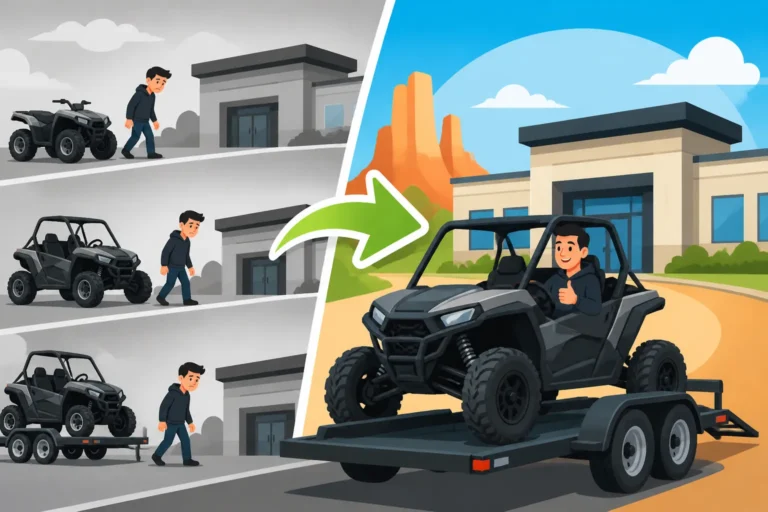
Let's be real, who actually enjoys a trip to the local Department of Motor Vehicles (DMV) or Driver License Division (DLD) office? Between the unpredictable wait times, the potential for forgotten documents, and the general hustle and bustle, it can quickly turn a simple task into an hours-long ordeal. That's precisely why Utah's online OHV registration renewal system has become such a lifesaver for so many riders. It offers a level of convenience and efficiency that traditional methods simply can't match, allowing you to handle your renewals from the comfort of your couch, late at night, or whenever it suits your schedule.
Beyond just saving time, renewing online means you're less likely to miss a deadline. With a few clicks, you can ensure your machine is legal and ready to roll, often receiving your new decal and registration card faster than if you mailed in your paperwork. It's about empowering you to manage your OHV responsibilities on your terms, letting you focus on planning your next adventure rather than dreading a government office visit.
Saying Goodbye to DMV Lines and Paper Cuts
The single biggest draw of online renewal is undoubtedly escaping the physical lines and the dreaded "take a number" ritual. We've all been there: you arrive right when the doors open, only to find a queue already snaking out the door, or you try to squeeze in a visit during your lunch break, only to realize you'll be clocking out late. Online renewal obliterates this scenario entirely. You can complete the entire process from your computer or smartphone, whether you're at home, grabbing a coffee, or even parked at a trailhead before a ride (assuming you have service!).
This digital convenience also reduces the chance of misplacing physical paperwork. No need to shuffle through a stack of documents or worry about a check getting lost in the mail. Everything is submitted electronically, creating a clear, digital trail of your transaction. This ease of access and reduced administrative burden makes it a far more appealing option for most busy riders.
Keeping Track of Multiple Machines Effortlessly
For families or enthusiasts with a fleet of OHVs – maybe a couple of ATVs for the kids, a side-by-side for group rides, and a dirt bike for solo excursions – managing individual registration renewals can quickly become a complicated dance of due dates. The online portal offers a streamlined way to handle all your machines in one go, provided they are all registered under the same name and address. This centralized management is a significant advantage, helping you avoid accidental lapses in registration for one of your vehicles.
Imagine the peace of mind knowing you can log in, see the status of all your registered OHVs, and renew them all within a single transaction. This not only saves you time but also helps you stay organized, preventing any machine from falling through the cracks. It's an efficient solution for anyone juggling multiple off-road vehicles.
Getting Ready: What You Need Before You Start the Online Process
Even though the online renewal process is designed for convenience, a little preparation goes a long way. Trying to rush through it without the necessary information can lead to errors, delays, or even having to start over. Think of it like packing your cooler before a long ride: you wouldn't just throw things in haphazardly. Taking a few moments to gather your "essentials" for online renewal will ensure a smooth, quick, and successful transaction, getting you back to thinking about tires and trails rather than browser windows.
The key here is anticipation. Knowing exactly what information the system will ask for and having it readily available means you won't be scrambling for your wallet or digging through old paperwork mid-process. This preparatory step is crucial for transforming what could be a frustrating experience into a truly seamless one.
Essential Information and Documents to Have On Hand
Before you even open your web browser, make sure you have the following vital pieces of information right at your fingertips. The most important item is usually your renewal notice, which typically arrives in the mail a few weeks before your registration expires. This notice contains crucial identifiers that the online system uses to find your specific OHV records. It will usually include the registration number, the plate number (if applicable), and often a PIN or access code that allows you to securely log into your specific renewal transaction.
If you don't have your renewal notice, don't panic! You can often proceed using your vehicle's VIN (Vehicle Identification Number), which is typically stamped on the frame or visible on the manufacturer's plate, along with your license plate number. You'll also need your current address to confirm it's correct for shipping your new decal, and, of course, a valid payment method like a credit or debit card. For more details on this, you might find [What Paperwork Utah Riders Must Carry] a helpful read, though it's more about trail-side documents.
Understanding Your Fees and Payment Options
One of the often-overlooked aspects of any renewal is the exact cost, and sometimes, the fees involved can be a bit more nuanced than just a flat rate. When renewing your Utah OHV registration online, you'll generally be paying the standard registration fee and a uniform fee, which is based on the value and age of your machine. There might also be a small online transaction fee added to cover the cost of processing your payment electronically. The online system will calculate these for you, presenting a clear total before you finalize the transaction.
Payment online is almost universally done via credit or debit card. Most portals accept major card brands. It’s a good idea to ensure your card is current and has sufficient funds. While you won't need a physical check or cash for online renewal, understanding these costs beforehand helps you avoid any surprises at the checkout screen. The fees cover important aspects like trail maintenance and educational programs, so you can feel good about where your money is going. You can learn more about the breakdown of costs by checking out [Utah OHV Registration Fees, Start to Finish].
Step-by-Step: Navigating Utah's Online OHV Renewal Portal
Alright, you've gathered your information, you know what to expect regarding fees, and you're ready to tackle this! The online process is designed to be user-friendly, but a little guidance can make it even smoother. We'll walk through the typical flow, from finding your way into the system to confirming your details and finally making that payment. Remember, the goal here is to get your OHV legal and get you back to the trails with minimal fuss.
Most online systems are intuitive, but it’s easy to get sidetracked or confused if you’re not sure what button to press next. By following a clear path, you can avoid common mistakes and ensure your renewal goes through correctly the first time.
The Initial Login and Machine Identification
Your journey usually begins by navigating to the Utah Driver License Division's (DLD) official online services portal. Look for the specific section dedicated to OHV renewals. Once there, the system will prompt you to identify your machine. This is where your renewal notice comes in handy, as it typically provides a direct link or a combination of your registration number (often a decal number) and a PIN or renewal code. Entering these details securely connects you to your specific OHV record.
If you don't have the renewal notice – maybe it got lost in the mail or you simply tossed it, thinking you'd remember – you'll usually have an alternative option. This often involves entering your OHV's Vehicle Identification Number (VIN) and possibly your license plate number if your machine is also street-legal or was issued a plate. The system needs these unique identifiers to pull up the correct vehicle and owner information from its database. Be extra careful to type these numbers accurately to avoid fetching someone else's record or encountering an error. If you've been putting off renewal, you might want to read about [Late Renewal on a Utah OHV Registration].
Confirming Details and Completing Payment
Once your machine is identified, the online portal will display all the associated details: your name, address, the OHV's make, model, year, and the calculated renewal fees. Take a moment here to carefully review all the information. Is your mailing address correct? This is critical because your new decal and registration card will be mailed to this address. If anything is incorrect, there's usually an option to update it directly within the renewal process or a clear instruction on how to make changes (which might involve contacting the DLD directly if it's a major detail like an ownership transfer).
After confirming all details are accurate, you'll proceed to the payment screen. Here, you'll input your credit or debit card information. The system will process your payment securely and then provide you with a confirmation number or a receipt that you can usually print or save as a PDF. This confirmation is your proof that the transaction was successful, and it's a good idea to keep it for your records until your new decal arrives. This entire process is typically very quick, often taking less than five minutes if you have all your information prepared.
Troubleshooting Common Online Renewal Roadblocks
While online renewal is generally smooth sailing, it's not without its potential bumps in the road. You might hit a snag that makes you question why you didn't just go to the DMV in person after all. But don't despair! Most common issues have straightforward solutions, and understanding what to do when something goes wrong can save you a lot of stress. Identifying the problem early and knowing the right steps to take means you can quickly get back on track to a successful renewal.
The key is to approach these issues calmly and systematically. Often, the error message itself provides a clue. Remember, the goal is convenience, and resolving these minor hurdles independently keeps that goal intact.
When Your Renewal Notice Goes Missing
It's a common scenario: the due date for your OHV registration is looming, and you realize you never received that handy renewal notice in the mail. Maybe it got lost, misfiled, or perhaps you moved recently and the DLD doesn't have your updated address. This can definitely feel like a moment of panic because that notice often contains the critical PIN needed for online access. However, as mentioned earlier, you typically don't need the physical notice to complete your online renewal.
In most cases, you can still proceed by using your OHV's VIN and license plate number (if it has one). The Utah DLD online portal usually provides an alternative login path for those without a renewal notice. If you've recently moved, this is also an excellent opportunity to update your mailing address within the system during the renewal process to ensure future notices reach you. If you're really stuck, a quick call to the DLD can help, but more often than not, the online system has you covered. For more on this, check out [Renewing Without the Renewal Notice].
Dealing with Payment Processing Issues or Errors
Nothing is more frustrating than meticulously filling out all the forms, confirming all your details, and then having your payment fail at the last step. Payment processing errors can range from a simple typo in your card number to more complex issues like an expired card, insufficient funds, or even your bank flagging the transaction as suspicious. The first thing to do is double-check all your card details: the number, expiration date, and security code. A single digit off can cause the whole thing to fail.
If the details are correct, try using a different card if you have one available. Sometimes, a bank's security system might temporarily block an online transaction if it seems unusual. If the problem persists, you might need to contact your bank to verify the transaction or try again later. Make sure you're using a secure and reliable internet connection, as flaky Wi-Fi can sometimes interrupt the payment submission. If you're renewing for multiple machines in one go, ensure your card limit can handle the total amount. While not a direct solution, thinking about how you manage important documents can sometimes prevent these kinds of issues. If you had to, say, prove prior ownership to resolve a payment issue that stemmed from an unclear transfer, a well-drafted bill of sale from a service like LawDepot could be invaluable in clarifying who owes what for taxes or fees.
What to Do If Your Machine Details Are Incorrect
Discovering that your OHV's make, model, year, or even your own name is incorrect on the online renewal form can be alarming. It makes you wonder if you're even registering the right machine! Minor discrepancies, like a slightly off model name, might not prevent the renewal from going through, but major errors need to be addressed. If you see a significant error – for instance, the year is wrong by several years, or it lists a completely different type of machine – do not proceed with the renewal.
Such errors usually indicate a deeper issue with the DLD's records or an initial input mistake during a previous registration. In these cases, the online system typically won't allow you to make major corrections yourself. You'll likely need to contact the Utah DLD directly or visit a DLD office in person to rectify the information. Bringing your actual vehicle title and any previous registration documents will be crucial to prove the correct details. While LawDepot itself doesn't directly fix DMV errors, having professionally prepared documents like a properly executed bill of sale (if the error traces back to a purchase) or even a power of attorney (if someone else needs to act on your behalf to fix the error) can smooth out the process of correcting records.
What Happens Next: From Click to Decal in Your Mailbox
You've successfully navigated the online portal, confirmed your details, and clicked that glorious "submit" button. Phew! The immediate relief is real. But now what? The process doesn't end with a confirmation screen; there's still a brief waiting period before your OHV is fully legal with its shiny new sticker. Understanding this post-submission phase, from processing times to receiving and displaying your decal, helps manage expectations and ensures you're ready to ride legally as soon as everything arrives.
This final stage is all about verification and delivery. It's the physical manifestation of your digital transaction, and knowing the timeline can prevent unnecessary anxiety or premature trips to the DLD.
The Processing Timeline and Confirmation
After you've completed your online renewal and received a confirmation number, the Utah DLD typically processes your request fairly quickly. Generally, you can expect your new registration card and decal to be printed and mailed out within a few business days. The actual delivery time will then depend on standard postal service speeds, which can vary but usually takes about 7 to 10 business days from the date of your successful online transaction.
It's a good idea to save or print your confirmation receipt. This digital proof serves as evidence that you've completed the renewal process, which can be useful if your decal takes longer than expected to arrive or if you encounter any issues. While this receipt isn't a substitute for the official registration card and decal on the trail, it provides peace of mind. For an idea of how long the whole process might take, you can refer to [How Long Utah OHV Registration Takes to Process].
Receiving and Displaying Your New Decal
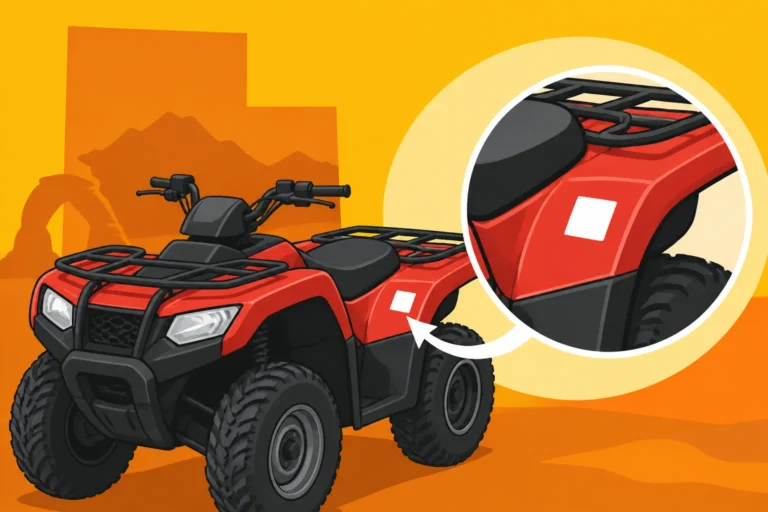
Once your new OHV registration card and decal arrive in the mail, the final step is to affix that decal to your machine. Utah has specific rules about where OHV decals should be placed to ensure they are clearly visible for enforcement. For ATVs, the decal typically goes on the rear of the machine, usually on the fender or a designated area. For side-by-sides (UTVs), it often goes on a rear fender or frame component. The key is visibility and security – you want it where it won't be easily obscured or fall off.
Make sure to remove any old, expired decals before applying the new one. Clean the surface thoroughly to ensure the new decal adheres properly and lasts for its full two-year lifespan. Applying it crooked or over a dirty surface can lead to it peeling off prematurely, which would necessitate ordering a replacement. Remember, riding with an expired or improperly displayed decal can lead to a citation, so this final step is just as important as the renewal itself. More details on placement can be found in [Utah OHV Decals and Where They Go].
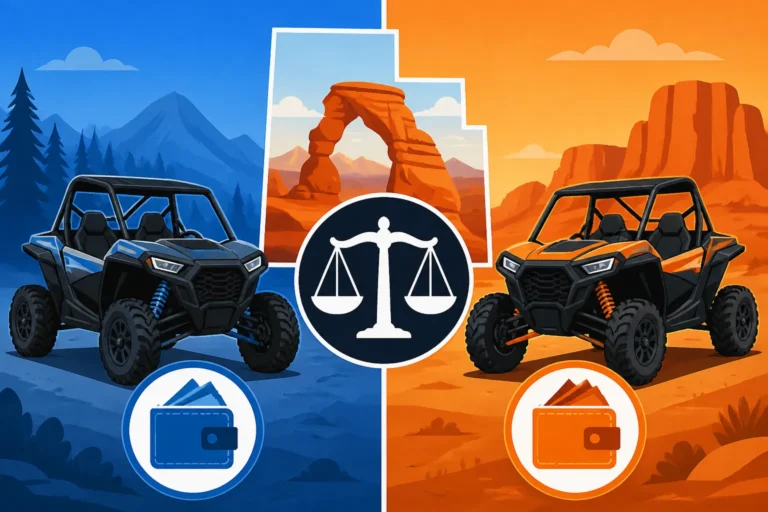
Online vs. In-Person vs. Mail: Weighing Your Renewal Options
While this guide focuses on the convenience of online renewal, it's important to acknowledge that it's not the only way to get your Utah OHV registered. For some, or in certain situations, other methods might be more suitable or even necessary. Understanding the pros and cons of renewing by mail or in person at a DLD office can help you make the best decision for your specific circumstances, particularly if you're facing unique challenges or prefer a more traditional approach.
Each method has its own set of advantages and disadvantages. Evaluating these helps you choose the path that aligns best with your needs, your schedule, and the particularities of your OHV registration.
The Pros and Cons of Each Method
| Feature | Online Renewal | In-Person Renewal (DLD Office) | Mail-In Renewal |
|---|---|---|---|
| Convenience | Highest: 24/7 access from anywhere. | Low: Requires travel, waits during business hours. | Moderate: No travel, but reliance on postal service. |
| Speed | Fast processing; mail delivery 7-10 days. | Instant decal/card if all documents are correct. | Slowest: Mailing time plus processing time. |
| Error Correction | Limited; may require DLD contact for major issues. | Direct assistance for immediate corrections. | Very difficult; requires DLD contact or re-submission. |
| Payment Options | Credit/debit card only. | Cash, check, money order, credit/debit card. | Check or money order only. |
| Proof of Renewal | Instant confirmation receipt. | Physical receipt and immediate new documents. | Postal tracking (if used); wait for documents. |
| Privacy/Security | Secure online portal (ensure official site). | Direct interaction, secure document handling. | Risk of mail loss or tampering. |
| Multi-Machine | Easy for multiple machines in one transaction. | Can handle multiple, but might take longer. | Possible, but can complicate tracking. |
As the table illustrates, online renewal consistently ranks high for convenience and speed for most straightforward situations. However, in-person renewal offers the distinct advantage of immediate problem resolution and receiving your physical documents on the spot, which can be crucial if you're up against a tight deadline or have complex issues to resolve. Mail-in renewal, while convenient in terms of not having to travel, is generally the slowest and offers the least control or immediate feedback. This might be a good time to mention other critical documents beyond registration. For instance, if you've recently bought or sold an OHV, ensuring you have a proper bill of sale is crucial, and resources like LawDepot can help you generate these important legal documents correctly, regardless of how you choose to renew your registration.
When an In-Person Visit Might Still Be Necessary
Despite the clear benefits of online renewal, there are specific scenarios where making a trip to a Utah DLD or DMV office in person is not just preferable, but often mandatory. The most common reasons include situations where:
- You have a significant error in your vehicle or owner information that cannot be corrected through the online portal.
- Your machine requires a VIN inspection (e.g., if it's new to Utah, rebuilt, or the VIN is obscured).
- You're dealing with a complex ownership transfer (like inheriting an OHV or putting it into a trust) that requires special documentation or signatures. For instance, if you're transferring ownership into a family trust, having the appropriate trust documents drafted by a service like LawDepot can streamline the in-person process, showing clear legal authority.
- You need immediate proof of registration because you're riding that same day and can't wait for mail delivery.
- You prefer to pay with cash or need specific assistance that only a DLD representative can provide.
- You're trying to resolve a lien or title issue that is preventing your renewal.
In these situations, the face-to-face interaction at the DLD office ensures that all nuances are addressed, questions are answered, and the appropriate physical documentation can be presented and processed directly. While it might take a bit more time initially, it can prevent long-term headaches down the road. It's always a good idea to call ahead to your local DLD office if you have a complex situation, just to confirm what documents you'll need to bring.
Disclaimer
This article is for general informational purposes only and does not constitute professional advice. Laws, prices and regulations vary by location and change over time. Consult a qualified professional for guidance on your specific situation.