How to Register an ATV or UTV in Utah
Navigating the labyrinthine process of registering an ATV or UTV in Utah can feel like trying to find your way through a new trail system without a map. Whether you've just bought a shiny new side-by-side, picked up a fantastic deal on a used quad, or are moving to Utah with your beloved machine, the paperwork and procedures can be incredibly confusing, leading to frustration and delays. This comprehensive guide is designed to cut through that complexity, providing you with a clear, step-by-step roadmap to get your off-highway vehicle (OHV) legally registered and ready for Utah's incredible trails.
Understanding Utah's OHV Registration Landscape
Before you even think about hitting the red rock trails of Moab or the expansive dunes of Sand Hollow, understanding why and how you need to register your OHV in Utah is paramount. It's not just a bureaucratic hurdle; it's an essential part of responsible ownership that ensures you're contributing to the very trails you enjoy and staying on the right side of the law.
Why Registration Matters for Every Rider
Let's be honest, nobody enjoys dealing with paperwork, but registering your OHV in Utah isn't just about avoiding a ticket. It's a fundamental responsibility that impacts your riding experience, the health of our trail systems, and your financial well-being. Imagine pulling up to a popular trailhead, excited for a day of adventure, only to be turned away or worse, fined, because your machine isn't properly registered. That's a real and disheartening scenario for many riders who overlooked this crucial step.
Beyond the immediate legal implications, your registration fees play a vital role in maintaining and developing the very trails we all love. These funds contribute to trail signage, facility upkeep, and law enforcement patrols that keep our riding areas safe and accessible. Without proper registration from all riders, these critical resources would quickly dwindle, diminishing the quality of the OHV experience across the state. Furthermore, having a properly registered machine is often a prerequisite for obtaining essential trail permits or participating in organized riding events, essentially unlocking access to some of Utah's most iconic landscapes. It's about being a part of the solution, not just enjoying the ride.
What Qualifies as an OHV in Utah
Utah's definition of an Off-Highway Vehicle (OHV) is quite broad, encompassing a wide array of machines designed for off-road use. It's not just limited to the typical four-wheelers you see tearing up the dunes. This definition is crucial because if your machine falls under it, registration is generally required for legal operation on public lands or designated OHV routes. For instance, that shiny new utility-terrain vehicle (UTV) you just bought for family adventures, or the rugged all-terrain vehicle (ATV) you use for exploring mountain trails, absolutely falls into this category.
But the scope extends even further. It includes traditional dirt bikes, which are incredibly popular for single-track riding, and even snowmobiles during the winter months, offering a whole different kind of off-road thrill. Essentially, if it's motorized, designed for off-highway travel, and you plan to ride it on public land or designated routes in Utah, it's almost certainly an OHV that requires registration. There are specific guidelines around engine size and design, but generally, if it has an engine and isn't street-legal from the factory, assume it's an OHV for registration purposes. Understanding this broad classification helps ensure you don't inadvertently overlook the registration requirement for a less common type of machine. If you're unsure, it's always best to check with the Utah Division of Motor Vehicles (DMV) or a local county assessor's office. [Which Machines Utah Registers as Off-Highway Vehicles] delves deeper into these specific classifications.
Resident vs. Non-Resident: Key Differences
While this guide focuses primarily on Utah residents, it's worth noting that the state has distinct requirements for visitors. If you're a Utah resident, your OHV must be registered with the Utah Division of Motor Vehicles, and you'll receive a permanent registration card and decals that are renewed periodically. This process ties your machine directly to the state's system, ensuring you're compliant with local laws and contributing to the state's OHV program.
However, if you're visiting Utah from another state and plan to ride your OHV on public lands, you'll generally need a non-resident OHV permit. This is a separate, temporary permit that allows out-of-state registered machines to operate legally within Utah's trail systems. It's a crucial distinction, as many visitors mistakenly assume their home state registration is sufficient. Utah ended OHV reciprocity with most states some time ago, meaning even if your machine is fully registered in Arizona or Colorado, you still need that Utah non-resident permit. For residents, it's a straightforward registration process with the DMV, but for visitors, it's an additional step to ensure legality. [Utah Ended OHV Reciprocity: What Visitors Do Now] provides more details for out-of-state riders.
Gathering Your Essential Documents: The Paperwork Puzzle
The biggest hurdle for many people trying to register an OHV in Utah is knowing exactly what documents they need to bring. It's not just one form; it's a collection of specific items that prove ownership, identity, and the machine's compliance. Showing up to the DMV unprepared can lead to multiple trips and endless frustration, so let's break down the critical paperwork you'll need to gather before you head out the door.
Proof of Ownership: Title and Bill of Sale
This is arguably the most critical piece of the puzzle, and it varies significantly depending on whether your ATV or UTV is brand new, used, or from out of state. For a brand-new machine purchased from a licensed dealer in Utah, the process is usually streamlined. The dealer will typically provide you with the Manufacturer's Statement of Origin (MSO) or Manufacturer's Certificate of Origin (MCO), which is essentially the birth certificate for your OHV. This document, along with a bill of sale, proves you are the first owner. The dealer often handles much of the initial paperwork for you, submitting it to the DMV to get the titling process started. However, it's crucial to double-check what they hand you at delivery and ensure all the necessary forms are there for registration.
If you've bought a used OHV, the situation is a bit more hands-on. You'll need the previous owner's properly assigned title. This means the seller must have signed over the title to you in the designated areas, accurately completing the buyer's information, sales price, and date of sale. A common pitfall is receiving a title that's incomplete or improperly filled out, which the DMV will reject. Alongside the title, a detailed bill of sale is essential, especially for private party transactions. This document should clearly state the buyer and seller's names, the OHV's VIN, make, model, year, the purchase price, and the date of sale. While [Do You Need a Notarized Bill of Sale in Utah?] clarifies that notarization isn't always mandatory, it can add an extra layer of protection for both parties. For older machines, say pre-1988, a title might not exist, in which case a robust bill of sale becomes even more critical for proving ownership. Companies like LawDepot offer templates for comprehensive bills of sale that can ensure you cover all the necessary legal points, giving you peace of mind during a private transaction. [Utah ATV Title Requirements Explained] provides an in-depth look at what Utah expects from your title.
Personal Identification and Residency Proof
When you're dealing with any government agency like the DMV, proving who you are is a foundational step. You'll need to bring valid, government-issued photo identification. For most Utah residents, this will be your current Utah driver's license or state ID card. It must be unexpired and clearly show your name and photograph. This serves not only to confirm your identity but also often to verify your residency in the state.
In some cases, especially if your driver's license address doesn't match your current residential address or if you're a new resident, you might need additional proof of Utah residency. This could include utility bills (electricity, water, gas), a lease agreement or mortgage statement, or even bank statements that clearly show your name and a Utah street address. The DMV wants to ensure that you are indeed a resident qualifying for Utah OHV registration, rather than trying to avoid non-resident permit fees. Having a couple of these documents on hand, even if you think your driver's license is sufficient, can save you a frustrating trip back home. Accuracy in your personal details is key, so make sure all your documents reflect your current legal name and address.
VIN Verification: When and How It's Done
The Vehicle Identification Number (VIN) is your OHV's unique fingerprint. It's a 17-digit code that distinguishes your machine from every other one ever made. For new OHVs purchased from a Utah dealer, the VIN is typically verified during the initial paperwork process, often handled by the dealer themselves. However, for used machines, especially those purchased out of state, or if there's any question about the VIN's legitimacy or readability, a physical VIN inspection might be required. This is a critical step to ensure the machine hasn't been stolen and that the VIN on the physical vehicle matches the one on the title and other ownership documents. [VIN Inspections for Utah ATV Paperwork] details this process.
A VIN inspection can often be performed by a Utah law enforcement officer (e.g., city police, county sheriff, or Utah Highway Patrol) or, in some cases, by authorized DMV personnel. You'll need to bring your OHV to them for a physical check. They will visually inspect the VIN plate or stamp on your machine, usually located on the frame, to ensure it's authentic and hasn't been tampered with. They'll compare it against your title and other documents. If the VIN is missing, defaced, or doesn't match the paperwork, it can lead to significant delays and complications, potentially even preventing registration until the issue is resolved. It's a safeguard to protect against fraud and theft, ensuring that the machine you're trying to register is legally yours and legitimate.
Navigating the Registration Process: Step-by-Step
You've gathered all your documents, triple-checked them, and you're ready to make it official. Now comes the actual act of registration. While it might still feel a bit daunting, understanding the process step-by-step can demystify it and make your visit to the DMV or county office much smoother. No one wants to spend more time than necessary dealing with bureaucracy when the trails are calling!
Where to Go: DMV, County Assessors, and Online Options
In Utah, you have a few avenues for OHV registration, which can sometimes add to the confusion but also offers convenience. The primary place for new registrations, title transfers, and complex situations is a branch of the Utah Division of Motor Vehicles (DMV). These offices are equipped to handle all aspects of OHV titling and registration, ensuring that everything is processed correctly. It's often the best choice for first-time registrations or when dealing with a machine that has complex ownership history. You can find a list of [Which Utah DMV Offices Handle OHV Paperwork] to plan your visit.
For simpler transactions, such as renewals or minor updates, many Utah county assessor's offices are also authorized to process OHV registrations. These can sometimes offer a less crowded alternative to the larger DMV branches, especially in smaller counties. However, it's always wise to call ahead to your specific county assessor's office to confirm they handle OHV registration and titling for your particular situation, as services can vary slightly. Finally, for renewals, Utah has increasingly made online options available. If your OHV is already in the system and you simply need to renew its registration, the online portal can be a huge time-saver. You'll usually need your previous registration information or renewal notice to proceed. While online renewal is convenient, initial registrations and title transfers almost always require an in-person visit due to the need for document verification and VIN checks. [Renewing a Utah OHV Registration Online] provides details on how to use that service.
Completing the Application Form
Once you're at the DMV or county office, you'll be directed to fill out the necessary application forms. The specific form might vary slightly, but it will generally be an application for Utah title and registration. This form requires you to provide detailed information about both yourself and your OHV. Expect to fill in your full legal name, current Utah address, driver's license number, and contact information. Accuracy here is paramount, as any discrepancies with your identification or ownership documents could cause delays.
For your OHV, you'll need its make, model, year, and crucially, its Vehicle Identification Number (VIN). This is why having your title or MSO handy is so important – all this information will be right there. You'll also likely be asked for the purchase date and the price you paid, which is used to calculate sales tax and the uniform fee. Don't rush through this section. Double-check every digit of the VIN and ensure the make and model precisely match your ownership documents. If you have any questions while filling out the form, don't hesitate to ask a DMV or county employee; they're there to help clarify the requirements. Many of these forms are also available online through the Utah DMV website, so you might even be able to print and pre-fill some sections at home to save time.
Understanding Fees and Taxes
This is often the part that catches people off guard. Registering an OHV in Utah involves more than just a single registration fee. There are typically several components that make up the total cost, and these can vary based on the age and value of your machine. The primary components are the registration fee itself, a uniform fee, and sales tax. [Utah OHV Registration Fees, Start to Finish] breaks down these costs in detail.
The registration fee is a fixed amount that contributes directly to the state's OHV program, funding trail maintenance, education, and law enforcement. In addition to this, Utah assesses a "uniform fee" on OHVs, which is essentially a property tax that's paid annually at the time of registration. This fee is calculated based on the year of manufacture and depreciated value of your OHV, meaning newer, more valuable machines will generally incur a higher uniform fee. This is why [The Age-Based Uniform Fee on Utah OHVs] explains why two identical UTVs might pay different fees if one is older. Furthermore, if you've purchased your OHV recently, you will also be required to pay Utah sales tax on the purchase price, unless a specific exemption applies (like gifting between immediate family members, though even then, a small gift tax might apply). All these fees are generally paid at the time of registration, either at the DMV or county assessor's office. Be prepared with your preferred payment method; most offices accept cash, checks, and credit/debit cards, though online transactions might incur an additional convenience fee.
Receiving Your Decal and Registration Card
Once you've successfully navigated the paperwork, paid all the necessary fees, and everything is processed, the final step is receiving your physical proof of registration. You'll typically be issued a registration card, which is a small document you must carry with you whenever you operate your OHV. This card contains important information about your machine, including its VIN, make, model, and the registration expiration date. Think of it like your vehicle's driver's license; it's essential for proving legality to law enforcement. [What Paperwork Utah Riders Must Carry] provides a full list of what to have on the trail.
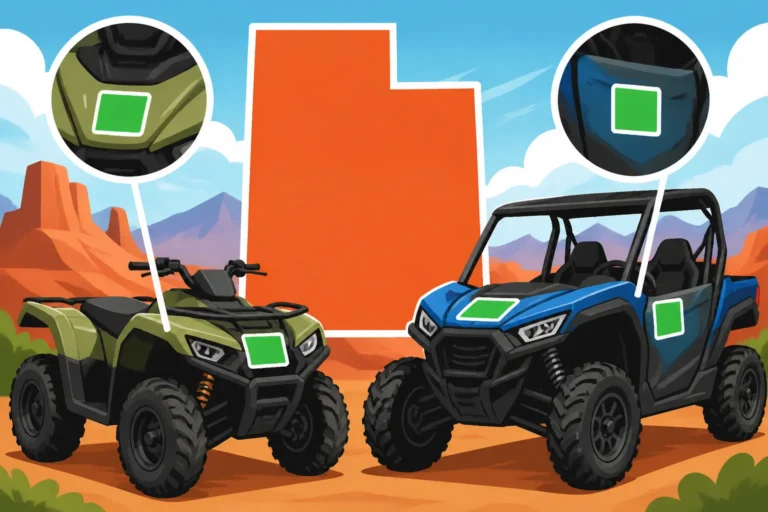
Along with the registration card, you'll receive a set of OHV decals. These are adhesive stickers that you must affix to your machine in specific locations. The decals indicate that your OHV is properly registered and show the current registration year. [Utah OHV Decals and Where They Go] details the precise placement rules for ATVs and UTVs. Proper placement is important, as law enforcement officers often look for these decals during trail patrols. They're designed to be visible and tamper-proof. It's a good practice to keep your registration card in a waterproof pouch on your machine or in your riding gear to protect it from the elements and ensure it's always accessible. Don't forget, these decals need to be renewed periodically, typically every two years, to keep your registration current.
Special Scenarios and Common Roadblocks
While the standard registration process covers most situations, there are several common scenarios that can throw a wrench into your plans. From buying a used machine with a murky past to inheriting a family heirloom, these situations require extra attention and specific documentation. It’s crucial to anticipate these potential roadblocks to ensure a smooth registration experience.
Registering a Used ATV/UTV
Buying a used ATV or UTV can be a fantastic way to get into the sport or upgrade your machine without breaking the bank. However, the registration process for a pre-owned vehicle often involves more scrutiny and specific steps compared to buying new from a dealer. The most critical piece of documentation you'll need is the original title, properly signed over to you by the previous owner. This means ensuring the seller has completed all sections on the back of the title, including their signature, your name as the buyer, the date of sale, and the purchase price. Any missing information or errors on the title can lead to rejection at the DMV, requiring you to track down the seller for corrections, which can be a real headache.
Beyond the title, a comprehensive bill of sale is indispensable, especially for private party sales. This document should detail the VIN, make, model, year of the OHV, the sale price, and the names and signatures of both the buyer and seller. Even if a title is present, a bill of sale provides an extra layer of legal proof of the transaction and can be critical for accurately calculating sales tax. It's a good idea to use a template from a reputable source, like those offered by LawDepot, to ensure all essential details are captured. If you're [Buying a Used ATV in Utah: The Paperwork], make sure to get all your ducks in a row. It's also highly recommended to perform a VIN check to ensure the machine isn't stolen before you complete the purchase.
What to Do If You Don't Have a Title
This is a surprisingly common issue, particularly with older ATVs or UTVs that may predate modern titling requirements, or for machines where the title has simply been lost over time. If your OHV was manufactured before 1988, Utah's titling rules may be different, and you might be able to register it with just a bill of sale and a VIN inspection, especially if the machine was never titled previously. However, for newer machines where a title should exist but is missing, the process becomes more complex. You can't simply register a titled machine without its title.
If the title is lost, the registered owner (or their legal heir) must apply for a duplicate title. This means if you bought an OHV from someone who lost the title, they need to get the duplicate before they can legally transfer it to you. This can be a significant roadblock if the seller is uncooperative or hard to reach. In some rare cases, for truly abandoned machines or those with extremely complicated ownership histories, a bonded title process might be an option, but this usually involves obtaining a surety bond, extensive documentation, and can be a lengthy legal procedure. For a deep dive into this complex issue, refer to [No Title From the Seller: What Utah Requires] and [Replacing a Lost ATV Title in Utah]. It's always best to be very cautious when purchasing a machine without a title, as it can indicate underlying issues.
Registering a Machine Purchased Out-of-State
Bringing an OHV into Utah that was purchased in another state adds another layer of complexity, primarily because you're dealing with different states' titling conventions and sales tax laws. The core requirement remains the same: you'll need proof of ownership, typically the out-of-state title. This title must be properly assigned from the seller to you, just as it would be in a Utah transaction. However, sometimes titles from other states can look very different from Utah's, making it harder to identify the correct sections for transfer.
In most cases, an out-of-state purchase will also require a VIN inspection upon arrival in Utah. This ensures the VIN matches the title and that the machine isn't stolen or has any legal encumbrances. While you may have paid sales tax in the state of purchase, Utah might still assess a use tax if their sales tax rate is higher, or if no sales tax was paid. You typically get a credit for any sales tax already paid, but you might owe the difference. You'll need to bring the out-of-state title, bill of sale (detailing sales tax paid, if any), your personal ID, and potentially the machine itself for a VIN inspection to a Utah DMV office. [How Utah Handles a Title From Another State] and [Buying an ATV Out of State and Registering It in Utah] offer more specific guidance.
Gifting or Inheriting an OHV
Giving or receiving an OHV as a gift, or inheriting one after the passing of a loved one, comes with its own set of paperwork requirements. While you might not be paying monetary "sales tax" on a gift, the state often assesses a "uniform fee" based on the machine's value. For a gifted OHV, you'll still need the properly endorsed title from the previous owner (the giver) to the new owner (the recipient). A clear gift affidavit or a bill of sale stating "gift" with a nominal value (e.g., $1.00) is highly recommended. This helps clarify the transaction for the DMV and can impact how the uniform fee is assessed.
When inheriting an OHV, the process depends on whether the deceased owner had a will and how their estate is being handled. You'll generally need documentation such as a death certificate, letters of testamentary (if there's a will and an executor), or an affidavit of heirship (if there's no will). The goal is to legally prove your right to ownership of the deceased's assets, including the OHV. Once legal ownership is established, you can then proceed with the title transfer and registration in your name. In both gifting and inheritance scenarios, it's wise to ensure all necessary documents clearly state the nature of the transfer to avoid any confusion regarding sales tax liability or ownership verification. LawDepot can be a useful resource for finding templates for gift affidavits or specific legal forms related to estate transfers. [Gifting an ATV to a Family Member in Utah] and [Registering a Machine You Inherited in Utah] offer more specific advice.
Maintaining Your Registration: Renewals and Updates
Getting your OHV registered is just the first step. To ensure you can continue to enjoy Utah's incredible trail systems legally, you need to keep your registration current and your information accurate. Neglecting renewals or failing to update your details can lead to fines, impoundment, and unnecessary headaches.
The Renewal Process: Online, Mail, or In-Person
Utah OHV registrations are typically valid for two years, after which they need to be renewed. This periodic renewal ensures that the state's records are current and that you continue to contribute to the OHV program through your fees. Ideally, you'll receive a renewal notice in the mail or via email a few weeks before your registration expires. This notice will usually contain all the information you need, including your OHV's details, the amount due, and instructions on how to renew.
The most convenient way for many riders to renew is online. Utah's DMV website offers a portal where you can typically renew your registration quickly by entering your OHV's VIN or previous registration number and paying the fees with a credit or debit card. This option saves a trip to the DMV and ensures your new decals are mailed directly to you. If you prefer, or if there's a specific issue preventing online renewal, you can also renew by mail or in person at a DMV office or participating county assessor's office. Just be mindful of the expiration date; riding with an expired registration is illegal and can result in penalties. [Renewing Your Utah OHV Registration] is a detailed guide to this process. Even if [When a Utah Renewal Notice Never Arrives], it's still your responsibility to renew on time.
Keeping Your Information Current
Life happens. You might move to a new house, change your name, or even sell your OHV. It's incredibly important to keep your OHV registration information current with the Utah DMV. The most common update is a change of address. If you move, you should update your address on file as soon as possible. This ensures that you receive renewal notices and any other important correspondence regarding your OHV. Failing to update your address could mean you miss critical information, potentially leading to a lapsed registration or other issues you were unaware of.
Similarly, if you sell your OHV, it's crucial to properly transfer the title to the new owner and ideally, notify the DMV of the sale. This protects you from any liability for incidents that might occur after you've sold the machine. If you've financed your OHV, your lienholder's information will also be on file, and if you pay off your loan, ensuring the lien release is properly recorded is important for getting a clear title. Think of your OHV registration as an active record that needs attention, not a static piece of paper you file away and forget. Keeping your records up-to-date helps ensure a seamless and worry-free ownership experience.
What to Do if You Lose Your Decal or Registration Card
It happens to the best of us: things get lost, damaged, or simply disappear. If your OHV registration card goes missing, or your decals are damaged, stolen, or fall off your machine, don't panic. You can obtain replacements. It's illegal to operate your OHV on public lands without carrying your registration card and having current decals properly displayed, so addressing this issue promptly is essential.
To get a replacement registration card or decals, you'll typically need to visit a Utah DMV office in person or, in some cases, you might be able to request them online. You'll need to provide your OHV's VIN and likely your personal identification to prove ownership. There will be a small fee for replacement items. While a photo of your registration might seem like an acceptable substitute on the trail, it generally isn't. You need the physical card. The same goes for decals; a missing decal needs to be replaced with a new, official one. Don't try to get creative with homemade solutions. Promptly replacing these items keeps you compliant and avoids any potential fines or hassles with trail patrol. [The Cost of a Duplicate OHV Decal in Utah] can give you an idea of what to expect.
Beyond Basic Registration: Other Important Considerations
While securing your OHV registration is the primary goal, there are several other related factors that savvy riders in Utah keep in mind. These considerations can impact your safety, legal standing, and overall enjoyment of the sport. From understanding when insurance is required to knowing about advanced riding certifications, being fully informed ensures a well-rounded and responsible approach to OHV ownership.
Insurance Requirements
For most standard off-highway vehicles that operate exclusively on trails and designated OHV routes, liability insurance is not strictly mandated by Utah state law unless the vehicle is modified to be street legal. However, this doesn't mean insurance is unnecessary. In fact, carrying OHV insurance is a highly recommended practice for any rider. Accidents happen, whether it's a collision with another rider, damage to private property, or an injury to yourself or a passenger. Without insurance, you could be personally liable for significant costs.
Many riders find that their existing auto or home insurance policies offer very limited, if any, coverage for OHVs, especially when off-road. Therefore, a dedicated OHV insurance policy provides peace of mind, covering everything from property damage and medical payments to comprehensive and collision coverage for your machine itself. If you're considering making your OHV street legal, then insurance becomes a mandatory requirement, just like any other road-going vehicle. Always check with an insurance provider to understand your options and ensure you're adequately protected. [When Utah Requires Insurance on an OHV] covers these situations in more detail.
Street-Legal Conversion: A Separate Path
For many riders, the idea of being able to legally drive their UTV or ATV on paved roads to connect trails or run into town is incredibly appealing. Utah is one of the states that allows for street-legal conversion of OHVs, but it's a completely separate process from basic off-highway registration. You cannot simply put an OHV plate on your quad and expect to drive on public roads. Making an OHV street legal requires significant modifications to meet specific equipment requirements, including turn signals, horns, mirrors, windshields, and more.
Once these modifications are made, the OHV must pass a street-legal inspection, similar to how a car would be inspected. Only after passing inspection and meeting all requirements will it be issued a standard license plate allowing it on approved roads. This is an entirely different class of registration and involves additional fees and procedures. It's important not to confuse basic OHV registration, which allows you on trails, with street-legal registration, which allows you on public roads. Trying to use your trail-registered OHV on roads without the proper street-legal conversion can lead to hefty fines and safety risks. [Making a UTV Street Legal in Utah] is a great resource if you're interested in pursuing this path.
Understanding OHV Education and Safety
Utah places a strong emphasis on OHV safety, particularly for younger riders. While there isn't a mandatory education course for all adult riders to register their OHV, it is required for anyone under a certain age to operate an OHV on public lands. Youth riders, typically under 16, must complete an approved OHV education course and carry their certification while riding. This course teaches essential safety practices, rules of the trail, and environmental responsibility, ensuring that young enthusiasts are prepared for safe operation.
Even for adult riders, taking an OHV safety course is highly recommended. These courses cover critical skills like proper riding techniques, navigating various terrains, emergency procedures, and understanding trail etiquette. They can significantly reduce the risk of accidents and enhance your overall riding experience. Many organizations and private instructors offer these courses throughout Utah, and they're a valuable investment for any rider, regardless of experience level. Safety isn't just about avoiding a fine; it's about protecting yourself, your passengers, and preserving the trails for everyone to enjoy.
Private Land Use and Exemptions
While OHV registration is generally a requirement for operating on public lands and designated trails in Utah, there are specific situations where your machine might be exempt. The most common exemption applies if you use your ATV or UTV exclusively on private property that you own or have permission to use. If your machine never touches public roads or trails, you typically are not required to register it with the state. This is often the case for utility ATVs used solely on farms, ranches, or large private land parcels for work purposes.
However, even with this exemption, you must be absolutely certain your machine never crosses into public domain, even for a brief moment. A quick run across a public road to get to another part of your property could negate the exemption and land you in trouble if unregistered. Additionally, some OHVs used by government agencies or for specific agricultural purposes might also have exemptions. It’s crucial to understand these nuances thoroughly; if there's any chance your OHV will be on public land, getting it registered is the safest and most compliant option. Don't assume an exemption applies without verifying the specific legal criteria. [Registering a UTV You Only Use on Your Own Land] offers specific scenarios.
Disclaimer
This article is for general informational purposes only and does not constitute professional advice. Laws, prices and regulations vary by location and change over time. Consult a qualified professional for guidance on your specific situation.